
Yes. A properly drafted family trust can open bank accounts in its own name, and most banks will work with trustees once the paperwork checks out. Before you call anyone, confirm the trust instrument names a trustee and identifiable property, get an EIN if the trust is irrevocable, and never mix trust funds with personal accounts. If you need private, multi-currency, or custody-linked banking, a specialized institution such as Prominence Bank is worth a look.
TL;DR:
- Trusts holding large balances or assets across multiple jurisdictions should expect enhanced due diligence, including legal opinion letters for trustee authority.
- FDIC insurance covers trust deposits up to $250,000 per beneficiary, so spreading funds across accounts is essential for high balances or few beneficiaries.
- Trust accounts must be funded correctly by retitling assets into the trust, as untitled assets are at risk of probate regardless of trust setup.
- Opening trust accounts remotely is often possible with private or digital banks like Prominence Bank, but major retail banks may require in-person visits.
- Accurate and detailed recordkeeping, including a trust summary and provenance documentation, is vital to prevent commingling and facilitate smooth successor access.
Table of Contents
- What Do Banks Require to Open Family Trust Bank Accounts?
- Deposit Checking vs. Custody: Which Account Type Fits Your Trust?
- How Do You Open and Fund a Family Trust Bank Account?
- What Compliance Risks Should Trustees Watch For?
- Prominence Bank: A Private Banking Option Built for Trustees
- A Trustee’s Real Priorities When Opening a Trust Account
- Where to Verify Trust Banking Rules Before You Sign
- Sources
- FAQ
What Do Banks Require to Open Family Trust Bank Accounts?
A trust becomes bankable the moment it satisfies three legal elements: clear intent to create the trust, identifiable property funding it, and named beneficiaries. Banks verify these elements before they let anyone near a deposit slip, and they do it through paperwork, not conversation.
Every institution wants to proof the trust actually exists and that the person sitting across the desk has authority to act for it. Expect this document list for family trust bank accounts:
- The executed trust agreement or a certificate of trust (a shorter summary document many banks accept in place of the full trust, which keeps distribution terms private)
- Government-issued ID for each trustee named on the account
- Proof of address for the trust or the trustee
- An EIN for irrevocable trusts, or the grantor’s Social Security number for most revocable trusts
- A death certificate or court order if you’re a successor trustee stepping in after the original trustee died or became incapacitated
The identity checks aren’t optional flourishes. Federal Customer Identification Program rules require banks to verify trustees and beneficial owners before opening any account, which is why a trust with a vague or poorly drafted instrument can stall at the intake desk for weeks. Trusts holding large balances, cross-border assets, or connections to higher-risk jurisdictions should expect enhanced due diligence, sometimes including a request for a legal opinion letter clarifying trustee powers.
Deposit Checking vs. Custody: Which Account Type Fits Your Trust?
The account type matters more than most trustees assume going in. A trust checking or savings account gives you FDIC insurance and simple liquidity for distributions and bill payments. A custody or brokerage account under the trust’s name holds securities, and coverage there comes from SIPC protection or the custodian’s own safekeeping arrangements, not FDIC insurance. Confusing the two is a common and expensive mistake.
Families with holdings spread across several currencies or jurisdictions run into a second decision: whether to add multi-currency accounts or a safekeeping receipt arrangement alongside the core deposit account. A safekeeping receipt documents that a bank or custodian is holding a specific asset, which matters when a trust owns bullion, securities, or instruments that need a paper trail independent of the trust document itself.
Before you sign anything, insist on these operational controls:
- Multi-signatory requirements, so no single trustee can move large sums without a co-signer
- Detailed electronic reporting that itemizes every disbursement by beneficiary and purpose
- Restricted disbursement workflows that flag transfers outside pre-approved categories
- Beneficiary-level reporting if the trust splits distributions among multiple family members
Pro Tip: Ask the bank whether it can separate deposit banking from custody services under the same trust name. Splitting the two often simplifies liability and makes audits faster, especially for families with cross-border exposure.
How Do You Open and Fund a Family Trust Bank Account?
Opening the account is the easy part. Funding it correctly, so the trust actually owns what it’s supposed to own, is where families slip up.
- Review the trust language first. Confirm what powers the trustee has, whether the trust is revocable or irrevocable, and whether it already has an EIN or needs one.
- Get your certified documents ready. A certificate of trust and government ID for each trustee should be in hand before you call a bank.
- Apply for an EIN if needed. Irrevocable trusts generally require their own EIN, and the IRS lets you apply online in one sitting. Revocable trusts often can use the grantor’s Social Security number instead.
- Contact the bank and ask direct questions. Confirm titling conventions, minimum balance requirements, and whether the trust can open remotely or needs an in-person branch visit.
- Fund the account cleanly. Move cash by ACH or wire, and formally retitle securities, real estate deeds, and other assets into the trust’s name rather than leaving them in an individual’s name.
- Keep provenance records for every transfer. Save statements and transfer confirmations tied to each funding step.
- Set up post-opening infrastructure. Create an accounting file, schedule regular statement reviews, and document exactly how a successor trustee will gain access if you’re no longer available.
Skipping step five is the single most common failure point. Estate-planning guides consistently warn that assets left untitled outside the trust don’t get the protection the trust was built to provide, and they end up back in probate anyway. Minimums vary widely by institution and service tier, with some banks and trust companies reporting opening deposits ranging from low thousands of dollars up past $100,000 depending on whether custody or fiduciary services are involved. Some major retail banks, including Chase, still require an in-person meeting and an executed trust document rather than allowing fully remote opening.
What Compliance Risks Should Trustees Watch For?
Commingling is the fastest way to blow up the legal protections a trust is supposed to provide. Keep every trust’s funds in accounts titled to that trust alone, and never use trust money to cover a trustee’s personal expenses, even temporarily. Courts and beneficiaries treat commingling as a breach of fiduciary duty, and it’s one of the easiest things to prove once someone starts digging through statements.
Recordkeeping expectations aren’t informal suggestions either. Federal guidance to banks on personal and charitable account administration lays out what institutions expect from trustees in terms of documentation and account oversight, and banks lean on that guidance when they ask trustees for records.
FDIC insurance on trust deposits follows per-beneficiary coverage rules, typically $250,000 per eligible beneficiary, with aggregation rules that can reduce effective coverage if a trust names very few beneficiaries or holds unusually large balances. Trustees managing seven-figure trust balances should map out deposit placement across accounts or institutions rather than assuming one account covers everything.
A few habits keep you out of trouble:
- Reconcile trust statements monthly, not annually
- Document every distribution with the beneficiary’s name and the reason for payment
- Keep the trust agreement, EIN letter, and certificate of trust in one accessible file
- Expect enhanced due diligence requests if the trust holds offshore assets or large cash balances, and respond with clear governance documents rather than delay
Prominence Bank: A Private Banking Option Built for Trustees
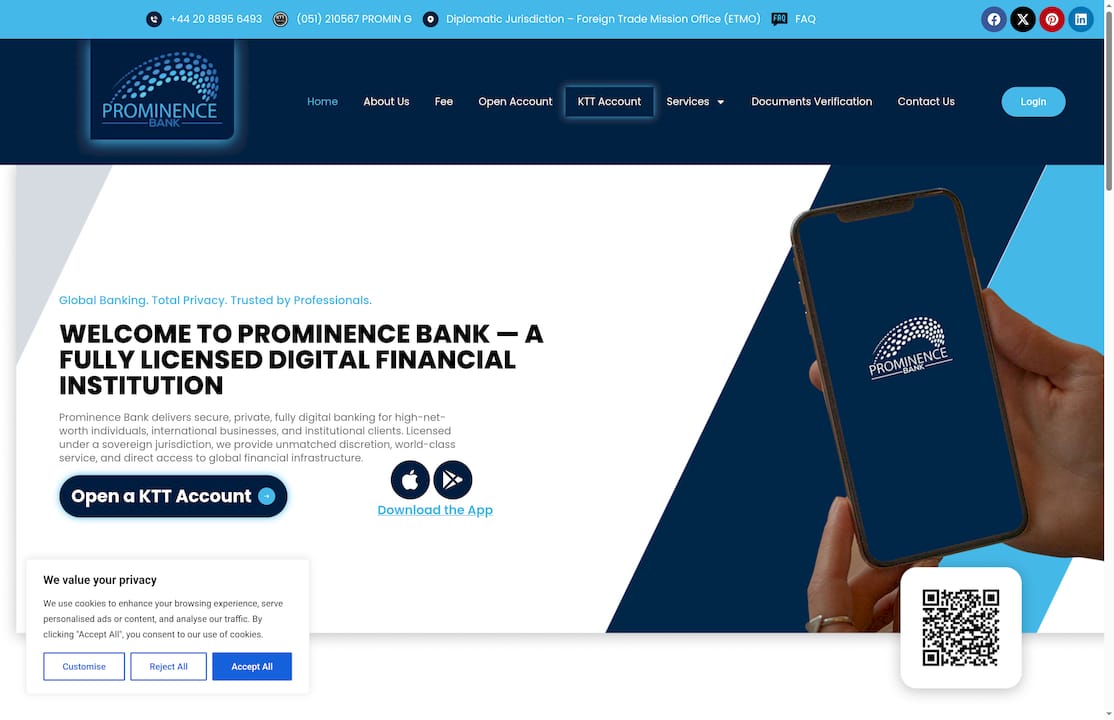
Trustees managing multi-currency assets or family wealth spread across jurisdictions often outgrow what a standard retail branch can offer. Prominence Bank runs fully digital onboarding for multi-currency business and trust-linked accounts, combined with custody and safekeeping services and AML/KYC-compliant processes built for exactly this kind of complexity.
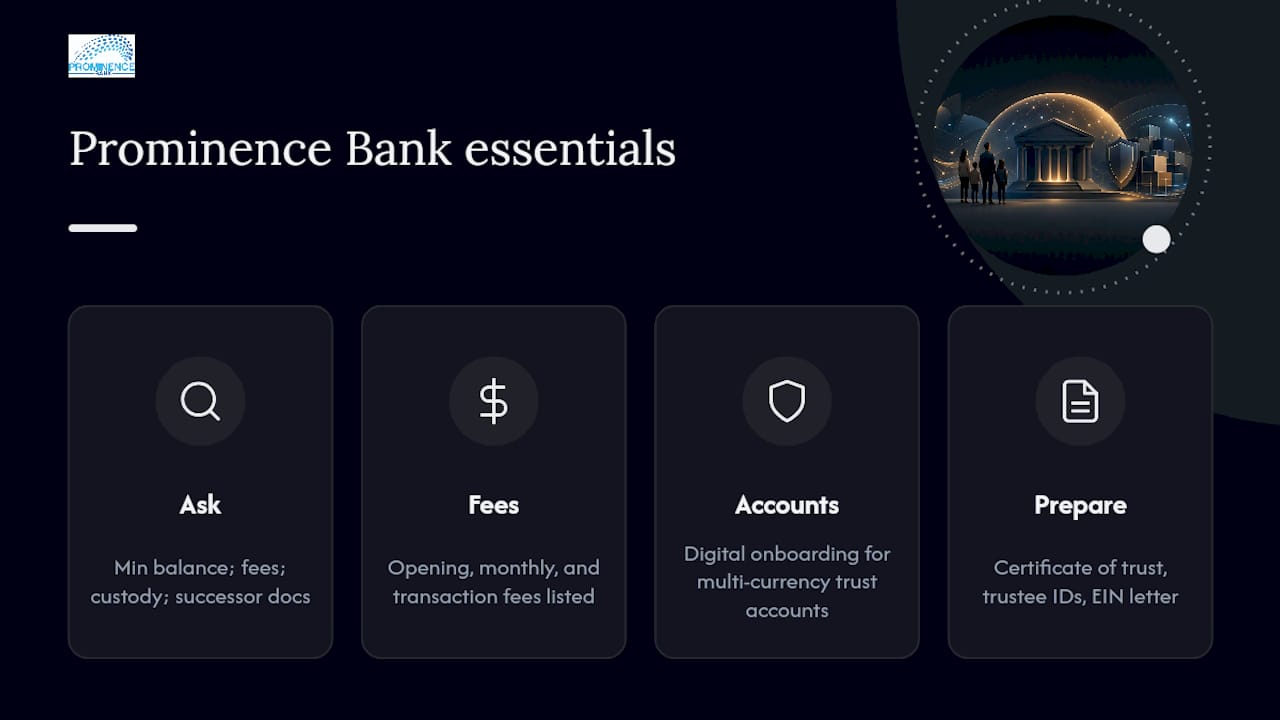
Before you commit to any bank for a family trust, ask four questions: What’s the minimum balance? What’s the full fee schedule? Can the bank handle custody alongside deposit accounts? And what documentation will a successor trustee need to take over access later? Prominence Bank’s fee schedule lists account opening costs, monthly account fees, and transaction charges upfront, so trustees can compare real numbers instead of guessing.
If your trust needs a private, multi-currency structure with custody capability, start by reviewing the business account application and have your certificate of trust, trustee IDs, and EIN letter ready before you begin. Having those three documents in hand cuts most of the back-and-forth out of onboarding.
A Trustee’s Real Priorities When Opening a Trust Account
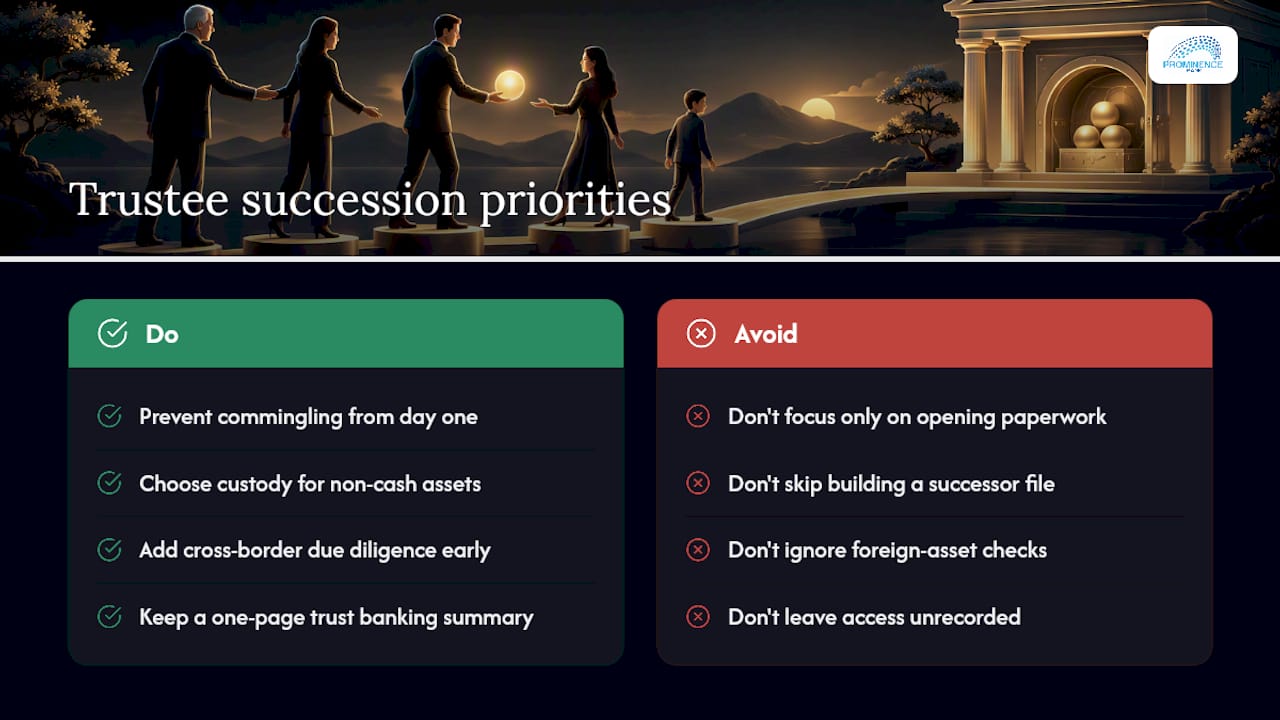
The paperwork gets all the attention, but the harder problem is succession. Most trustees focus on getting the account open and never build the file a successor will need six months or ten years from now. Prevent commingling from day one, choose custody arrangements when the trust holds anything beyond plain cash, and build cross-border due diligence into your timeline if the family holds foreign assets, because it will slow things down whether you plan for it or not.
Keep a one-page trust banking summary listing the bank, account numbers, EIN, and successor-access steps. It sounds trivial until a trustee dies or steps down without warning, and the family is left guessing where the money even sits.
— Harold
Where to Verify Trust Banking Rules Before You Sign
- FDIC trust deposit insurance guidance for coverage mechanics
- IRS EIN application for tax ID setup
- Trust counsel for ambiguous instrument language or state-specific trust rules
This article is general information, not a substitute for advice from a qualified financial advisor. Consult a qualified financial professional about your own circumstances before acting on anything here.
Sources
- FDIC: Section 4 – Compliance: Account Administration — Personal and Charitable Accounts
- Open a Trust Account | Chase
- IRS: Apply for an Employer Identification Number (EIN) online
- How to Set Up a Family Trust at a Bank (w/ 7 Examples)? + FAQs
FAQ
Does a Family Trust Need Its Own EIN?
Irrevocable trusts generally need their own EIN for tax reporting, while most revocable trusts can use the grantor’s Social Security number instead. The IRS EIN application is free and typically completed online in one session.
Can You Open a Family Trust Bank Account Online?
Some banks, including private and digital institutions like Prominence Bank, support remote onboarding once trust documents and trustee IDs are verified electronically. Other major retail banks, such as Chase, still require an in-person branch meeting with executed trust paperwork.
How Much FDIC Insurance Covers a Trust Account?
FDIC coverage for trust deposits generally runs $250,000 per eligible beneficiary, subject to aggregation rules. Trusts with few beneficiaries or very large balances should spread deposits across accounts to stay fully insured.
What Documents Do I Need to Open a Trust Bank Account?
Most banks require the trust agreement or a certificate of trust, government ID for each trustee, proof of address, and either an EIN or the grantor’s Social Security number. Successor trustees also need a death certificate or court order showing their authority to act.
What Does It Cost to Open a Trust Account With Prominence Bank?
Prominence Bank lists a one-time bank account opening fee and monthly account fees. Current prices are available on their pricing page. Full details, including savings account fees and transaction charges, are on the Prominence Bank fee schedule.