
Financial privacy and bank secrecy are not opposites, and they are not the same thing. In U.S. usage, “bank secrecy” mostly refers to the Bank Secrecy Act (BSA), the law that makes banks identify customers, keep records and report suspicious activity. Privacy is the separate set of rules and practices that limit who else gets to see your financial information. You can have strong privacy. You cannot have an anonymous account. The useful question is who sees your data, under what conditions, and what the bank must do before and after you open an account.
This guide is for high-net-worth individuals, global entrepreneurs, international businesses and the advisers who place them. It explains the legal line, what it means for numbered, custody, KTT and crypto-related accounts, and how to judge a discreet bank without chasing a myth.
TL;DR
- “Bank secrecy” in the U.S. sense is a set of identification, recordkeeping and reporting duties on the bank. It is not a promise of secrecy for the customer.
- Privacy is the protection of your nonpublic financial information from the public, counterparties and unrelated third parties. It is lawful and can be built into how an account is structured and run.
- A truly anonymous account is not legal at a regulated bank: identity, and for entities the beneficial owner, must be established before the account opens.
- Governments can reach your records only through defined legal channels, so privacy and compliance work together.
- Offshore and custody arrangements add tax-reporting duties for U.S. persons, such as FBAR and Form 8938.
Table of Contents
- Secrecy and privacy: two different jobs
- The anonymous account myth
- What numbered accounts hide, and what they do not
- Who can see your records, and how
- Offshore, custody and crypto: where the reporting sits
- What real financial privacy looks like
- A short test for any discreet bank
- Promo: privacy built on verified identity
- Perspective
- FAQ
- Sources
Secrecy and privacy: two different jobs
The Congressional Research Service frames the contrast directly. U.S. financial institutions must identify customers and the purpose of their accounts for anti-money-laundering reasons, while also protecting nonpublic personal information under Title V of the Gramm-Leach-Bliley Act (GLBA). One law pulls information toward the authorities in defined cases. The other keeps it away from everyone else.
The OCC, the regulator of national banks, summarizes the same split. Bank secrecy covers recordkeeping, transaction reporting and customer identification, while financial privacy covers GLBA privacy notices, opt-out opportunities for certain disclosures and safeguards for personal financial information.
| Bank secrecy (BSA) | Financial privacy | |
|---|---|---|
| Who it binds | The bank | The bank, toward you |
| What it demands | Identify customers, keep records, report suspicious activity | Protect nonpublic data, give notices, offer opt-outs |
| Who benefits | Regulators and law enforcement | The account holder |
| Can you waive it? | No | Partly, by authorizing disclosures |
The name causes the confusion. “Secrecy” suggests hiding. The BSA does the opposite: it is the reason a regulated bank knows exactly who you are. What stays confidential is the information once it is in the bank’s hands.
The anonymous account myth
Searchers often ask whether an anonymous bank account is legal. At a regulated bank, the answer is no, and the reason is concrete.
Under the Customer Identification Program (CIP) rule, a bank generally must obtain the customer’s name, an individual’s date of birth, an address and an identification number before opening an account, and use risk-based procedures to form a reasonable belief that it knows the customer’s true identity. For a U.S. person the number is a taxpayer identification number. For a non-U.S. person it can be a taxpayer number, a passport number with issuing country, an alien identification number or another qualifying government-issued document.
Two details matter in practice:
- The FDIC’s 2024 guidance says required data must be collected before opening whether the bank deals with you directly or through a third party, and the rule does not allow abbreviated collection of an element such as a partial TIN.
- The bank must also keep records of what it obtained and how it verified it.
So “anonymous” can only honestly mean anonymous to the public. The bank knows you. If you are comparing providers, treat any pitch of a no-questions account as a warning sign, not a feature.
If the verification step itself worries you, the practical answer is to control how your documents travel. Guidance on keeping identity verification private explains how to prove who you are without spreading copies of your documents more widely than needed.
What numbered accounts hide, and what they do not
A numbered account replaces your name with a reference number in day-to-day handling. That is a real privacy layer: fewer staff, counterparties and systems see your name attached to the account. It is not an exemption from identification.
The legal picture shows why:
- Beneficial ownership. FinCEN guidance explains that nominal account holders, shell companies and similar entities can conceal true owners, so institutions should identify and verify beneficial owners as part of risk-based due diligence.
- Private banking. For private-banking accounts managed in the U.S., covered institutions must take reasonable steps to identify nominal and beneficial owners, determine whether an owner is a senior foreign political figure, establish the sources and intended use of funds, and review activity for consistency.
The takeaway for a family office or an international group is that structure does not remove the person behind it. A well-designed structure keeps your name out of places it does not need to be, and it is documented well enough that onboarding goes smoothly.
Who can see your records, and how
Privacy has teeth in the U.S. because the government cannot simply ask for your file. The Right to Financial Privacy Act (RFPA) generally prohibits a financial institution from giving a government authority access to customer records unless the government follows the Act and certifies compliance in writing. Common permitted routes include:
- Your own authorization.
- An administrative subpoena or summons.
- A search warrant.
- A judicial subpoena.
- A qualifying formal written request.
Notice and timing exceptions can apply. The statute also lets an institution tell a government authority that it holds information relevant to suspected illegal activity, limited to identifying information and the nature of the suspected activity.
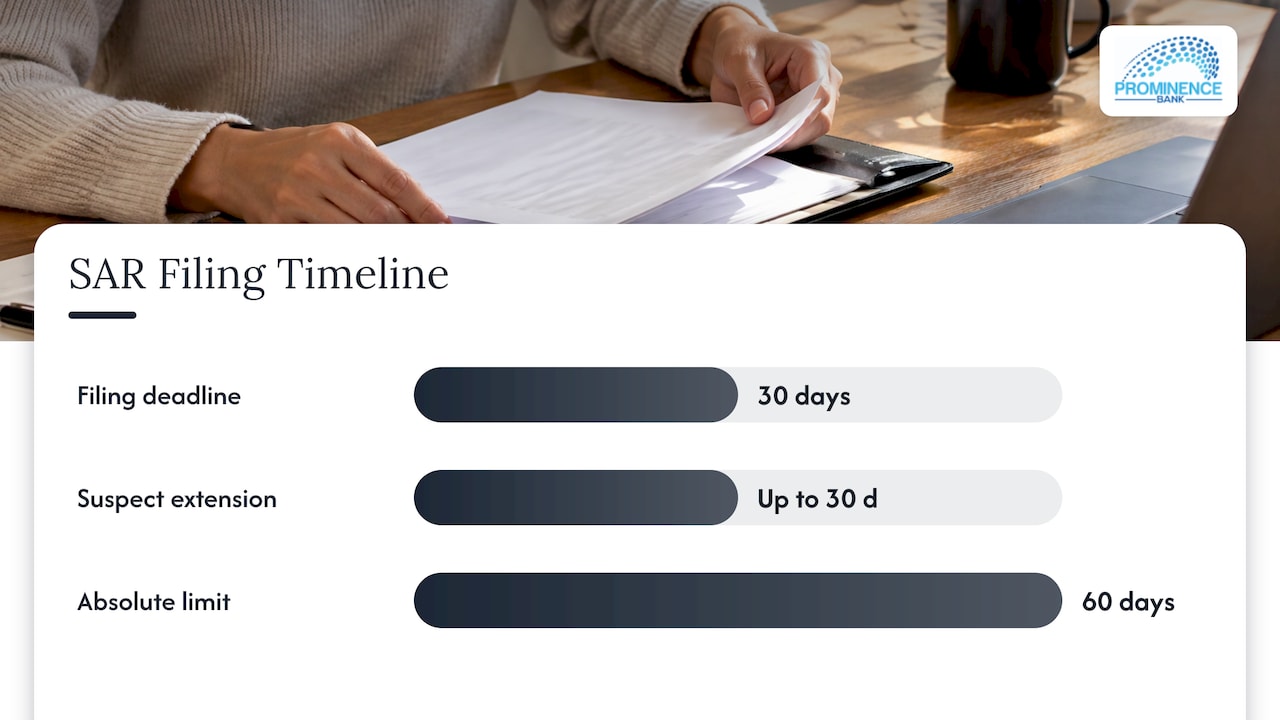
The other channel is the bank’s own reporting. Under 31 CFR 1020.320, a bank must file a suspicious activity report (SAR) for a transaction involving or aggregating at least $5,000 when it knows, suspects or has reason to suspect illegal proceeds, concealment or evasion, or no apparent lawful purpose. The filing deadline is generally 30 calendar days after the bank first detects the relevant facts. If no suspect is identified, it may be extended by up to 30 more days, and never beyond 60 days from initial detection.
This matters for your planning. Ordinary, well-explained activity sits comfortably inside the rules. Activity that cannot be explained is what triggers reporting, whatever the bank’s marketing says about discretion.
Offshore, custody and crypto: where the reporting sits
Moving money or assets abroad changes who needs to know, not whether they need to know. If you are a U.S. person, two separate filings often apply:
- Form 8938. The IRS states that certain taxpayers with foreign financial assets generally exceeding $50,000 must report them with the annual return, subject to differing thresholds and exceptions.
- FBAR. U.S. persons generally must file when the aggregate value of foreign financial accounts exceeds $10,000 at any time during the calendar year.
The IRS also says Form 8938 is separate from FBAR and a taxpayer may need both, and that foreign financial institutions may give the IRS identity and specified financial information about offshore accounts held by U.S. individuals. Custody arrangements, safekeeping receipts and digital-asset accounts should be reviewed with a tax adviser and a securities or tax attorney against these rules before you fund them. Thresholds and exceptions differ by situation.
What real financial privacy looks like
With secrecy off the table, privacy is a set of choices you can make. These are the ones that count for high-net-worth and international clients.
Limit who sees the name
Decide which counterparties, platforms and staff need your identity. Numbered accounts, entity structures with properly documented ownership, and restricted internal access all reduce exposure without hiding anything from a regulator.
Use your opt-outs
Under GLBA, institutions must give you a privacy-policy notice and an opportunity to opt out before disclosing personal financial information to unaffiliated third parties. Read the notice at onboarding and exercise the opt-outs that apply.
Keep your documentation clean
Source of funds, purpose of the account and ownership charts should be ready before you apply. Banks verify identity and review activity for consistency, so a clear file shortens onboarding and lowers the chance of questions later.
Secure the channel
Privacy fails most often through careless handling: unencrypted document emails, shared logins, scanned passports left in inboxes. Our own library covers this in how to ensure banking privacy and what e-banking privacy involves.
Match the structure to the purpose
Business, corporate, private and custody needs are different. A trading company with complex flows needs a different set-up from an individual holding wealth across currencies. Our pages on the role of anonymity in business banking and confidential business accounts show how discretion and compliance fit together.
A short test for any discreet bank
Before you commit funds, ask these questions. A credible institution answers each without hesitation.
- Does it verify identity and beneficial ownership before opening? If it does not, it is not operating to international AML/KYC standards.
- Does it publish its fees? Hidden or negotiable-on-the-phone pricing makes budgeting hard.
- Does it explain how it handles legal requests for information?
- What does it do with your data, and can you limit sharing?
- Which of your own reporting duties does the account trigger in your home country?
The third and fifth questions are where most disappointment happens. Clients expect the bank to shield them from obligations that belong to them as taxpayers.
Promo: privacy built on verified identity
Prominence Bank is a licensed digital bank for high-net-worth individuals, international businesses and institutions. It offers multi-currency business accounts, private numbered accounts, custody, KTT-enabled accounts, safekeeping receipts and cryptocurrency banking, with online access and compliance with international AML/KYC standards.

The fees are published. Account opening is a one-off 25,000 (USD or EUR), and a numbered account is a one-off $/€ 50,000 with a monthly fee of 100 (USD or EUR). Enhanced due diligence is priced in three levels: €5,000, €10,000 and €15,000. KTT transactions carry a 1.5% fee. You can see the full schedule on the fees page, and start with private banking or business banking.
Perspective
Clients arrive asking for secrecy. What they need is discretion that holds up under review.
A bank that promises to hide you from every authority is selling something that cannot be delivered, and the client carries the risk. A bank that verifies who you are, documents your structure and then limits who inside and outside the institution sees your information is selling something durable. That is how we think about it at Prominence Bank: high discretion and confidentiality, advanced security and compliance with international AML/KYC standards are one design, not three competing goals.
Numbered accounts, KTT-enabled accounts, custody and safekeeping receipts all serve legitimate needs for international businesses and wealth holders who do not want their financial lives visible to the public or to counterparties. Our published fee schedule includes enhanced due diligence tiers precisely because complex structures deserve a thorough, transparent onboarding.
If you want to understand how the pieces fit before you apply, our guides on bank account anonymization and online bank compliance for high-net-worth clients are a good place to begin.
Harold
FAQ
Is an anonymous bank account legal?
Not at a regulated bank. The CIP rule requires a bank to collect identifying information and verify it before opening an account, and to keep records of what it collected. What is legal and common is an account that is private from the public and counterparties, while the bank holds your verified identity.
Does bank secrecy mean my bank keeps everything confidential?
No. In the U.S. the term refers to the Bank Secrecy Act, which obliges banks to identify customers, keep records and report suspicious activity. Confidentiality of your information comes from privacy rules such as GLBA and the RFPA, which limit disclosure to third parties and government authorities.
Can the government see my account without telling me?
Only through defined channels. The RFPA requires authorities to follow specified procedures and certify compliance in writing, and notice and timing exceptions can apply. Separately, a bank’s SAR filing is made by the bank itself when its own criteria are met.
Does a numbered account hide who owns it?
It hides your name in routine handling, not from the bank. Banks must identify nominal and beneficial owners, and private-banking due diligence includes establishing sources and intended use of funds.
Do I still have to report offshore accounts as a U.S. person?
Yes, if you meet the thresholds. Form 8938 and FBAR are separate filings, and you may need both. Confirm your situation with a tax attorney or CPA.
Sources
- OCC Bulletin 2025-23, Protecting Customer Financial Records
- Congressional Research Service, Data Privacy vs. Bank Secrecy
- Federal Reserve, Section 1020.220, Customer Identification Program requirements for banks
- FDIC, Collecting Identifying Information Required Under the CIP Rule (2024)
- FinCEN, Guidance on Obtaining and Retaining Beneficial Ownership Information
- Federal Reserve, Section 1010.620, Due Diligence Programs for Private Banking Accounts
- 12 U.S.C. § 3403, Confidentiality of financial records
- eCFR, 31 CFR 1020.320, Reports by banks of suspicious transactions
- IRS, FATCA information for individuals
- National Taxpayer Advocate, Purple Book: Improve Filing