
An avalized bill of exchange is a bill of exchange that carries a bank’s formal guarantee, called an aval, making the bank directly liable to pay the holder if the drawee defaults. For an exporter, that guarantee turns an ordinary trade debt into a payment the bank itself stands behind, which is why avals remain a trusted tool in cross-border sales.
TL;DR:
- Use an aval chiefly on a time bill; an unsigned or vague guarantee may be unenforceable, so confirm the bank’s exact wording before finalizing it.
- Confirm the governing law and forum; civil law systems may treat an aval as independent of buyer disputes, while U.S. practice relies on different instruments.
- Banks price avals according to the drawee’s credit, bill tenor, and guaranteed amount, and may require financial statements, sales contracts, collateral, or corporate guarantees.
- When selling to a new buyer, an aval can support longer payment terms, but it may offer fewer protections than a confirmed letter of credit.
Table of Contents
- The instrument and its parts: bill basics and what an aval looks like
- How a bank avalises a bill: the process from request to payment
- Legal differences: UNCITRAL and Geneva rules versus U.S. practice
- When an avalized bill makes sense and how it compares to other tools
- Costs, documentation and timing before you request an aval
- How a digital bank like Prominence Bank supports trade guarantees
- Why avals still matter for specific trust-gap trades
- Arranging trade guarantees and settlement through Prominence Bank
- FAQ
- Sources
The instrument and its parts: bill basics and what an aval looks like
A bill of exchange is a written order where one party, the drawer, instructs another, the drawee, to pay a fixed sum to a named payee, either on demand (a sight bill) or on a future date (a time bill). Once the drawee signs to accept the obligation, they become the acceptor.
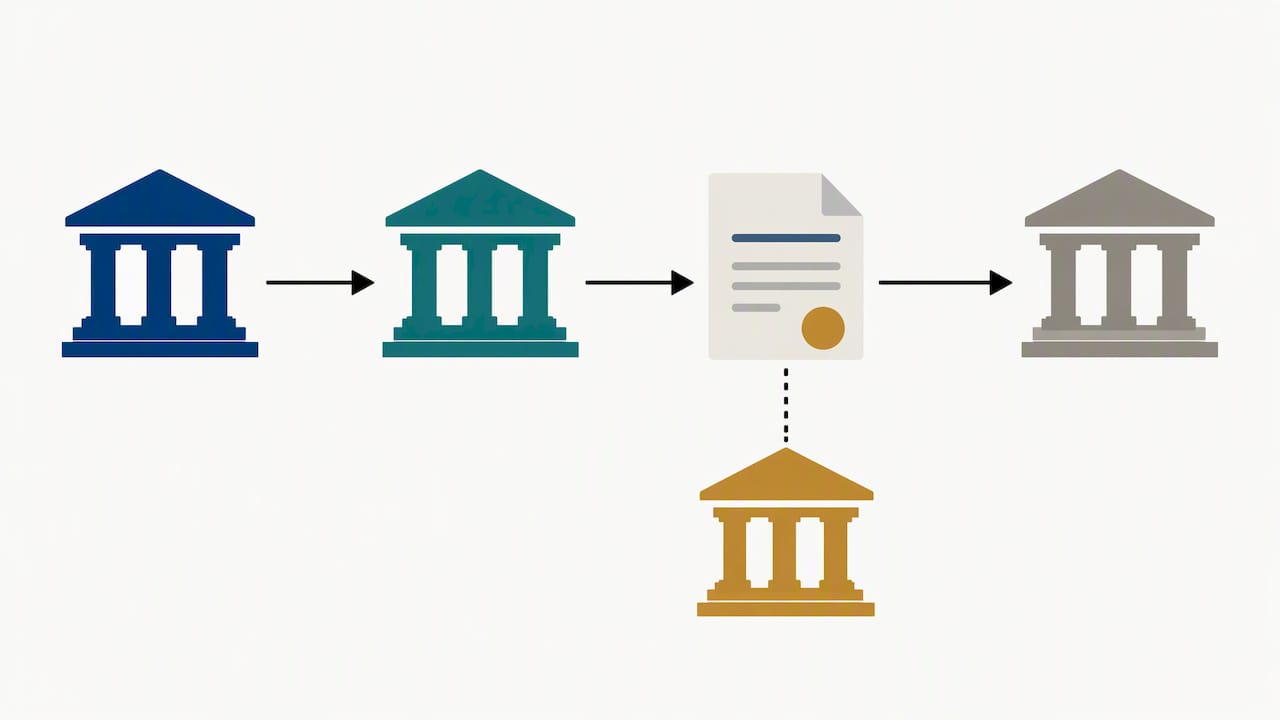
An aval adds a second layer of promise on top of that structure. According to the UNCITRAL explanatory note on bills of exchange, the guarantee typically appears as a handwritten or stamped phrase such as “pour aval” or “payment guaranteed,” followed by the bank’s signature, either directly on the bill or on an attached allonge.
A few things to know before you accept or request one:
- Avals customarily attach to time bills, not sight bills, since the guarantee is meant to cover a deferred payment date.
- The wording and signature are what make the guarantee enforceable, so an unsigned or vague notation is not a valid aval.
- The payee, drawer and acceptor remain visible on the face of the bill alongside the bank’s endorsement.
How a bank avalises a bill: the process from request to payment
Getting a bill avalised follows a fairly predictable sequence, though the pace depends on the bank’s internal credit process and how complete the paperwork is.
- The exporter or seller requests the aval, usually because a buyer’s credit is unproven or the trade terms were negotiated to include a bank guarantee.
- The bank underwrites the request: a credit review of the drawee, a look at supporting contracts, and in many cases collateral or a corporate guarantee from the buyer’s side.
- Once approved, the bank appends the aval wording and signature directly on the bill or on an allonge, then returns the instrument to the parties involved.
- At maturity, the holder presents the bill for payment; if the drawee fails to pay, the holder presents it to the avalising bank instead.
Because the aval is, in many civil-law systems, an obligation independent of the underlying contract, the bank cannot simply point to a dispute between buyer and seller as a reason to refuse payment, according to the UNCITRAL explanatory note. That independence is precisely what gives the instrument its value to exporters.
Pro Tip: Ask the bank for the exact wording it intends to use on the aval before the bill is finalized, since minor phrasing differences can affect how the guarantee is interpreted later.
Legal differences: UNCITRAL and Geneva rules versus U.S. practice
Where your bill is governed matters as much as who signed it. The UNCITRAL Convention on International Bills of Exchange sets uniform formal requirements for international bills and promissory notes, giving parties in different countries a shared legal baseline.
- In many civil-law jurisdictions that follow the Geneva tradition, an aval creates an obligation independent of the underlying trade contract, so the bank’s liability stands even if the buyer disputes the goods.
- U.S. practice does not use the continental aval structure in the same way. Cornell Law School’s overview of bills of exchange notes that negotiable instruments in the U.S. are governed by the Uniform Commercial Code, and the practical equivalent is often an inscription such as “payment guaranteed” rather than a formal aval.
- Investopedia’s explainer on avalizing points out that avals are more common in Europe, while U.S. parties tend to rely on related but distinct instruments.
- Always confirm the governing law and forum stated on the bill, and involve counsel when a transaction crosses between civil-law and common-law jurisdictions.
When an avalized bill makes sense and how it compares to other tools
Exporters typically push for an aval when they are selling to a buyer with limited credit history, entering a new market, or extending payment terms longer than they would otherwise accept. The guarantee lets them treat the receivable almost like cash.
- Exporters gain payment certainty and a bill that is easier to discount or sell on, since a bank-backed instrument is more attractive to other buyers of the paper.
- Importers often gain better pricing or longer payment terms, because the supplier’s risk has effectively shifted to the bank.
- Compared with a confirmed letter of credit, an aval can be simpler and less costly to arrange, though it does not always carry identical procedural protections.
- Compared with trade credit insurance, an aval shifts risk to a specific bank rather than spreading it across a policy, which can matter for how the receivable is treated on a balance sheet.
Costs, documentation and timing before you request an aval
Pricing for an aval depends on the credit quality of the drawee, the tenor of the bill and the amount involved, since the bank is taking on a real payment obligation rather than just processing a transaction.
- Expect the bank to ask for financial statements, the underlying sales contract, and sometimes collateral or a corporate guarantee from the buyer.
- Complete documentation submitted up front is the single biggest factor in avoiding delays, since incomplete files get sent back for clarification.
- Pre-qualifying the buyer’s credit before the bill is drafted can shorten the underwriting stage considerably.
One factual note worth flagging: market commentary suggests avals are more common in Europe than in the United States, according to Investopedia, which affects how readily a given bank can accommodate the request depending on where it operates.
How a digital bank like Prominence Bank supports trade guarantees
We operate as a digital banking institution built around secure, private, fully online financial services, which matters when you are trying to arrange a guarantee quickly across borders rather than waiting on a branch network.
- We offer multi-currency business accounts that let exporters and importers hold and move funds in multiple currencies.
- Our corporate banking solutions are built for businesses managing more complex structures, including the kind of documentation a bank needs before issuing a guarantee.
- Our trade finance services cover the practical side of arranging guarantees and settlement once terms are agreed.
If you want to see what a guarantee or related instrument costs before you apply, our fees schedule lists the charges for the instruments and services we offer.
Why avals still matter for specific trust-gap trades
Avals have lost ground to open-account trading and digital settlement tools, but they still earn their place in a specific situation: a lower-frequency, high-value trade between parties that do not yet trust each other’s credit. Picture a mid-size exporter shipping machinery to a new overseas buyer with no prior payment history. A letter of credit might be slower to arrange than a bank’s aval on a time bill, which is why I still see trade finance professionals reach for this instrument rather than treating it as a relic. If you want to compare it against other guarantee structures, our comparison of working capital options provides useful insights into alternatives to bank-arranged trade guarantees for cash-flow management.
— Harold
Arranging trade guarantees and settlement through Prominence Bank
When your transaction calls for a bank standing behind a bill, speed and discretion matter as much as the guarantee itself. We built our account opening and trade finance services to run fully online, so a business can set up multi-currency accounts and request guarantee-related services without waiting on branch appointments or paper-heavy onboarding.
- Open a multi-currency business banking account to hold and settle funds in the currencies your trade contracts specify.
- Use our corporate banking services for more complex structures, including documentation support for guarantees and endorsements.
- Review our fee schedule to see costs for account opening, wire transfers, and endorsement-related services before you apply.
Every account and transaction we process runs through our compliance and AML/KYC standards, so the confidentiality our clients expect does not come at the expense of due diligence. 
If you are ready to move forward, start your business account application and our team will walk you through the documentation a guarantee or trade finance request typically needs.
This article is general information, not a substitute for advice from a qualified financial advisor. Consult a qualified financial professional about your own circumstances before acting on anything here.
FAQ
What is an avalized bill of exchange?
An avalized bill of exchange is a bill that carries a bank’s formal guarantee, known as an aval, making the bank liable to pay the holder if the drawee defaults. The guarantee typically appears as wording like “pour aval” plus the bank’s signature, as described in the UNCITRAL explanatory note.
What are the two types of bills of exchange?
Bills of exchange are generally either sight bills, payable on demand, or time bills, payable on a specified future date. Avals customarily attach to time bills rather than sight bills, since the guarantee is meant to cover the period before the deferred payment falls due.
What is an endorsed bill of exchange?
An endorsed bill of exchange is one where the payee has signed it over to transfer the right to receive payment to another party, which is distinct from an aval. An aval is a guarantee added by a third party, typically a bank, while an endorsement transfers ownership of the payment right itself.
Do bills of exchange still exist?
Yes, bills of exchange are still used in trade finance, though their use has shifted as open-account trading and electronic settlement tools have grown. They remain useful for transactions where one party wants a documented, negotiable payment obligation, particularly when a bank aval adds payment certainty.
How much does it cost to get a bill avalized?
Pricing depends on the credit quality of the drawee, the bill’s tenor and the amount guaranteed, since the bank takes on a real payment obligation. Banks typically also require financial statements and supporting contracts before issuing the guarantee, which affects turnaround time as much as cost.
Sources
- UNCITRAL explanatory note on bills of exchange and promissory notes
- Avalize in Banking: How Third-Party Guarantees Work — Investopedia
- Bill of exchange — Cornell Law School WEx