
Protecting significant wealth across borders has never been more complex. Regulatory frameworks like FATCA and the Common Reporting Standard (CRS) have reshaped what financial privacy means, pushing high-net-worth individuals and multinational corporations to rethink how they structure and safeguard their assets. Discreet banking provides enhanced privacy and protection from regulatory scrutiny and reputational risks, making it a strategic priority rather than a luxury. This article breaks down the core advantages of discreet banking, compares it against traditional and offshore models, and maps out actionable pathways for those who need maximum financial control.
Table of Contents
- What is discreet banking? Foundations and frameworks
- Core advantages of discreet banking for HNWIs
- Benefits for corporations: M&A, structure, and risk management
- Comparison: Discreet banking versus traditional and offshore models
- Expert perspectives: How discreet banking strategies are evolving
- Next steps: Exploring discreet banking solutions
- Frequently asked questions
Key Takeaways
| Point | Details |
|---|---|
| Enhanced privacy | Discreet banking sharply limits third-party access and scrutiny of assets and transactions. |
| Strategic asset protection | Legal frameworks like trusts and Swiss laws help shield wealth from creditors and reputation risks. |
| Custom-tailored services | High-net-worth clients access exclusive investments, multi-currency accounts, and holistic advice. |
| Corporate risk mitigation | Global firms use advanced privacy controls during mergers and high-stakes transactions. |
| Compliant confidentiality | Modern discreet banking balances privacy with regulatory transparence to remain lawful. |
What is discreet banking? Foundations and frameworks
Discreet banking is not a loophole. It is a structured, legally grounded approach to financial privacy that operates within regulated jurisdictions and complies with international standards. The term covers a range of tools and mechanisms designed to limit unnecessary exposure of client identity, transaction details, and asset structures to third parties.
The legal roots run deep. Swiss banking laws offer strong asset protection against creditors through legally backed confidentiality, setting a global benchmark that other regulated jurisdictions have followed. Beyond Swiss law, discreet banking relies on:
- Numbered accounts that shield client identity from general bank staff
- Encrypted communications for all sensitive correspondence
- Special Purpose Vehicles (SPVs) and trusts to separate personal identity from asset ownership
- Non-disclosure agreements (NDAs) between clients and relationship managers
- Jurisdiction selection in territories with strong statutory privacy protections
What has changed in recent years is the regulatory environment. The new norm is structured transparency rather than absolute secrecy, meaning modern discreet banking is built on compliant complexity, not hidden accounts. CRS and FATCA require automatic information exchange between tax authorities, so the goal is no longer invisibility. It is lawful, layered privacy.
“The most sophisticated clients are not hiding. They are structuring. There is a fundamental difference between secrecy and privacy, and elite banking is built on the latter.”
For those exploring this space, a solid private banking overview is the right starting point before selecting specific tools or jurisdictions.
Core advantages of discreet banking for HNWIs
High-net-worth individuals operate in a different financial reality. A single leaked transaction or publicly visible asset can trigger legal challenges, reputational damage, or unwanted attention from creditors and litigants. Discreet banking addresses these risks directly.
Tailored services and multi-currency accounts offer flexibility that standard retail banking simply cannot match. Here is what that looks like in practice:
- Superior personal privacy: Your financial footprint is minimized. Third-party access is restricted by contract and by law.
- Exclusive investment access: Pre-IPO opportunities, hedge funds, and private equity placements are available only through private channels.
- Multi-currency flexibility: Holding, converting, and transacting in multiple currencies without friction is essential for international lifestyles.
- Holistic wealth services: Succession planning, family office structures, and trust management are integrated into a single relationship.
- Asset protection: Legal structures shield wealth from creditors, litigation, and political instability.
Discreet banking enables holistic wealth management tailored to long-term goals, which means your banker understands your full picture, not just your account balance. This relationship model is what separates private banking from premium retail.

Pro Tip: Before selecting a discreet banking provider, verify that they offer dedicated relationship managers with experience in cross-border estate planning. Generic private banking labels do not guarantee the depth of service you need.
For individuals seeking this level of service, exclusive services and tailored private accounts are worth evaluating alongside private personal bank accounts designed for international mobility.
Benefits for corporations: M&A, structure, and risk management
Corporations face a different set of pressures. A single rumor about a pending acquisition can move stock prices, alert competitors, and derail months of negotiation. Discreet banking is not optional for serious M&A activity. It is infrastructure.
Discreet banking supports global M&A via code names, role-based approvals, and discreet transfers that keep deal details contained until the right moment. Here is how corporations typically structure this:
- Code name assignment: Each deal is assigned an internal project name. No real company names appear in internal communications until signing.
- Role-based access controls: Only authorized personnel can view transaction details, reducing internal leak risk.
- Discreet fund transfers: Large capital movements are structured to avoid triggering public disclosure requirements prematurely.
- Consolidated multinational structures: Holding companies and SPVs consolidate assets across jurisdictions without creating unnecessary public records.
- Regulatory change monitoring: Dedicated advisors track shifting compliance landscapes so deal structures remain valid across closing timelines.
| Risk factor | Standard banking | Discreet banking |
|---|---|---|
| Deal leak exposure | High | Minimal |
| Internal access controls | Limited | Role-based, granular |
| Cross-border transfer privacy | Moderate | Structured and compliant |
| Regulatory advisory | Generic | Deal-specific |
| Reputational risk management | Reactive | Proactive |
Leaks from tax haven banks cause stock price drops, demonstrating the measurable financial cost of inadequate banking discretion. For corporations managing sensitive transactions, this is not a theoretical risk.
Explore corporate banking solutions and dedicated M&A banking support for deal-specific structures.
Comparison: Discreet banking versus traditional and offshore models
Not all private banking is equal. Understanding the differences between discreet banking, traditional private banking, and classic offshore models helps you choose the right structure for your situation.
| Feature | Traditional banking | Classic offshore | Discreet banking |
|---|---|---|---|
| Privacy level | Low | Variable | High, lawful |
| Regulatory compliance | Full disclosure | Often outdated | Structured transparency |
| Entry threshold | Low | Moderate | High |
| Investment access | Standard | Limited | Exclusive |
| Global reach | Moderate | Narrow | Broad |
| Reputational risk | Low | High | Low |
Absolute secrecy is a myth under CRS and FATCA, and high cost is a common drawback of offshore structures. Classic offshore accounts built on pre-2010 secrecy models now carry significant regulatory exposure. The compliance landscape has shifted, and structures that were once standard are now liabilities.
Key distinctions worth noting:
- Discreet banking is compliant by design. It does not rely on jurisdictional loopholes that regulators are actively closing.
- Offshore models vary widely. Some are fully compliant; others carry reputational and legal risk that can outweigh the privacy benefit.
- Traditional banking offers no meaningful privacy. Account data, transaction history, and beneficial ownership are broadly accessible to regulators and, in many cases, to legal adversaries.
For clients evaluating specific tools, numbered accounts and business banking options represent two distinct entry points depending on whether the priority is personal identity protection or operational flexibility.
Expert perspectives: How discreet banking strategies are evolving
The conversation around financial privacy has matured significantly. Advisors who once focused on minimizing disclosure are now focused on structuring disclosure intelligently.
Discreet banking now means structured transparency, compliant complexity, and lawful privacy. This shift reflects a broader recognition that the old model of absolute secrecy is not just legally risky. It is strategically counterproductive. Clients who rely on opacity rather than structure are more vulnerable, not less.
“The families and corporations that navigate this landscape best are those who treat privacy as an engineering problem, not a hiding problem. You build the right structure, and the privacy follows.”
Several trends are reshaping how elite clients approach discreet banking in 2026:
- Long-term relationship management is replacing transactional banking. Advisors who understand a client’s full generational picture provide better privacy architecture.
- Families from politically volatile regions are using discreet structures not to evade taxes but to protect assets from arbitrary government action or currency collapse.
- Corporations are integrating compliance teams directly into their banking relationships, so regulatory changes are absorbed in real time rather than discovered after the fact.
Pro Tip: If your banking relationship does not include proactive compliance advisory, you are managing risk reactively. The best discreet banking providers flag regulatory changes before they affect your structure, not after.
For clients who value this kind of depth, relationship-driven banking is the model that delivers it consistently.
Next steps: Exploring discreet banking solutions
If you have read this far, you already understand that financial privacy is not about hiding. It is about building structures that protect your wealth, your transactions, and your reputation from unnecessary exposure. The right banking partner makes that possible without sacrificing compliance or global reach.
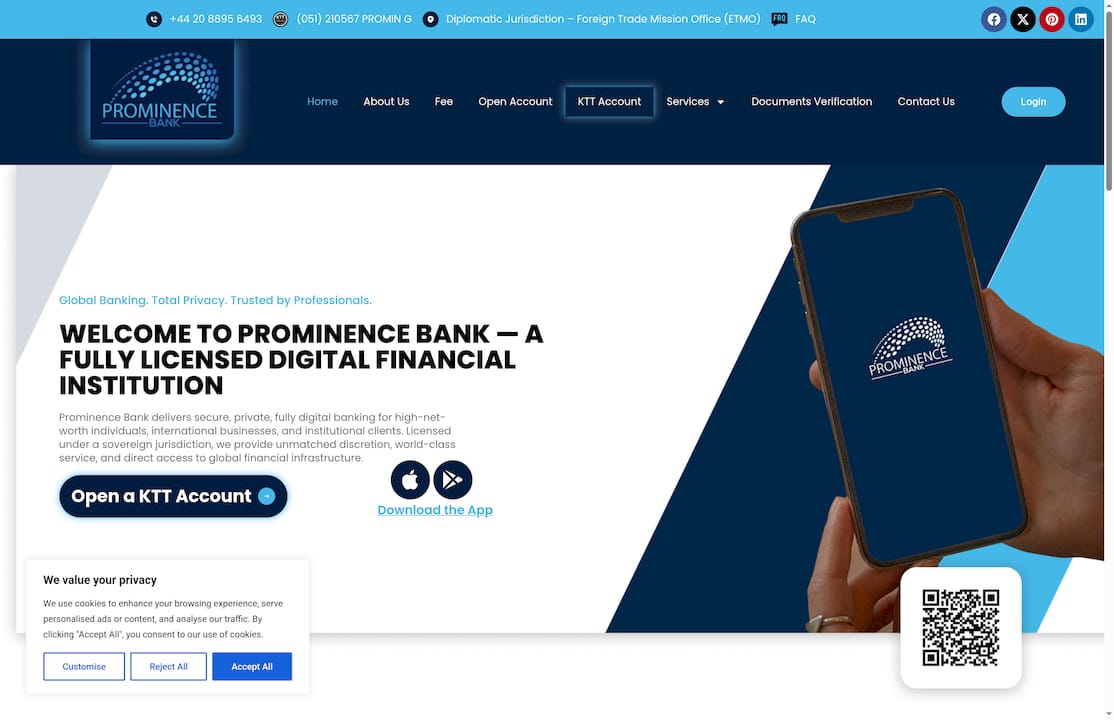
Prominence Bank offers private banking at Prominence Bank designed specifically for high-net-worth individuals and complex corporate structures. Whether you need multi-currency accounts, M&A support, or a fully integrated wealth management framework, the approach is built around your specific situation, not a generic product menu. For corporations and institutional clients, corporate banking options provide the operational infrastructure for sensitive, cross-border transactions. And for individuals seeking the highest tier of personalized service, premium exclusive services deliver the depth and discretion that complex wealth demands. Reach out directly to begin a private consultation and map out the structure that fits your goals.
Frequently asked questions
How does discreet banking protect my assets?
Legal confidentiality and privacy mechanisms guard assets through regulated structures including trusts, SPVs, and numbered accounts that limit third-party access while remaining fully compliant with international law.
Is discreet banking legal under current global regulations?
Yes. Structured transparency and regulatory compliance are central to modern discreet banking, which is built on lawful privacy rather than illegal secrecy or information suppression.
What is a numbered account and why is it useful?
Numbered accounts used for identity protection replace your name with a code within the bank’s internal systems, meaning general staff cannot link your identity to your account, adding a meaningful layer of confidentiality.
What are the main drawbacks of discreet banking?
High costs and regulatory disclosure are the two primary limitations. Entry thresholds are steep, and CRS and FATCA mean that absolute secrecy is not achievable regardless of jurisdiction or account structure.