
Under the Corporate Transparency Act, FinCEN requires most reporting companies to file beneficial ownership information through its BOI e-filing system, though an August 2026 update narrowed this obligation substantially. FinCEN’s rule now exempts entities created in the United States, leaving certain foreign reporting companies as the primary group still filing BOIRs that list company data and identifying details for each beneficial owner.
TL;DR:
- Domestic entities created in the United States are now largely exempt from filing beneficial ownership information, while foreign companies registered in the U.S. remain subject to reporting.
- The initial filing deadlines vary depending on formation date, with pre-2024 companies due by January 2025, and new entities within specified time frames after registration.
- Beneficial owners are identified by owning at least 25% of the company or exercising substantial control through authority, veto power, or trust arrangements, with many traps for layered control structures.
- Filing requires detailed company and owner information, including legal names, addresses, identifiers, and uploaded ID images, with a simplified process for repeat filers via FinCEN identifiers.
- Several exemptions and rules allow reporting entities to list entities instead of individuals, reducing paperwork but requiring careful judgment on control and ownership nuances.
Table of Contents
- Who has to report: domestic and foreign reporting company definitions
- What a BOIR must contain: company, owner, and applicant data
- How and when to file: the e-filing portal, deadlines, and corrections
- Exemptions that change who gets named in a filing
- Finding beneficial owners: ownership percentage versus control
- Building a repeatable compliance process
- What noncompliance can trigger
- Where compliance teams should spend their limited time
- A banking partner for complex ownership documentation
- Where to verify the current rules
- Sources
- FAQ
Who has to report: domestic and foreign reporting company definitions
Before the August 2026 revision, a domestic reporting company was any corporation, LLC, or similar entity created by filing a document with a secretary of state or similar office. A foreign reporting company was any entity formed under another country’s law and then registered to do business in a U.S. state or tribal jurisdiction. That distinction still matters because FinCEN’s updated rule keeps certain foreign reporting companies within scope while exempting entities created domestically, according to the BOI reporting page.
Twenty-three categories of entities were already exempt under the original rule, covering groups like public companies, banks, credit unions, insurance companies, and large operating companies that meet revenue and staffing thresholds. The Small Entity Compliance Guide walks through each category with checklists built for exactly this determination.
A few steps settle most scope questions quickly:
- Confirm where and how the entity was formed, since that determines domestic versus foreign reporting company status.
- Check the entity against the 23 exemption categories in the Compliance Guide before assuming reporting applies.
- Use FinCEN’s interactive flowcharts to resolve edge cases such as subsidiaries, trusts holding operating entities, or newly registered foreign branches.
- Revisit the determination whenever the entity’s structure, revenue, or registration status changes.
Compliance teams that handled this analysis before 2026 should re-run it now rather than relying on an older conclusion, since the scope of who must file has changed.
What a BOIR must contain: company, owner, and applicant data
A complete filing has three potential layers of information: the reporting company itself, its beneficial owners, and, for entities created after the rule’s initial effective date, the company applicants who formed or registered it. The BOIR Filing Instructions spell out the exact fields FinCEN’s system expects for each layer.
For the company, the filer needs:
- Full legal name and any trade names or “doing business as” names.
- Current U.S. address for the principal place of business.
- Jurisdiction of formation or, for foreign reporting companies, jurisdiction of first registration.
- A taxpayer identification number, typically an EIN, or a foreign tax identification number when no U.S. TIN exists.
For each beneficial owner and, where applicable, each company applicant, the filing needs full legal name, date of birth, a complete current address, a unique identifying number from an acceptable document such as a passport, state ID, or driver’s license, the jurisdiction that issued it, and an image of that document uploaded with the filing.
FinCEN allows a shortcut here. An individual who obtains a FinCEN identifier can give the reporting company that number instead of handing over the full set of personal data for every filing, which the BOIR Filing Instructions describe as a way to simplify repeat filings across multiple entities tied to the same person.
Attachment files have size limits set by the e-filing system, and every field marked with an asterisk on the form must be completed before the system accepts the submission. Missing a single starred field stops the filing outright rather than flagging it as incomplete, so a pre-filing data check saves a rejected submission.
How and when to file: the e-filing portal, deadlines, and corrections
Filings go through FinCEN’s BOI e-filing portal, not through the IRS, a state agency, or a standard business registration office. Whoever submits the form, whether an employee, an owner, or a third-party filer, must certify that the information is true, correct, and complete, a requirement the Small Entity Compliance Guide treats as a condition of acceptance rather than a formality.
Original filing windows, still relevant for understanding how the regime was phased in, worked like this:
- Reporting companies that existed before January 1, 2024 had until January 1, 2025 to file their initial BOIR.
- Companies created or registered during 2024 had 90 days from formation or registration to file.
- Companies created or registered on or after January 1, 2025 had 30 days from receiving notice of their creation or registration.
Those deadlines apply to companies that remain within scope after the August 2026 revision. Our earlier guidance on FinCEN BOI reporting covers how those windows interact with the updated exemption for domestically created entities.
Corrections work differently from updates. A correction resubmits the entire BOIR with the error fixed, and all other data repeated as originally filed. An update follows the same full-resubmission approach but covers a genuine change, such as a new beneficial owner or a changed address. An entity that becomes exempt after previously filing submits a “newly exempt entity” BOIR rather than simply stopping submissions.
Exemptions that change who gets named in a filing
Several special rules let a reporting company report an entity’s name instead of an individual’s personal details, or shrink the reporting pool entirely.
- Owned-by-exempt-entity rule: when one or more exempt entities wholly or partially control the ownership interests that would otherwise require reporting an individual, the reporting company can list the exempt entity’s name instead.
- Pooled investment vehicle exception: a pooled investment vehicle operated or advised by certain regulated financial institutions can report a single individual who exercises substantial control rather than every investor.
- Minor child rule: a reporting company does not report a minor child’s own information but instead reports the parent’s or legal guardian’s information in the child’s place.
- Newly exempt entities: an entity that qualifies for exemption after already filing must submit a newly exempt entity BOIR rather than simply letting its record go stale.
These rules reduce paperwork but they do not eliminate judgment calls, particularly around trusts and pooled vehicles where control is split across multiple parties.
Finding beneficial owners: ownership percentage versus control
FinCEN’s framework asks two separate questions, and a person can trigger reporting by meeting either one, not just one or the other.
The ownership test asks whether an individual owns or controls at least 25% of the reporting company’s ownership interests, counted on both a direct and indirect basis. Indirect ownership often runs through intermediate entities, trusts, or joint holding arrangements, so tracing a stake above or below the 25% line usually means mapping each layer and applying ownership percentages at every step rather than reading a single cap table.
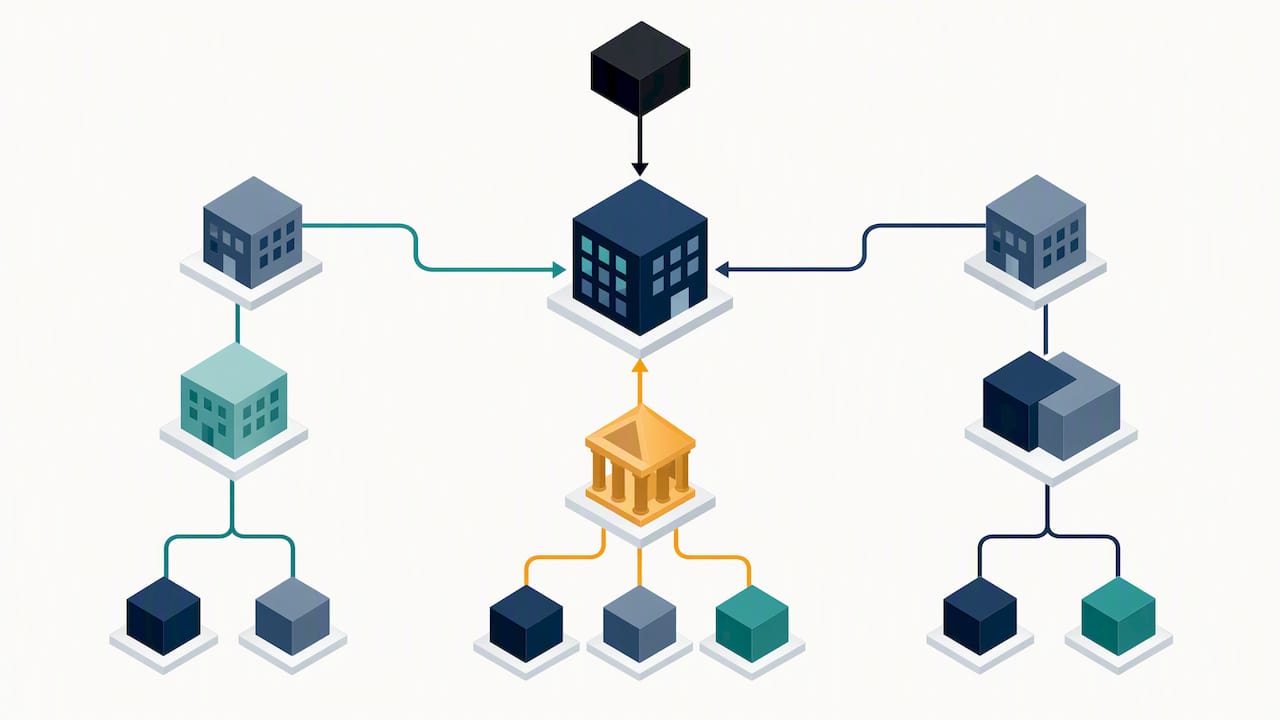
The control test looks past the ownership percentage entirely. An individual with substantial control might be a senior officer, someone with authority to appoint or remove officers or a majority of the board, someone holding veto power over major decisions, or a trustee with the power to direct a trust’s holdings. FinCEN’s own framing treats substance over form as the governing principle: a person who actually makes the decisions is reportable even when the ownership chart makes them look like a minor player.
Watch for a handful of recurring traps:
- Nominee shareholders or directors who hold title but answer to someone else.
- Layered corporate ownership where no single entity crosses 25% but a person controls the layers collectively.
- Voting agreements or proxy arrangements that shift practical control away from the registered owner.
- Trust structures where a trustee, protector, or beneficiary with withdrawal rights may count as a beneficial owner depending on the terms.
Pro Tip: Pull the entity’s operating agreement, voting trust documents, and any side letters before finalizing the beneficial owner list. The capitalization table alone rarely shows who can actually direct the company’s decisions.
Our guide on KYC for complex ownership structures walks through documentary evidence that holds up under both tests.
Building a repeatable compliance process
A BOIR filing goes smoothly when the underlying data collection is treated as a process rather than a one-time scramble.
- Determine reporting status under the current rule, checking both the entity’s formation jurisdiction and the 23 exemption categories.
- Map ownership and control, applying both the 25% test and the substantial control test to every individual connected to the entity.
- Collect identifying documents and ID images for each reportable individual, including date of birth, address, and issuing jurisdiction.
- Verify that IDs are current and that claimed control relationships match the documentary evidence on file.
- Complete the BOIR, filling every required field before submission to avoid a rejected form.
- Certify and file through the e-filing portal, with a named individual taking responsibility for the certification.
- Schedule a periodic review, since ownership changes, new officers, or address updates all trigger an update filing.
Recordkeeping matters as much as the filing itself. Retaining copies of submitted BOIRs, supporting ID images, and the internal control-mapping analysis gives a defensible record if a question arises later, and integrating that recordkeeping with existing KYC and AML files avoids duplicate data collection across departments.
| Step | Primary owner | Typical trigger |
|---|---|---|
| Reporting status determination | Legal or compliance lead | New entity formation or rule change |
| Ownership and control mapping | Compliance team | Initial filing or ownership change |
| ID collection and verification | Operations or compliance staff | New beneficial owner identified |
| Certification and filing | Designated certifying officer | Filing deadline or update trigger |
Smaller teams without in-house capacity often bring in outside counsel or a filing specialist for the control analysis specifically, since misreading substantial control carries more risk than a data-entry error. A third-party filer still needs the underlying documentation handed to them in complete form, so outsourcing the filing step rarely removes the need for internal document collection.
What noncompliance can trigger
Willful failure to file, or filing false information, carries both civil and criminal exposure under the statute, and FinCEN points filers to the statutory text and its own guidance for the precise conditions and amounts rather than a single flat number. Scrutiny tends to surface through routine audits, follow-up information requests tied to an existing filing, or suspicious activity referrals that touch an entity’s ownership records.
The practical mitigation steps are not complicated: file corrections promptly when an error surfaces, keep a documented record of the due diligence behind each beneficial owner determination, and have a clear internal escalation path when a control question is genuinely ambiguous rather than letting it sit unresolved.
Where compliance teams should spend their limited time
The biggest filing risk is not a missed deadline, it’s a wrong beneficial owner list built from a cap table instead of an honest look at who actually controls decisions. Small teams should outsource ID verification and the e-filing mechanics before they outsource the control analysis itself, because that judgment call is where the real liability sits. Banking relationships often shape what documentation is practical to collect in the first place, which is worth remembering before a filing deadline forces the issue.
— Harold
A banking partner for complex ownership documentation
Businesses juggling layered ownership structures, trusts, or multiple reportable individuals often find that the banking relationship itself becomes part of the compliance burden, since banks run their own enhanced due diligence on top of any BOIR already filed. Prominence Bank works with corporate clients on exactly these structures through its corporate banking services, built to accommodate the kind of layered ownership that makes BOI determinations complicated in the first place.

For organizations that need a banking partner able to securely receive ownership documentation, ID images, and control evidence as part of onboarding, Prominence Bank’s business banking services and its Enhanced Due Diligence tiers are built around that exact workflow:
- Secure document handling for ownership structures with multiple beneficial owners or layered entities.
- Enhanced Due Diligence levels scaled to complexity, from standard review to advanced and critical-case handling.
- Dedicated onboarding support once a BOIR filing and internal ownership mapping are already complete.
Review the fee schedule for account opening and due diligence costs, or start a business or corporate account application once your ownership documentation is in order.
Where to verify the current rules
- FinCEN’s BOI reporting page for live updates to scope and deadlines.
- The BOIR Filing Instructions for exact field requirements.
- The Small Entity Compliance Guide for exemption checklists.
- FATF guidance on ownership and control for cross-border context.
This article is general information, not a substitute for advice from a qualified financial advisor. Consult a qualified financial professional about your own circumstances before acting on anything here.
Sources
- Beneficial Ownership Information Reporting
- BOIR Filing Instructions
- BOI Small Entity Compliance Guide
FAQ
What are the beneficial ownership disclosure rules for 2026?
As of the August 2026 update, FinCEN’s rule exempts entities created in the United States from federal BOI reporting, while certain foreign reporting companies remain subject to filing requirements. Readers should check the current FinCEN BOI page directly, since scope has changed more than once and the live guidance reflects the present rule.
Is the UBO declaration mandatory?
It depends entirely on whether the entity still qualifies as a reporting company under the current rule. Entities within scope, which after the 2026 update means mainly certain foreign reporting companies, must file, while entities created domestically are now exempt under FinCEN’s updated guidance.
Is beneficial ownership reporting mandatory?
For entities that remain in scope, yes, the Corporate Transparency Act makes filing a legal requirement with civil and criminal consequences for willful noncompliance. The Small Entity Compliance Guide confirms this obligation applies specifically to entities that have not qualified for an exemption.
What information is required for beneficial ownership?
A BOIR needs the reporting company’s legal name, trade names, U.S. address, formation jurisdiction, and tax ID, plus each beneficial owner’s full legal name, date of birth, address, and an identifying document with its issuing jurisdiction and image. The BOIR Filing Instructions list every required field in detail, including the FinCEN identifier alternative for repeat filers.