
Resumen:
- Offshore investing involves placing capital outside your home country for tax benefits, asset protection, or diversification.
- It includes using exempted companies, offshore mutual funds, private equity structures, and international real estate or metals.
Offshore investing is defined as placing capital into financial vehicles, accounts, or structures located outside your home country to achieve tax optimization, asset protection, or geographic diversification. The most common examples of offshore investment options include exempted companies in tax-neutral jurisdictions, offshore mutual funds, venture capital structures, and international real estate holdings. Jurisdictions like the Cayman Islands, the British Virgin Islands (BVI), and Luxembourg host the majority of these vehicles because they offer legal tax-neutral frameworks that are fully compliant with international AML/KYC standards. Offshore investing is not tax evasion. It is a legal wealth preservation strategy when conducted with full transparency and proper compliance.
1. Examples of offshore investment options: Exempted companies
Exempted companies are the most widely used offshore investment vehicle for high-net-worth individuals, hedge funds, family offices, and institutional investors. The Cayman Islands and BVI are the two dominant jurisdictions for this structure because both offer 0% corporate tax and a legal framework that US and international investors recognize and trust.

Standard offshore exempted companies take 3–15 business days to set up and cost $3,500–$4,500 in professional fees, excluding ongoing maintenance. That speed and cost profile makes them accessible to a broader range of investors than most people assume.
Consejo profesional: Factor in annual maintenance costs before committing to a jurisdiction. Ongoing compliance and annual fees for offshore companies can run several thousand dollars per year, even when the entity is inactive.
Cayman exempted companies suit hedge funds, SPACs, and family offices best. BVI companies work well for simpler holding structures and asset protection. The table below compares the two at a high level.
| Característica | Cayman Exempted Company | BVI Business Company |
|---|---|---|
| Corporate tax rate | 0% | 0% |
| Setup timeline | 3–15 business days | 3–10 business days |
| Professional setup fees | $3,500–$4,500 | $3,500–$4,500 |
| Primary use cases | Hedge funds, SPACs, family offices | Holding companies, asset protection |
| Regulatory reputation | Very high (FATF compliant) | High (FATF compliant) |
| Annual maintenance cost | Several thousand dollars | Several thousand dollars |
2. Offshore mutual funds and managed portfolios
Offshore mutual funds provide diversification and professionally managed access to international markets, making them well suited for medium-risk investors and globally mobile clients. Unlike onshore funds, offshore mutual funds are typically domiciled in jurisdictions like the Cayman Islands, Luxembourg, or Ireland, which means they operate under different tax and regulatory rules than funds registered in the US or UK.
The core appeal is access. A single offshore fund can hold equities, bonds, and alternative assets across multiple countries, reducing concentration risk in any one market. For expats and investors with income in multiple currencies, this structure also simplifies portfolio management.
Key advantages and risks to weigh:
- Diversification: Exposure to global markets through a single managed vehicle
- Professional management: Fund managers with international mandates and expertise
- Tax efficiency: Gains may be deferred or taxed at lower rates depending on your home jurisdiction
- Regulatory variation: Oversight standards differ by jurisdiction; Cayman and Luxembourg funds carry stronger reputations
- Currency risk: Multi-currency exposure can work for or against you depending on exchange rate movements
- Minimum investment thresholds: Many offshore funds require higher minimums than domestic equivalents
- Redemption terms: Some funds impose lock-up periods or quarterly redemption windows
3. Venture capital and private equity structures
Offshore entities are the standard vehicle for structuring venture capital and private equity funds that serve both US and international investors. The most common configuration is the master-feeder fund structure, where a Cayman Islands exempted company acts as the offshore feeder fund and a Delaware limited partnership serves as the onshore feeder.
This structure exists for a specific reason. Offshore feeder funds block Unrelated Business Taxable Income (UBTI) for tax-exempt US investors such as pension funds and university endowments. They also eliminate filing obligations for foreign investors who would otherwise face US tax reporting requirements. The result is a single master fund that pools capital from both investor classes without creating tax complications for either group.
Cayman limited partnerships are equally common in this space. They offer flexible governance terms, no mandatory audit requirements at the fund level, and a legal framework that US counsel and international investors both understand well.
Consejo profesional: When structuring a fund for both US taxable and foreign investors, use a parallel fund structure rather than a single feeder. This gives each investor class a vehicle optimized for its specific tax profile and avoids conflicts in fund governance.
FATCA compliance is non-negotiable for any offshore fund accepting US investors. Proper FATCA registration and reporting must be built into the fund structure from day one, not added later.
4. Offshore real estate and precious metals
Offshore real estate and precious metals held abroad provide liquidity and diversification benefits that purely financial instruments cannot replicate. Both asset classes are frequently integrated within offshore trusts or holding companies to add a layer of privacy and simplify succession planning.
Direct offshore real estate ownership gives you exposure to property markets with different growth cycles than your home country. Markets in Southeast Asia, the Caribbean, and parts of Europe have historically moved independently of US or UK property cycles, which reduces overall portfolio correlation.
Precious metals stored in offshore vaults in jurisdictions like Singapore or Switzerland offer a different kind of protection. They hold intrinsic value independent of any single currency or government, making them a reliable hedge against inflation and currency devaluation.
Key considerations before investing in either category:
- Legal title: Confirm how ownership is recorded and enforced in the target jurisdiction
- Holding structure: Use an offshore trust or exempted company to simplify estate transfer and protect privacy
- Storage and insurance costs: Offshore vault fees and insurance for precious metals are ongoing expenses
- Liquidity timeline: Real estate is illiquid; precious metals can be liquidated faster but still require established custodians
- Repatriation rules: Some jurisdictions restrict how and when proceeds can be moved out of the country
- Tax treatment at home: Your home country may tax gains on offshore real estate or metals regardless of where they are held
Offshore trusts are particularly effective for holding real estate across multiple jurisdictions because they centralize ownership and control under a single legal structure.
5. Comparison of offshore investment types
The right offshore investment vehicle depends on your liquidity needs, risk tolerance, setup budget, and long-term goals. The table below compares the major categories across the dimensions that matter most to high-net-worth investors.
| Investment type | Liquidez | Setup cost | Tax efficiency | Regulatory complexity | Mejor traje para |
|---|---|---|---|---|---|
| Exempted company | Mediana | $3,500–$4,500 | Muy alto | Mediana | Holding assets, funds, SPACs |
| Offshore mutual fund | Medio a alto | Low (subscription) | Alto | Mediana | Diversified portfolios, expats |
| VC/PE offshore fund | Baja | Alto | Muy alto | Alto | Institutional and accredited investors |
| Offshore real estate | Baja | Variable | Medio a alto | Medio a alto | Long-term wealth preservation |
| Precious metals | Medio a alto | Bajo a medio | Mediana | Baja | Inflation hedging, privacy |
Ongoing compliance and professional advice are not optional extras. They are the difference between a structure that survives tax authority scrutiny and one that creates liability. Budget for annual legal, accounting, and banking fees from the start.
Offshore investment setups are increasingly adopted by global entrepreneurs and expats managing tax liabilities and estate planning, not only by the ultra-wealthy. The barrier to entry is lower than most investors expect, but the cost of poor setup is high.
Escapadas clave
The most effective offshore investment strategy combines a tax-neutral corporate structure, a compliant banking relationship, and ongoing professional oversight to protect and grow wealth across borders.
| Punto | Detalles |
|---|---|
| Exempted companies lead | Cayman and BVI exempted companies are the most used offshore vehicles, with setup costs of $3,500–$4,500. |
| El cumplimiento no es negociable | Annual maintenance fees and legal obligations apply even to inactive offshore entities. |
| Structure matches investor profile | VC/PE funds suit institutional investors; mutual funds suit medium-risk and expat investors. |
| Tangible assets add diversification | Offshore real estate and precious metals reduce correlation to financial markets and support estate planning. |
| Banking relationships matter | The quality of your offshore banking setup often determines whether your structure holds up under scrutiny. |
What I’ve learned about picking offshore investments that actually hold up
Most investors focus on the wrong variable when choosing an offshore structure. They spend weeks comparing jurisdictions and almost no time evaluating the quality of their banking and professional relationships. That is a mistake I have seen repeated across every investor profile, from family offices to solo entrepreneurs.
The Cayman Islands and BVI are both excellent jurisdictions. The difference between a structure that works and one that creates problems rarely comes down to which island you chose. It comes down to whether your bank, your lawyer, and your accountant are genuinely experienced with cross-border compliance. A well-run BVI company with a strong banking relationship will outperform a poorly managed Cayman structure every time.
The second mistake is treating offshore investing as a one-time setup. Foreign investment strategies require active management. Tax laws change. Reporting requirements evolve. FATCA and the Common Reporting Standard (CRS) have fundamentally changed what “offshore” means in practice. Investors who set up a structure in 2015 and never revisited it are often sitting on compliance problems they do not know about yet.
My practical advice: start with one core structure, get it right, and build from there. A single exempted company with a proper multi-currency account and clean annual filings is worth more than three loosely managed vehicles spread across different jurisdictions.
- Harold
Prominencebank: Banking built for offshore investors
High-net-worth investors managing offshore structures need a banking partner that understands the complexity of international corporate accounts, not one that treats them as edge cases.
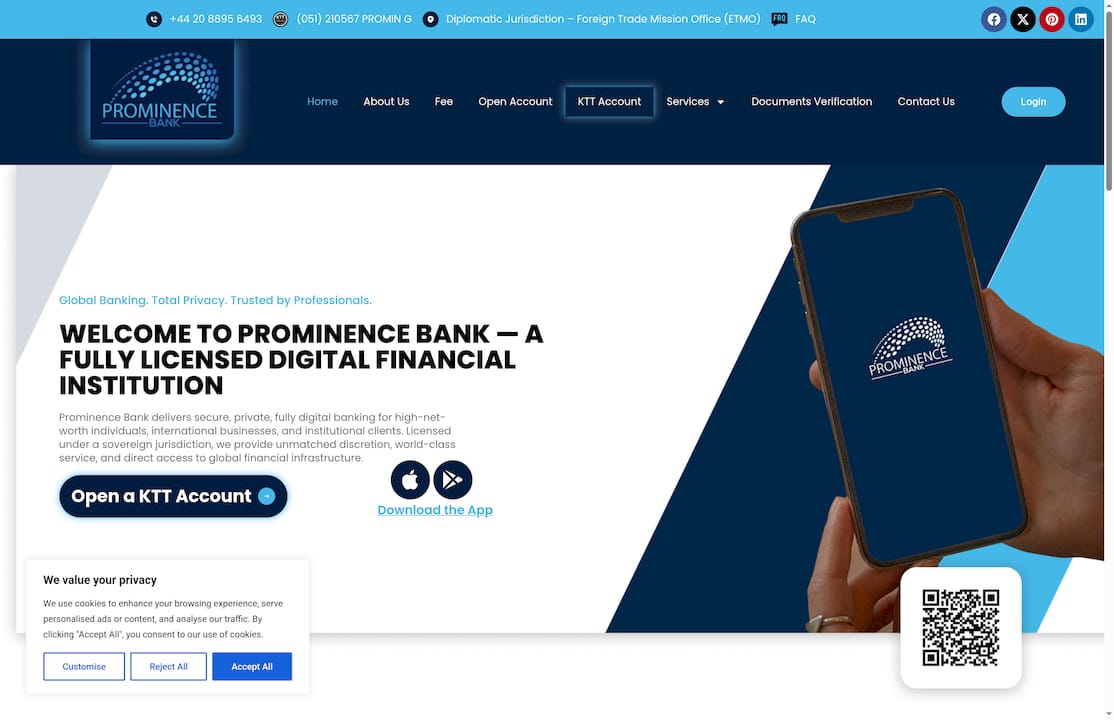
Prominencebank is a fully licensed digital banking institution operating under the sovereignty of the Extraterritorial Trade Mission Office (ETMO). The bank specializes in banca global multicurrencia for international corporations, exempted companies, and institutional investors. Multi-currency accounts at Prominencebank support the kind of cross-border transfers and treasury operations that offshore investment structures require. Prominencebank also offers Soluciones bancarias corporativas tailored to complex offshore structures, with full AML/KYC compliance and direct access to global financial infrastructure. Contact Prominencebank’s specialists to discuss account setup for your offshore entity.
FAQ
What are the most common examples of offshore investment options?
The most common offshore investment vehicles are exempted companies in tax-neutral jurisdictions like the Cayman Islands and BVI, offshore mutual funds, master-feeder private equity structures, offshore real estate holdings, and precious metals held in international vaults.
Is offshore investing legal for US investors?
Offshore investing is fully legal for US investors when conducted with proper disclosure, FATCA compliance, and accurate reporting to the IRS. The legal issue arises only when investors fail to report offshore accounts or income.
How much does it cost to set up an offshore investment structure?
Standard offshore exempted companies cost $3,500–$4,500 in professional setup fees and take 3–15 business days to incorporate, with additional annual maintenance costs running several thousand dollars per year.
What is a master-feeder fund structure?
A master-feeder fund uses an offshore feeder entity, typically a Cayman exempted company, to pool capital from foreign and tax-exempt investors into a single master fund. This structure blocks UBTI and eliminates US filing obligations for non-US investors.
Which offshore jurisdiction is best for a family office?
The Cayman Islands is the preferred jurisdiction for family offices because of its 0% corporate tax rate, strong legal framework, and established reputation with institutional counterparties and international regulators.