
Resumen:
- High-net-worth individuals need a coordinated strategy to grow, protect, and transfer wealth across multiple asset classes and legal structures.
- Replacing the 60/40 portfolio with a 40/30/30 model improves diversification by emphasizing private markets, real estate, private credit, and global assets.
Asset management for high-net-worth individuals is defined as the coordinated strategy of growing, protecting, and transferring wealth across multiple asset classes, tax structures, and legal frameworks simultaneously. Unlike standard portfolio management, this discipline requires integrating private markets, tax efficiency, estate planning, and liquidity management into a single, coherent plan. The traditional 60/40 portfolio no longer serves the complexity of modern HNW wealth. This guide delivers the core frameworks, practical steps, and expert insights you need to build a portfolio that performs across market cycles and generations.
What is the best asset management guide for high-net-worth individuals?
The most effective approach to portfolio management for high earners replaces the outdated 60/40 model with a structure built for complexity. The 40/30/30 allocation model assigns 40% to public equities, 30% to fixed income, and 30% to alternative assets. That shift reflects the reality that alternatives provide returns and risk profiles that public markets simply cannot replicate.

Alternative assets worth including are real estate, private credit, infrastructure, and collectibles. Each behaves differently from public equities during market stress. Real estate generates income and appreciates over time. Private credit offers floating-rate returns that hold up when interest rates rise. Infrastructure assets, like toll roads and energy grids, produce stable, inflation-linked cash flows.
Global diversification matters just as much as asset class diversification. Concentrating wealth in a single country exposes you to political risk, currency risk, and regulatory risk all at once. Spreading across North American, European, and Asian markets reduces that exposure without sacrificing return potential.
How to rebalance when you hold illiquid assets
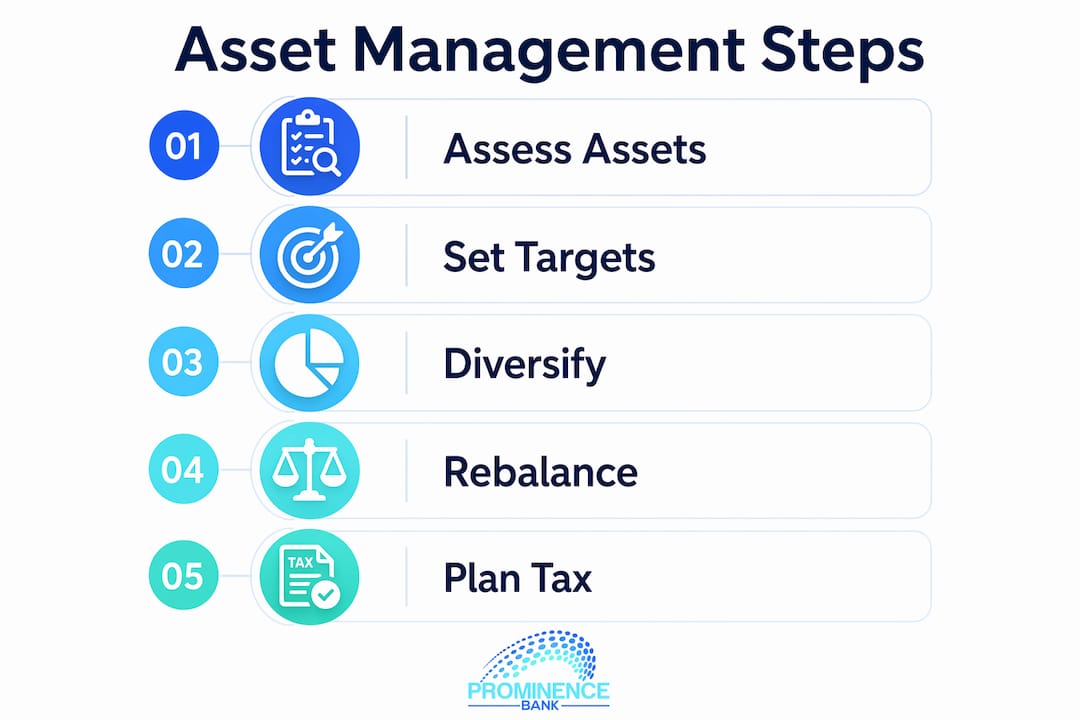
Rebalancing a portfolio that includes private equity or real estate is not as simple as selling a mutual fund. You cannot liquidate a private equity position on demand. The practical solution is to rebalance through new capital deployment. When you receive distributions from maturing private funds, redirect that capital toward underweight asset classes rather than reinvesting in the same category.
Consejo profesional: Set target ranges rather than fixed percentages for each asset class. A range of 28%–32% for alternatives, for example, gives you room to absorb illiquidity without triggering forced rebalancing at the wrong time.
How should high-net-worth individuals manage liquidity in private markets?
Liquidity management is the most underestimated skill in HNW investing. Private equity and venture capital follow a 6–12 year J-curve, where capital calls are heaviest in years 1–4 and meaningful returns only arrive in years 6–12. If you commit too much capital to illiquid funds without adequate reserves, you face a serious problem when a capital call arrives during a market downturn.
The practical rule is to hold liquid reserves sufficient to cover at least two years of living expenses, planned capital calls, and opportunistic investments. That buffer prevents forced asset sales at the worst possible time. Stress testing your portfolio against scenarios like a 30% equity drawdown, a credit freeze, or a spike in inflation reveals exactly where your liquidity breaks down.
Scenario-based stress testing enhances portfolio resilience more reliably than relying on macroeconomic forecasts alone. Simulating inflation shocks, recessions, and geopolitical disruptions gives you a clearer picture of real risk than any single economic model can provide. Portfolio stress testing is not optional for UHNW investors. It is the foundation of disciplined risk management.
Key liquidity practices for HNW portfolios:
- Maintain a dedicated liquidity reserve in short-duration bonds or money market instruments, separate from your investment portfolio.
- Stage private market commitments across multiple vintage years to smooth out capital call timing.
- Track your total unfunded commitments across all private funds and compare them against your liquid assets quarterly.
- Avoid concentrating more than 30% of total portfolio value in any single illiquid position.
What are the critical tax and estate planning strategies for HNW individuals?
Gestión eficaz de la riqueza integrates three pillars: grow, protect, and transfer. Managing these elements in isolation creates gaps that cost you significantly over time. A tax strategy that ignores estate planning, or an investment plan that ignores tax location, leaves money on the table every year.
The core tax strategies for HNW investors work as follows:
- Tax location: Place tax-inefficient assets, such as high-yield bonds and REITs, inside tax-advantaged accounts. Hold tax-efficient assets, like index funds and municipal bonds, in taxable accounts. This single adjustment can meaningfully reduce your annual tax bill without changing your overall allocation.
- Tax-loss harvesting at scale: Harvesting losses systematically can save hundreds of thousands in federal taxes annually for UHNW investors. The key is doing it across multiple accounts and asset classes simultaneously, not just within a single brokerage account.
- Irrevocable trusts: Placing appreciating assets into irrevocable trusts removes future growth from your taxable estate. Spousal Lifetime Access Trusts (SLATs) and Grantor Retained Annuity Trusts (GRATs) are two structures worth discussing with your estate attorney.
- Domestic Asset Protection Trusts (DAPTs): These trusts shield assets from creditors while keeping them accessible to you under specific conditions. Not all states permit DAPTs, so jurisdiction selection matters.
- Charitable giving timing: Bunching charitable contributions into a donor-advised fund in a high-income year maximizes your deduction. Donating appreciated securities directly to charity avoids capital gains tax entirely.
Consejo profesional: Coordinate the timing of gain realization with your charitable giving. Realizing a large capital gain in the same year you make a major charitable contribution can offset a substantial portion of the tax liability.
Offshore trusts add another layer of protection and planning flexibility for families with international assets or cross-border beneficiaries.
How can HNW individuals manage luxury and alternative assets effectively?
Luxury assets, including art, yachts, and trophy real estate, require a fundamentally different management approach than financial securities. Managing these assets demands risk, liquidity, and tax planning integrated within the overall portfolio. Treating a yacht or a private art collection as a lifestyle expense rather than a portfolio position is a costly mistake.
Key considerations for luxury asset management:
- Ownership structuring: Hold luxury assets inside an LLC or a dedicated holding company. This separates personal liability from asset liability and creates privacy around ownership.
- Insurance: Standard homeowner or marine policies are inadequate for high-value assets. Specialized insurers provide agreed-value coverage that reflects true market value rather than depreciated replacement cost.
- Optimización fiscal: Yacht tax strategies include charter income arrangements that can convert personal use expenses into deductible business costs under specific IRS rules. Art donations to museums or donor-advised funds can generate significant deductions when timed correctly.
- Maintenance reserves: Luxury assets depreciate without active maintenance. Budget a dedicated reserve, separate from your investment portfolio, to cover ongoing costs without disrupting your financial plan.
Servicios de oficina familiar centralize governance across financial assets and luxury holdings, providing coordinated reporting and integrated advisor collaboration that individual managers cannot replicate.
What are the most common pitfalls in HNW asset management?
The most damaging mistakes in HNW asset management share a common root: fragmentation. When your tax advisor, estate attorney, and investment manager operate independently, each optimizes for their own domain and nobody optimizes for the whole.
Common pitfalls to avoid:
- Isolated financial management: Separation of tax, estate, and investment planning creates inefficiencies that compound over years. A unified advisory team that meets regularly and shares information prevents this.
- Overcommitting to illiquid investments: Co-investments in private equity reduce fees and increase control, but they also increase concentration risk. Size each illiquid commitment relative to your total liquid assets, not your total portfolio value.
- Misunderstanding fee structures: Private market funds charge management fees on committed capital, not just deployed capital. A 2% management fee on a $10 million commitment costs $200,000 per year even before a single dollar is invested.
- Ignoring assumption bias in risk models: Most risk models use historical correlations that break down during crises. Scenario-based testing, not correlation-based models alone, gives you a realistic picture of downside risk.
Consejo profesional: Simplicity is a feature, not a compromise. A portfolio with 8 well-chosen positions across distinct asset classes outperforms a portfolio with 40 overlapping funds that charge compounding fees.
Puntos clave
Effective HNW asset management requires integrating growth, protection, and transfer strategies into a single coordinated plan, not managing each element in isolation.
| Punto | Detalles |
|---|---|
| Adopt the 40/30/30 model | Allocate 40% to equities, 30% to fixed income, and 30% to alternatives for better diversification. |
| Manage liquidity actively | Hold reserves covering two years of expenses and capital calls to avoid forced sales in downturns. |
| Integrate tax and estate planning | Coordinate tax location, loss harvesting, and trust structures with your investment decisions annually. |
| Structure luxury assets properly | Hold art, yachts, and real estate inside LLCs with specialized insurance and dedicated maintenance reserves. |
| Avoid fragmented advisory teams | A unified team sharing information across tax, legal, and investment domains prevents costly planning gaps. |
Why I think most HNW investors are solving the wrong problem
After years of working with affluent clients, the pattern I see most often is this: investors spend enormous energy optimizing their investment returns while leaving their tax and estate structures largely untouched. A 1% improvement in annual returns gets celebrated. A 1% reduction in estate taxes on a $50 million portfolio saves $500,000 in a single transaction. The math is obvious, but the attention rarely follows.
The other thing I have found is that complexity is often sold as sophistication. A portfolio with 15 private fund commitments, 3 hedge funds, and a dozen direct co-investments is not sophisticated. It is unmanageable. The families I have seen build and sustain multi-generational wealth tend to hold fewer, larger positions with clear governance frameworks around each one.
The best wealth management advice I can offer is this: review your entire financial picture, across investments, taxes, estate documents, and insurance, at least once per year with every advisor in the room at the same time. That single meeting will surface more value than any individual optimization ever could. The private banking strategies that work long-term are built on coordination, not complexity.
- Harold
How Prominencebank supports sophisticated HNW asset management
Prominencebank offers fully licensed digital banking built for the complexity of HNW financial structures. Its Cuenta multicurrencia solutions let you hold, convert, and deploy capital across currencies without the friction of correspondent banking delays, which matters when you are managing global equity positions, private fund capital calls, and cross-border real estate simultaneously.
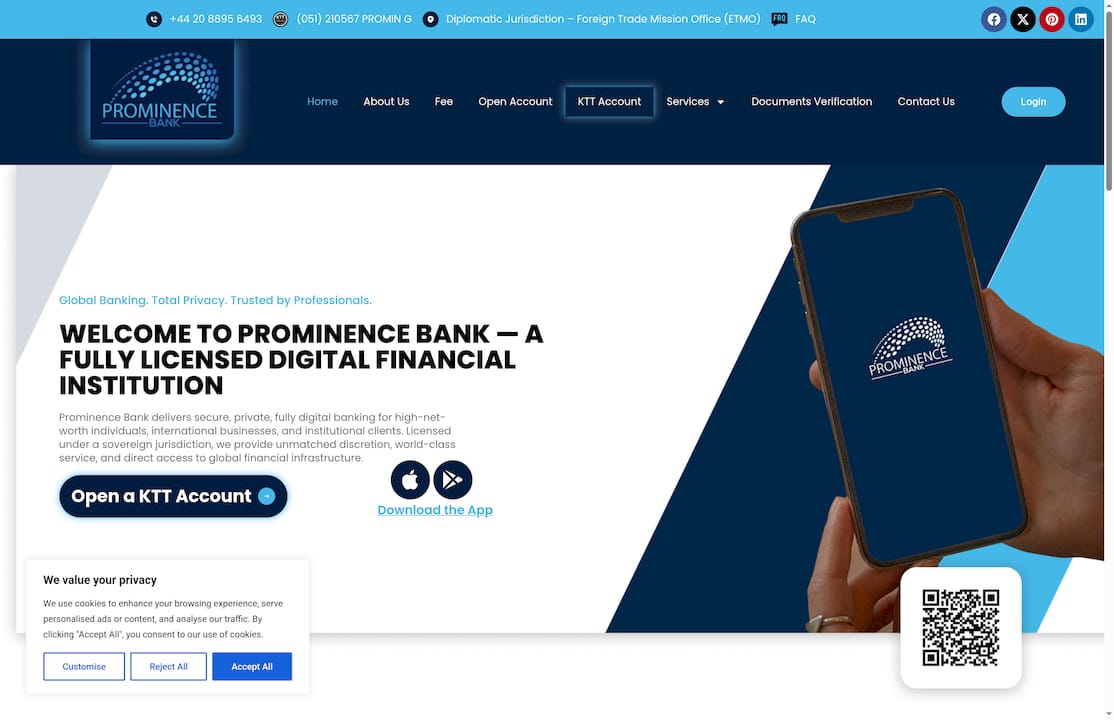
For clients who operate through corporate structures, Prominencebank’s Soluciones bancarias corporativas support holding companies, family office entities, and investment vehicles with the discretion and compliance infrastructure that international asset management requires. Operating under ETMO sovereignty with full AML/KYC compliance, Prominencebank gives HNW clients direct access to global financial infrastructure without sacrificing privacy or control.
FAQ
What is the 40/30/30 portfolio model?
The 40/30/30 model allocates 40% to public equities, 30% to fixed income, and 30% to alternative assets. It replaces the traditional 60/40 portfolio to provide better diversification and access to private market returns.
How much liquidity should a high-net-worth investor maintain?
HNW investors should hold liquid reserves covering at least two years of living expenses plus all anticipated private fund capital calls. This buffer prevents forced asset sales during market downturns.
What is tax-loss harvesting and why does it matter at scale?
Tax-loss harvesting is the practice of selling positions at a loss to offset capital gains and reduce taxable income. For UHNW investors, systematic harvesting across multiple accounts and asset classes can save hundreds of thousands in federal taxes annually.
What is a Domestic Asset Protection Trust?
A Domestic Asset Protection Trust (DAPT) is a legal structure that shields assets from creditors while allowing the grantor to remain a discretionary beneficiary. Not all states permit DAPTs, so jurisdiction selection is critical.
How do co-investments reduce fees in private equity?
Direct co-investments allow investors to participate in private equity deals alongside a fund without paying the standard management fee and carried interest on that capital. This fee reduction compounds significantly over a 6–12 year investment cycle.