
TL;DR:
- Offshore asset protection techniques use foreign trusts, corporate entities, and bank accounts to shield wealth from creditors. Proper timing and compliance with international standards are crucial for these structures to remain effective against legal claims.
Offshore asset protection techniques are legal strategies that use foreign trusts, corporate entities, and international bank accounts to shield wealth from creditors and legal claims. The industry term for this practice is “offshore asset protection planning,” and it draws on structures like Cook Islands trusts, international business companies (IBCs), and multi-currency accounts governed by FATF Recommendation 24 and the OECD Common Reporting Standard (CRS). These tools work best when built before any legal threat appears. The biggest mistake high-net-worth individuals make is treating offshore planning as a reaction to litigation rather than a foundation for long-term wealth preservation.
1. What are offshore asset protection techniques and how do they work?
Offshore asset protection techniques place assets under the legal control of foreign entities, making them harder for domestic creditors to reach. The core tools are offshore trusts, offshore corporations, and foreign bank accounts. Each layer adds a separate legal barrier between you and a potential judgment creditor. Used together, they create a coordinated defense that no single domestic remedy can easily dismantle.

The strength of any offshore structure depends on two factors: timing and compliance. Assets transferred years before a legal claim arises carry far less fraudulent transfer risk than assets moved after a lawsuit is filed. Compliance with international reporting standards, including CRS automatic exchange rules, is not optional. It is the foundation that keeps the entire structure standing under regulatory scrutiny.
2. How do offshore trusts protect assets against creditor claims?
An offshore asset protection trust transfers legal title of your assets to a foreign trustee, removing them from your direct ownership. The most recognized jurisdiction for this structure is the Cook Islands, where local trust law requires creditors to file fraudulent transfer claims within 1–2 years and prove fraud beyond a reasonable doubt. That burden of proof is significantly higher than U.S. civil standards. Most creditors cannot meet it, which is precisely why Cook Islands trusts remain the benchmark for offshore trust protection.
Timing is the single most important variable in trust planning. Funding a trust during active litigation carries a heavier evidentiary burden, increases court scrutiny, and weakens the structure’s effectiveness. Each transfer to a Cook Islands trust triggers its own independent statute of limitations clock, so staggered funding over time can be both a strength and a vulnerability depending on when claims arise.
Key structural considerations for offshore trusts:
- Trustee independence: The trustee must hold genuine control. Courts look for real separation between the settlor and day-to-day administration.
- Settlor control limits: Retaining too much indirect control can negate the “impossibility defense,” which is the argument that you cannot repatriate assets because you do not control them.
- Documentation: Trust deeds, funding records, and solvency affidavits must be current and complete.
- Jurisdiction selection: Cook Islands, Nevis, and Belize each offer different statutory protections and limitation periods.
Pro Tip: Fund your offshore trust well before any legal dispute arises and maintain a contemporaneous paper trail for every transfer. Courts and regulators treat documentation gaps as evidence of intent to defraud.
3. How do offshore corporate structures supplement asset protection?
Offshore corporate structures like LLCs, IBCs, and holding companies separate personal liability from asset ownership. This separation means a judgment against you personally does not automatically reach assets held inside a properly structured foreign entity. The corporate veil, when maintained correctly, is a durable shield.
The most effective corporate structures combine a holding company in a low-tax jurisdiction with operating subsidiaries in the jurisdictions where business actually occurs. This distributes risk across multiple legal entities and makes it harder for a single creditor to attach all assets at once. Jurisdiction selection matters enormously. Favorable regulatory environments, banking access, and treaty networks all affect how well a structure performs under pressure.
Corporate structure essentials:
- IBCs (International Business Companies): Widely used in the British Virgin Islands and Belize for holding investment assets and intellectual property.
- Offshore LLCs: Popular in Nevis and the Marshall Islands for charging order protection, which limits creditor remedies to distributions rather than ownership seizure.
- Holding companies: Sit above operating entities to consolidate ownership while insulating personal wealth from business liabilities.
- Compliance documentation: Articles of incorporation, shareholder registers, and beneficial ownership records must be current to survive due diligence.
Pairing corporate structures with a family limited partnership adds another layer of protection, particularly for estate planning and intergenerational wealth transfer. The combination of an FLP and an offshore holding company is one of the more resilient configurations available to high-net-worth families.
4. What roles do offshore banking and custody accounts play in preserving wealth?
Offshore bank accounts and custody accounts are the operational layer of any international asset protection plan. They hold the liquid assets, execute transactions, and provide the financial infrastructure that makes the entire structure functional. Without a compliant, well-documented banking relationship, even the best trust or corporate structure cannot function effectively.
FATF Recommendation 24 requires financial institutions to verify beneficial ownership, source of funds, and the purpose of accounts, with ongoing monitoring for higher-risk relationships. This is not a one-time check. Banks conduct periodic reviews, and accounts with unexplained activity or incomplete documentation face freezes or closure. The CRS automatic exchange of financial account information between participating jurisdictions means that account secrecy, as a standalone strategy, is effectively obsolete.
Offshore banking and custody account priorities:
- Beneficial ownership documentation: Provide complete, current records linking every account to its ultimate owner.
- Source-of-funds evidence: Tax returns, audited financials, and professional letters establish legitimate wealth origins.
- Custody accounts: Hold investment assets like securities and bonds under the legal umbrella of the offshore structure, adding a layer of separation from personal ownership.
- Sanctions screening: Ensure all counterparties and jurisdictions are clear of OFAC and EU sanctions lists before opening accounts.
Pro Tip: Review your offshore custody accounts annually and update beneficial ownership records whenever the underlying corporate or trust structure changes. Stale documentation is one of the most common reasons banks terminate offshore relationships.
5. What are the risks and limitations of offshore asset protection strategies?
Offshore structures are not bulletproof. The most significant threat comes from U.S. bankruptcy law. Under Bankruptcy Code § 548(e), a bankruptcy trustee can unwind transfers to self-settled trusts made within 10 years of a bankruptcy filing. The proof standard under federal law is lower than in Cook Islands courts, which means protections that hold in foreign litigation can collapse in a U.S. bankruptcy proceeding.
Involuntary bankruptcy is a specific risk that offshore planners often underestimate. A creditor can file an involuntary bankruptcy petition against you, pulling your offshore assets into a federal proceeding. Creditor numerosity planning, which means ensuring you have more than a dozen qualifying creditors, raises procedural barriers against such petitions. This strategy deters single-creditor involuntary filings and preserves the offshore structure’s protections outside bankruptcy court.
Critical risks to manage:
- Self-settled trust vulnerability: U.S. courts treat trusts where the settlor is also a beneficiary as reachable under § 548(e).
- Settlor control: Retaining indirect control over trust assets risks courts compelling repatriation and imposing contempt sanctions.
- Last-minute transfers: Moving assets after a claim arises is the fastest way to lose both the assets and credibility with the court.
- Voluntary bankruptcy: Filing for bankruptcy yourself eliminates offshore protections and hands a trustee broad powers to recover transferred assets.
6. How to build documentation and timing strategies that hold up under scrutiny
Documentation is the difference between an offshore structure that survives legal challenge and one that collapses under the first subpoena. Regulators and banks favor transparent, consistent records over secrecy. Every transfer, every entity, and every account must connect to a coherent, explainable narrative backed by paper.
Timing transfers correctly is equally critical. Assets moved years before any legal dispute arise with a clean record. Assets moved during or after a dispute carry the taint of fraudulent intent, regardless of the offshore jurisdiction’s local rules. Affidavits of solvency, signed at the time of each transfer, document that you were not insolvent when the transfer occurred. These affidavits are among the most effective tools for defeating fraudulent transfer claims.
A unified compliance profile across all offshore entities is the standard that modern bank due diligence expects. This means your trust records, corporate filings, bank account documentation, and tax reporting all tell the same story. Gaps or contradictions between these records are red flags that trigger enhanced scrutiny.
Documentation best practices:
- Affidavits of solvency: Execute one at every major funding event, signed by a licensed professional.
- Source-of-wealth letters: Obtain these from your accountant or attorney and update them annually.
- Continuous funding: Avoid long gaps in trust funding, which can reset limitation periods or signal abandonment.
- Tax reporting compliance: File all required foreign account disclosures, including FBAR and Form 8938, without exception.
Pro Tip: Treat your offshore compliance file the same way you treat your tax records. Keep it current, organized, and accessible. The moment you need it in a legal proceeding, you will not have time to reconstruct it.
For business owners, integrating tax planning strategies with your offshore documentation framework creates a consistent record that satisfies both tax authorities and bank compliance teams simultaneously.
Key Takeaways
The most effective offshore asset protection strategy combines early trust funding, compliant corporate structures, and fully documented banking relationships built long before any legal threat appears.
| Point | Details |
|---|---|
| Fund trusts early | Transfer assets before any legal claim arises to maximize Cook Islands statute of limitations protection. |
| Maintain trustee independence | True separation between settlor and trustee control is required to sustain impossibility defenses in court. |
| Document everything | Affidavits of solvency, source-of-funds records, and tax filings must be current and consistent across all entities. |
| Understand bankruptcy limits | Bankruptcy Code § 548(e) gives trustees a 10-year window to unwind self-settled trust transfers under U.S. law. |
| Secrecy is not a strategy | CRS automatic exchange eliminates account secrecy; compliance and legitimate purpose are the only durable defenses. |
What I’ve learned about offshore protection that most advisors won’t tell you
The clients who come to me after a lawsuit has been filed are the hardest cases. Not because offshore structures cannot help them, but because the window for clean, defensible planning has already closed. The legal community talks endlessly about which jurisdiction has the best trust statute. The real conversation should be about when you funded the structure and whether your documentation tells a coherent story.
Secrecy used to be the selling point for offshore planning. CRS ended that. Every major financial center now exchanges account information automatically, and banks conduct beneficial ownership reviews that would have seemed intrusive a decade ago. The clients who thrive in this environment are not the ones hiding assets. They are the ones who built structures with legitimate business purposes, documented every step, and filed every required disclosure on time.
The other thing advisors underemphasize is the bankruptcy risk. Offshore trusts are genuinely powerful against civil creditors. Against a bankruptcy trustee armed with § 548(e) and a 10-year lookback, they are far more vulnerable. Creditor numerosity planning is one of the most underused tools in this space. Keeping your creditor base diverse and numerous is not glamorous advice, but it is often more valuable than the trust structure itself.
My honest recommendation: start planning five years before you think you need it. The best offshore protection is the kind that was never tested in court because it was built correctly from the beginning.
— Harold
Prominencebank supports your offshore asset protection plan
Offshore asset protection planning requires a banking partner that understands the compliance demands of international structures. Prominencebank offers multi-currency accounts designed for high-net-worth individuals and businesses managing assets across multiple jurisdictions, with full AML/KYC compliance built into every account relationship.
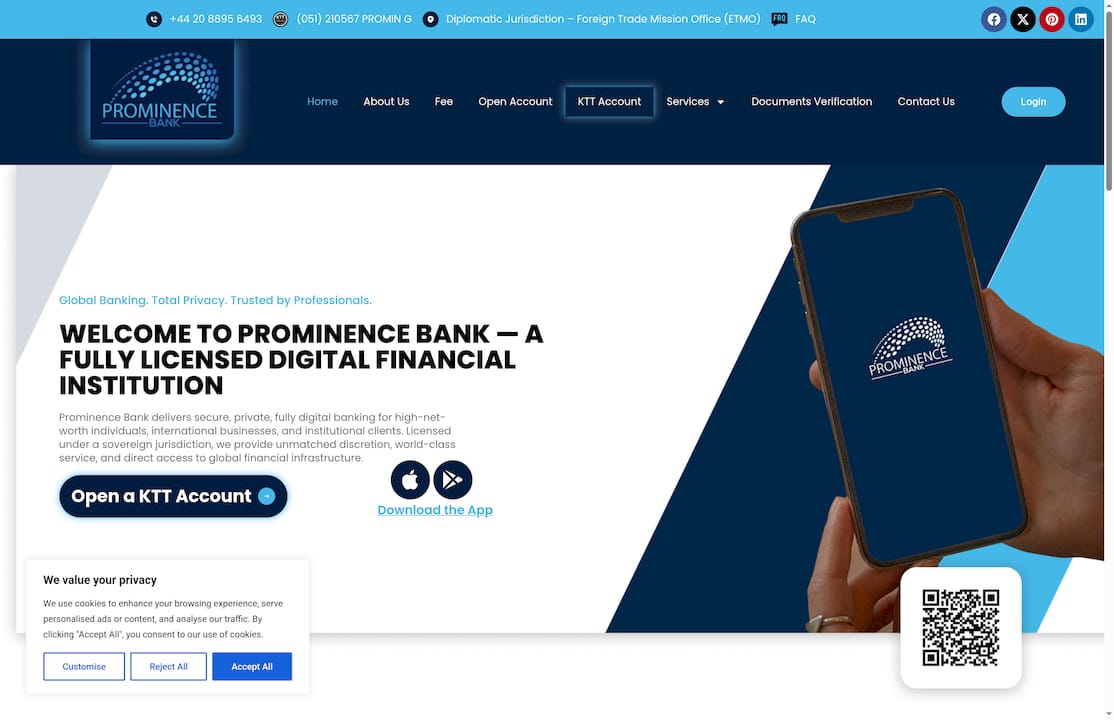
For businesses operating through offshore corporate structures, Prominencebank’s corporate banking solutions provide the account infrastructure needed to separate ownership, manage liquidity, and maintain the documentation trails that regulators and courts expect. Every account relationship is supported by direct access to global financial infrastructure, making Prominencebank a practical fit for clients who need banking that keeps pace with their offshore planning.
财务问题
What is the strongest offshore asset protection trust jurisdiction?
The Cook Islands is widely recognized as the strongest jurisdiction for offshore asset protection trusts. Creditors must prove fraud beyond a reasonable doubt and file within 1–2 years under local law.
Does offshore asset protection work against bankruptcy?
Offshore trusts provide limited protection in U.S. bankruptcy proceedings. Bankruptcy Code § 548(e) allows trustees to unwind transfers to self-settled trusts made within 10 years of filing.
Is offshore asset protection legal?
Offshore asset protection is legal when structures are properly disclosed, taxes are reported, and transfers are made with legitimate intent before any creditor claim arises.
How does CRS affect offshore account privacy?
The OECD Common Reporting Standard requires financial institutions to report account data annually to participating jurisdictions. This eliminates account secrecy as a viable strategy and makes compliance the only durable approach.
How much control can I keep over an offshore trust?
Retaining significant indirect control over an offshore trust risks courts compelling asset repatriation and imposing contempt sanctions. Genuine trustee independence is required for the structure to hold up under legal challenge.