
Resumen:
- Digital identity in banking confirms customer identity through verified credentials, biometric data, and behavioral information.
- It enables faster onboarding, reduces fraud, and ensures compliance with regulations like eIDAS 2.0 and AML.
Digital identity in banking is the electronic verification and management of customer identities across every touchpoint, from account opening to high-value transactions. The role of digital identity in banking has expanded well beyond a compliance checkbox. It now drives faster onboarding, stronger fraud prevention, and measurable gains in customer trust. Frameworks like eIDAS 2.0 and AML regulations are accelerating this shift, pushing financial institutions to replace manual document checks with wallet-mediated verification. For banking and finance professionals, understanding how digital identity works and where it is heading is no longer optional.
What is the role of digital identity in banking?
Digital identity in banking refers to the full set of electronic credentials, biometric data, and verified attributes that confirm who a customer is. The industry term for this process is digital identity verification, which encompasses Know Your Customer (KYC) checks, strong customer authentication (SCA), and ongoing transaction monitoring. These are not separate functions. They form a single, continuous identity layer that runs beneath every customer interaction.

The operational case is clear. Onboarding times drop by up to 90% when banks implement digital identity solutions like European Digital Identity (EUDI) wallets. That reduction translates directly into lower abandonment rates and reduced cost per acquired customer. Early adopters also report 40–60% reductions in account opening abandonment, which is a metric that directly affects revenue.

The compliance dimension reinforces the operational one. Certified Digital Verification Services in the UK help banks satisfy obligations under Regulation 28 of the Money Laundering Regulations. Widespread adoption of these services could generate up to £701 million in annual benefits for the UK economy by cutting the cost of manual compliance processes. That figure signals how much inefficiency still exists in traditional document-based verification.
How does digital identity improve customer onboarding?
Onboarding is where digital identity delivers its most visible impact. Traditional bank onboarding requires customers to submit physical documents, wait for manual review, and often repeat the process across multiple institutions. Digital identity wallets eliminate most of that friction by allowing customers to present pre-verified credentials in seconds.
The EUDI wallet model takes this further by making credentials reusable across institutions and borders. A customer verified once by a trusted issuer can reuse that credential at any accepting bank, without repeating the full KYC process. This cross-border reusability is particularly valuable for international businesses and high-net-worth clients who maintain accounts across multiple jurisdictions.
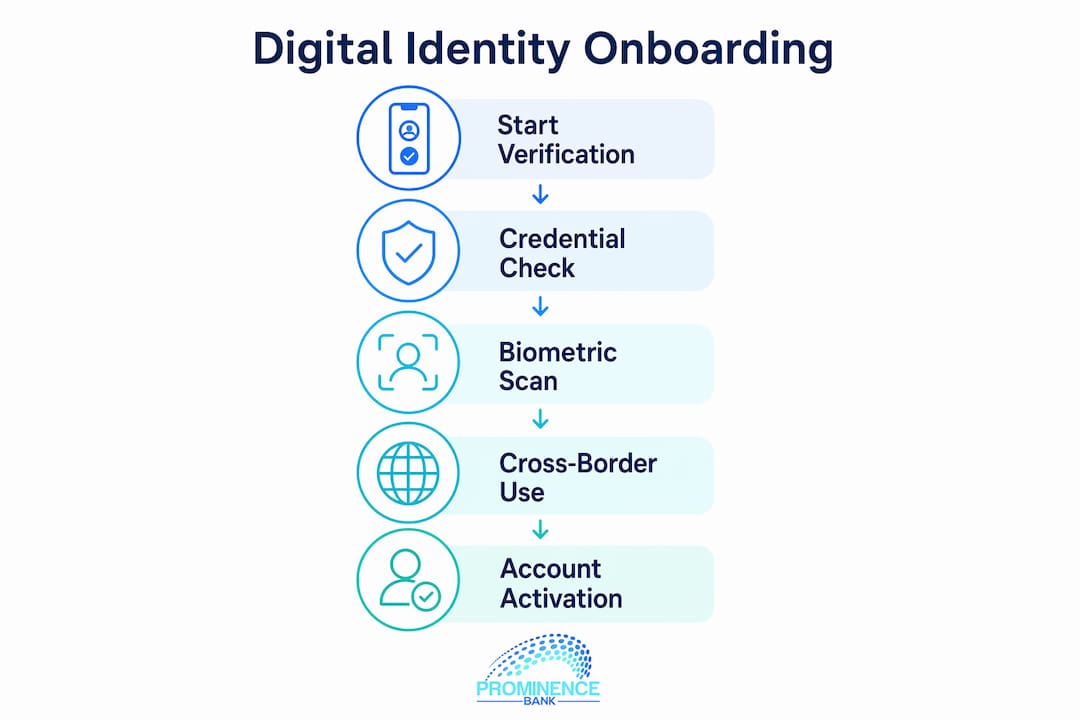
Privacy-by-design selective disclosure is a key feature of this model. Instead of sharing a full passport scan, a customer can disclose only the specific attributes a bank needs, such as age or nationality. This protects customer data while satisfying regulatory requirements. Banks that adopt secure onboarding practices built on this principle reduce both data exposure and compliance risk simultaneously.
Key onboarding benefits of digital identity solutions:
- Verification speed: Wallet-mediated checks complete in seconds versus days for manual review.
- Abandonment reduction: Streamlined processes cut drop-off rates by 40–60% among early adopters.
- Credential reusability: Verified attributes carry across institutions, reducing duplicate KYC costs.
- Reducción al mínimo de datos: Selective disclosure limits the personal data banks need to store and protect.
- Cross-border efficiency: International clients onboard without jurisdiction-specific document requirements.
Consejo profesional: Map your onboarding funnel by step before deploying a digital identity solution. Identify exactly where customers drop off. This tells you which verification touchpoints create the most friction and where wallet-mediated credentials will deliver the fastest return.
| Onboarding method | Time to complete | Abandonment risk | Cross-border ready |
|---|---|---|---|
| Manual document review | Días a semanas | Alto | No |
| Basic digital KYC | Hours to days | Moderado | Parcial |
| EUDI wallet-mediated | Seconds to minutes | Baja | Sí. |
How does digital identity strengthen banking security?
Digital identity is the foundation of strong customer authentication. Without a verified, persistent identity layer, banks cannot reliably distinguish legitimate customers from fraudsters using synthetic or stolen credentials. Fast payment systems create zero margin for error, and integrating verifiable digital identity credentials into payment flows directly reduces mule accounts and synthetic identity fraud.
Modern digital identity security combines biometrics, AI-driven verification, and risk-based authentication into a layered defense. Biometrics confirm physical presence. AI models flag behavioral anomalies in real time. Risk-based authentication adjusts the verification intensity based on the transaction type and context.
Matching verification intensity to transaction risk avoids unnecessary user abandonment while protecting from exposure. Over-verifying at low-risk touchpoints creates friction. Under-verifying at high-risk moments creates security gaps.
The AI layer introduces its own complications. AI-enhanced identity verification improves fraud detection but introduces explainability, demographic bias, and governance challenges. A model that flags certain demographic groups at higher rates creates both regulatory and reputational risk. Banks must audit AI verification outputs regularly and maintain human review for edge cases where automated decisions are ambiguous.
Core security capabilities enabled by digital identity:
- Biometric authentication: Facial recognition and fingerprint matching confirm physical presence at account access.
- Behavioral analytics: AI monitors transaction patterns and flags deviations from established customer behavior.
- Risk-based step-up: High-risk transactions trigger additional verification without affecting routine interactions.
- Synthetic identity detection: Verifiable credentials tied to trusted issuers make fabricated identities harder to sustain.
What regulations are shaping digital identity adoption?
Regulation is the primary driver of digital identity investment in banking right now. Two frameworks dominate the conversation: eIDAS 2.0 in Europe and the UK’s Money Laundering Regulations.
eIDAS 2.0 mandates that regulated financial institutions must accept European Digital Identity Wallets by 2027. This is not a voluntary standard. Banks operating in EU member states must transition from document-based verification to wallet-mediated verification processes or face non-compliance. The 2027 deadline is close enough that institutions without a deployment roadmap are already behind.
The UK framework operates differently but points in the same direction. Certified Digital Verification Services now provide a recognized pathway for satisfying AML obligations under Regulation 28 of the Money Laundering Regulations. Banks that adopt certified services gain a defensible compliance position while reducing the cost of manual checks.
The practical steps for regulatory alignment follow a clear sequence:
- Audit current verification processes. Identify which KYC and AML checks still rely on manual document review.
- Map regulatory requirements to verification levels. Determine which transactions require high-assurance credentials versus standard verification.
- Evaluate wallet acceptance criteria. Define which wallet issuers and credential types your institution will accept before deployment.
- Update internal policy language. Document acceptable levels of assurance for wallet-mediated authentication in formal policy.
- Test cross-border credential flows. Verify that your systems handle credentials issued by non-domestic authorities correctly.
Comprensión digital banking jurisdiction is equally important here. The regulatory framework that applies to your institution depends on where it is licensed and where its customers are located. Both dimensions affect which identity standards you must meet.
Is digital identity a competitive advantage for banks?
Identity verification is shifting from a compliance checkbox to a strategic enabler driving customer trust and conversion. Banks that treat digital identity as infrastructure rather than overhead gain measurable advantages in customer acquisition, retention, and Net Promoter Score. Orchestrating biometrics and AI reduces onboarding from days to minutes, which directly affects how customers perceive the institution.
The competitive framing changes how banks allocate resources. An institution that views identity verification as a cost center will invest the minimum required for compliance. An institution that views it as a customer experience asset will invest in reducing friction at every touchpoint, which compounds over time into higher conversion and lower churn.
Wallet-mediated authentication shifts control from bank-managed multi-factor authentication to trust evidence governed by external issuers. Banks no longer control the full authentication token lifecycle. They retain access decision authority, but the credential itself originates outside the institution. This is a fundamental shift in how identity assurance works, and it requires new internal governance structures.
Best practices for building identity as a competitive asset:
- Define acceptance rules early. Banks must plan for wallet diversity by specifying which issuers and credential formats they will accept. Assuming a single standardized integration creates operational fragmentation.
- Measure identity performance. Track abandonment rates, verification completion times, and fraud rates by channel to quantify the business impact of identity investments.
- Design adaptive customer journeys. Adapting verification rigor to risk level improves both conversion and fraud prevention. A low-risk login should feel frictionless. A high-value wire transfer should trigger proportionate assurance.
Consejo profesional: Build your identity governance framework before you deploy wallet integrations, not after. Retroactively defining assurance levels and acceptance rules creates policy gaps that regulators and auditors will find.
Why digital identity governance is harder than it looks
The technical implementation of digital identity is the easy part. The governance layer is where most banks underestimate the complexity.
I have seen institutions deploy biometric onboarding and wallet integrations on schedule, then spend months resolving internal disagreements about what constitutes an acceptable level of assurance. The problem is not the technology. It is that different teams, risk, compliance, product, and IT, have different definitions of what “verified” means. Without a shared internal policy language, those disagreements surface as operational inconsistencies that frustrate customers and create audit exposure.
The shift to federated evidence makes this harder. Banking IAM teams now govern trust paths across multiple parties rather than just user interfaces. A credential issued by a government wallet provider carries different assurance properties than one issued by a commercial identity provider. Your policy must account for both, and it must do so in language that a compliance officer, a product manager, and an engineer can all interpret consistently.
Over-verification is an underappreciated risk. Banks that apply high-assurance checks to every interaction, regardless of risk level, create friction that drives customers to lower-security channels. That is the opposite of the intended outcome. The goal is proportionate verification: high assurance where the risk justifies it, minimal friction everywhere else. Getting that calibration right requires ongoing measurement, not a one-time configuration decision.
The future belongs to institutions that treat identity as a living governance function, not a deployment project. That means regular policy reviews, continuous monitoring of wallet issuer trust frameworks, and a feedback loop between fraud data and verification thresholds.
- Harold
Prominencebank and digital identity for global banking
Prominencebank operates as a fully licensed digital banking institution built for clients who require both security and discretion across borders. Its onboarding and authentication architecture reflects the same principles that define best-in-class digital identity practice: verified credentials, AML/KYC compliance, and proportionate verification at every stage.
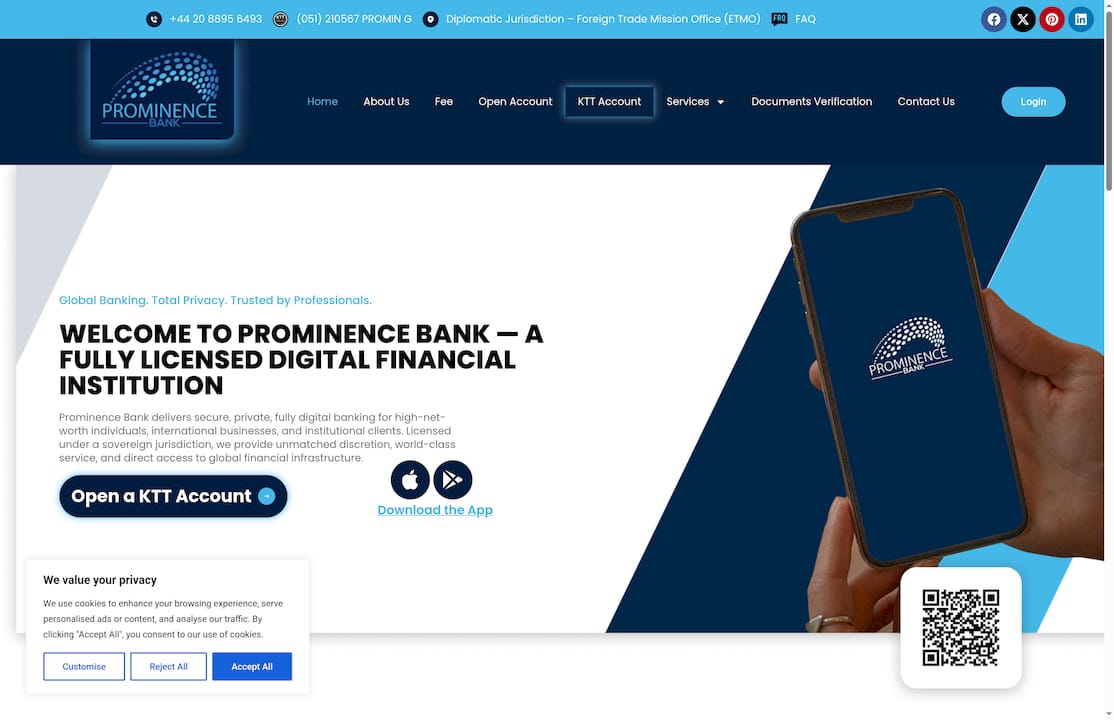
For international businesses and high-net-worth clients managing complex structures, Prominencebank’s Soluciones bancarias corporativas provide the identity-verified access controls and multi-currency capabilities that global operations require. Its multi-currency account infrastructure supports cross-border transactions with the compliance rigor that eIDAS 2.0 and AML frameworks demand. Clients who need a clear path to account setup can follow Prominencebank’s corporate account setup guide for a structured, compliant onboarding process.
Escapadas clave
Digital identity in banking is the foundation of secure onboarding, fraud prevention, and regulatory compliance, and institutions that govern it proactively gain measurable competitive advantages over those that treat it as a cost center.
| Punto | Detalles |
|---|---|
| Onboarding efficiency | EUDI wallets reduce onboarding times by up to 90% and cut abandonment rates by 40–60%. |
| Regulatory deadline | eIDAS 2.0 requires EU-regulated banks to accept digital identity wallets by 2027. |
| Security calibration | Match verification intensity to transaction risk to reduce fraud without creating unnecessary friction. |
| Governance first | Define internal policy language and wallet acceptance rules before deploying wallet integrations. |
| Competitive framing | Banks that treat identity as a customer experience asset gain higher conversion and stronger NPS than those treating it as compliance overhead. |
FAQ
What is digital identity in banking?
Digital identity in banking is the electronic verification and management of customer credentials, including biometrics, government-issued attributes, and behavioral data, used to confirm who a customer is at every interaction. It underpins KYC compliance, strong customer authentication, and fraud prevention.
What is eIDAS 2.0 and why does it matter for banks?
eIDAS 2.0 is a European regulation that mandates regulated financial institutions to accept European Digital Identity Wallets by 2027. It requires banks to transition from manual document checks to wallet-mediated verification, fundamentally changing how identity assurance works across the EU.
How does digital identity reduce fraud in banking?
Digital identity reduces fraud by binding verified credentials to specific individuals through biometrics and trusted issuer attestations, making synthetic and stolen identities harder to use. Integrating verifiable credentials into payment flows directly reduces mule accounts and transaction fraud.
What are the main challenges of digital identity in banking?
The main challenges include AI explainability and demographic bias in automated verification, governance complexity around wallet issuer trust frameworks, and the need to calibrate verification intensity to transaction risk without creating excessive friction.
How does digital identity support AML compliance?
Certified Digital Verification Services satisfy obligations under Regulation 28 of the UK’s Money Laundering Regulations. Widespread adoption of these services could generate up to £701 million in annual economic benefits by replacing costly manual document review with verified digital credential checks.