
Resumen:
- Multi-currency wallets serve different financial needs, such as fast transactions, digital asset management, or treasury stability. Choosing the right type depends on your use case, currency support, security, and regulatory protection. Hybrid solutions combining bank license protections with fintech flexibility are becoming the preferred choice for complex cross-border finances.
A multi-currency wallet is defined as a digital platform that lets you hold, convert, and spend money in multiple currencies from a single account. The three primary multi-currency wallet types are fintech specialist wallets, crypto-centric wallets, and bank-integrated global accounts. Each category serves a distinct financial profile. Fintech wallets like those supporting 40+ fiat currencies suit frequent travelers and SMEs. Crypto-centric wallets serve digital asset investors. Bank-integrated accounts, offered by institutions like Prominencebank, target high-net-worth individuals and corporate treasury teams who need stability, compliance, and relationship banking.
1. What are the main multi-currency wallet types?
The three core categories of digital currency wallet options each solve a different problem. Fintech specialist wallets prioritize low-cost, high-volume currency conversion. Crypto-centric wallets manage digital assets across multiple blockchains. Bank-integrated global accounts hold fewer currencies but deliver regulatory protection and treasury-grade liquidity tools.

Understanding these distinctions matters because most users confuse transactional wallets with global accounts. Wallets move money fast. Global accounts preserve value and provide local payment infrastructure. Choosing the wrong type costs you in fees, compliance risk, or lost liquidity.
2. Fintech specialist wallets: broad currency access at low cost
Fintech specialist wallets are the most widely used type of digital wallet for cross-border payments. They support 30–40+ fiat currencies with mid-market FX rates, meaning you pay close to the real exchange rate rather than a bank markup. That difference adds up fast for businesses paying international contractors or freelancers receiving foreign income.
Key multi-currency wallet features in this category include:
- Local bank details (IBANs, routing numbers, sort codes) for receiving payments as domestic transfers
- Real-time currency conversion with transparent fee disclosures
- Integración de API for automated payroll, reconciliation, and batch payments
- autenticación multifactorial (MFA) and tokenization for transaction security
- No or low monthly fees for personal accounts; tiered plans for business users
The cost structure is a genuine advantage. Conversion fees typically run from 0% to around 1% depending on the currency pair and volume. That compares favorably to traditional bank wire fees, which often include both a flat charge and a hidden FX markup.
Pros: Wide currency support, low conversion costs, fast transfers, user-friendly apps.
Cons: No deposit protection under banking law (most operate as Electronic Money Institutions), limited credit or lending products, and customer support that can lag behind traditional banks.
Consejo profesional: If your business pays remote workers in multiple countries, use a fintech specialist wallet with API batch payroll. You can fund a single account in your home currency and convert to local currencies automatically at the time of payment, cutting both FX costs and processing time.
3. Crypto-centric wallets: managing digital assets across chains
Crypto-centric wallets are the right choice when your financial activity involves blockchain-based assets. These wallets support multiple tokens across multiple blockchains, including Bitcoin, Ethereum, and a growing list of layer-2 networks. They are the standard tool for crypto investors, businesses accepting crypto payments, and teams managing stablecoin treasury positions.
Key features of this wallet category include:
- Multi-chain support covering major networks and emerging protocols
- Private key management options ranging from custodial (the provider holds keys) to non-custodial (you hold keys)
- Cold wallet integration for offline storage of high-value holdings
- Stablecoin support (USDC, USDT) for bridging crypto and fiat operations
- Pasarelas de entrada y salida de moneda fiduciaria for converting between crypto and traditional currencies
The most critical decision in this category is custody. A custodial wallet is convenient but means a third party controls your assets. A non-custodial wallet gives you full control but full responsibility. For businesses holding significant crypto reserves, a hybrid approach using hot wallets for daily transactions and cold storage for reserves is the standard practice.
Consejo profesional: Never store the majority of crypto holdings in a hot wallet connected to the internet. Move long-term reserves to a hardware wallet like a Ledger or Trezor device. This single step eliminates the most common attack vector for digital asset theft.
4. Bank-integrated global accounts: stability and relationship banking
Bank-integrated global accounts represent the most conservative category of multi-currency wallet options. These accounts typically hold 8–19 currencies and are tethered to full banking relationships rather than EMI licenses. That distinction matters enormously for corporate treasury and high-net-worth clients.
The table below compares the three main wallet categories across key evaluation criteria:
| Característica | Fintech wallets | Carteras Crypto | Bank-integrated accounts |
|---|---|---|---|
| Currency support | 30–40+ fiat | Multiple tokens/chains | 8–19 fiat currencies |
| FX rate model | Mid-market | Market rate | Negotiated or marked up |
| Protección del depósito | No (EMI) | No | Yes (banking license) |
| Local bank details | Sí. | Parcial | Yes (IBAN, routing) |
| Lending/credit | No | No | Sí. |
| Mejor | Travelers, SMEs, freelancers | Crypto investors, DeFi | HNW individuals, corporates |
Local bank details are a defining advantage of bank-integrated accounts. Dedicated IBANs and routing numbers let you receive payments as local domestic transfers, which avoids international wire fees entirely. For a business processing high volumes of cross-border receivables, this feature alone can generate significant savings.
Prominencebank operates in this category, offering cuentas globales multicurrencia built for high-net-worth individuals, international businesses, and institutional clients. The bank holds a full banking license under ETMO sovereignty, which means clients benefit from regulatory protections that EMI-based fintech wallets cannot provide.
5. How to choose the right wallet type for your needs
Choosing between digital currency wallet options requires matching the wallet’s core strengths to your actual financial behavior. The four primary evaluation criteria are: local bank detail access, FX rate model, security protocols, and compliance fit.
- Identifica tu caso de uso primario. High-frequency travel and small conversions favor fintech wallets. Digital asset management requires a crypto wallet. Treasury management and large-scale receivables point to a bank-integrated account.
- Evaluate the FX rate model. Mid-market rates with a small transparent fee beat opaque bank markups for high-volume users. For low-volume, infrequent conversions, the rate model matters less than the fee structure.
- Check security protocols. Look for biometric login, MFA, and transaction alerts at minimum. For business accounts, verify whether the provider supports role-based access controls and audit logs.
- Verify licensing status. Fintechs operating as EMIs lack deposit protection and lending capacity. If your treasury requires either, a fully licensed bank is the correct choice.
- Assess API and integration needs. Businesses running automated payroll or reconciliation need wallets with documented API access and batch payment support.
- Match currency coverage to your corridors. A wallet supporting 40+ currencies is irrelevant if you only operate in three. Prioritize depth of support in your actual payment corridors over headline currency counts.
Consejo profesional: Ask any provider for their fee schedule in writing before opening an account. Conversion fees, monthly fees, and wire fees are sometimes listed separately. The total cost of a wallet is the sum of all three, not just the FX rate.
6. Emerging trends shaping multi-currency wallets in 2026
The most significant shift in 2026 is the rise of financial superapps. These platforms merge currency exchange, banking, investing, and crypto into a single interface. The appeal is obvious: one login, one balance view, one fee structure. The risk is equally clear: concentration in a single provider increases exposure if that provider faces regulatory or operational problems.
Stablecoin integration is accelerating across all three wallet categories. Bank-integrated accounts increasingly offer USD-backed stablecoin holdings alongside traditional fiat balances. This gives corporate clients a tool for managing currency exposure without converting to a volatile crypto asset.
“Global accounts are evolving beyond simple currency holding. The next generation combines relationship banking, real-time FX, stablecoin liquidity, and regulatory compliance in a single structure. Retail wallets will handle transactions. Institutional accounts will handle treasury.”
Regulatory pressure is also reshaping the market. Governments across the EU, UK, and Asia-Pacific are tightening EMI licensing requirements. That pressure is pushing fintech wallets toward either obtaining full banking licenses or partnering with licensed banks. The gap between fintech agility and banking security is narrowing, and hybrid banking solutions are becoming the standard for institutional clients.
Escapadas clave
The best multi-currency wallet type is determined by your use case, not by the number of currencies a platform supports.
| Punto | Detalles |
|---|---|
| Three core wallet types | Fintech specialist, crypto-centric, and bank-integrated accounts each serve distinct financial needs. |
| Licensing determines protection | EMI-licensed fintechs lack deposit protection; fully licensed banks provide regulatory safeguards for treasury clients. |
| Local bank details reduce costs | Dedicated IBANs and routing numbers eliminate international wire fees for cross-border receivables. |
| FX rate model drives total cost | Mid-market rates with transparent fees outperform opaque bank markups for high-volume currency users. |
| Superapps are consolidating the market | Financial superapps merging banking, FX, and crypto are the dominant trend in 2026, raising both convenience and concentration risk. |
Why wallet type matters more than wallet brand
I’ve watched clients make the same mistake repeatedly: they choose a wallet based on a friend’s recommendation or a headline feature, then discover six months later that it doesn’t fit their actual financial structure. A freelancer who needs to receive EUR, GBP, and AUD payments doesn’t need a crypto wallet. A corporate treasury team managing $10M+ in cross-border receivables doesn’t need a consumer fintech app.
The licensing question is the one most people skip. I’ve seen businesses park significant cash in EMI-based wallets, assuming they had the same protection as a bank account. They don’t. If the provider fails, your funds sit in a pool with other clients’ money, not in a segregated, insured account. That risk is acceptable for operational spending. It’s not acceptable for treasury reserves.
El crecimiento bancario digital among high-net-worth individuals reflects a real shift: sophisticated clients want fintech speed with banking-grade security. The providers who deliver both are winning the institutional segment. For individuals and businesses with complex cross-border needs, the right answer is almost always a bank-integrated account as the core, with a fintech wallet layered on top for day-to-day transactional spending. That combination gives you the best of both categories without the concentration risk of relying on one provider for everything.
You can also review fee comparisons across wallet categories to pressure-test your current provider’s pricing before committing to a long-term relationship.
- Harold
Prominencebank’s multi-currency account solutions
Prominencebank combines full banking licensure with the account flexibility that international clients need. Its multi-currency global accounts support cross-border receivables with dedicated local bank details, AML/KYC-compliant onboarding, and direct access to global financial infrastructure.
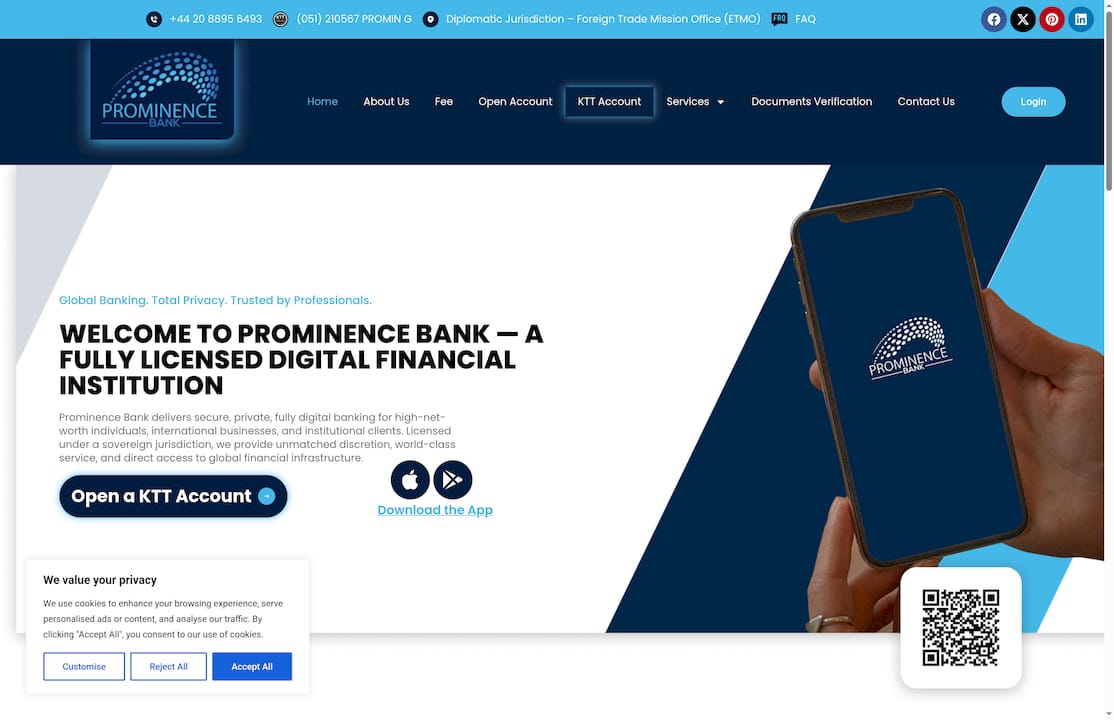
For high-net-worth individuals and corporate clients who need more than a fintech wallet can offer, Prominencebank’s servicios bancarios premium deliver treasury-grade tools, relationship management, and the regulatory protections that EMI-based platforms cannot match. If your financial structure spans multiple currencies, jurisdictions, or asset classes, Prominencebank is built for exactly that level of complexity.
FAQ
What are the three main multi-currency wallet types?
The three main types are fintech specialist wallets, crypto-centric wallets, and bank-integrated global accounts. Each serves a different financial profile based on currency volume, asset type, and compliance needs.
Do multi-currency wallets have deposit protection?
Most fintech wallets operate as Electronic Money Institutions and do not carry deposit protection. Only fully licensed banks provide regulatory deposit safeguards for client funds.
What is the difference between a multi-currency wallet and a global account?
Multi-currency wallets focus on fast, transactional currency movement. Global accounts center on value preservation, local bank details for receivables, and treasury-grade liquidity tools.
How many currencies do the best multi-currency wallets support?
Top fintech wallets support 40+ fiat currencies. Bank-integrated accounts typically hold 8–19 currencies, prioritizing depth of service over breadth of coverage.
What security features should a multi-currency wallet have?
A secure multi-currency wallet requires MFA, biometric login, transaction alerts, and tokenization at minimum. Business accounts should also include role-based access controls and audit logs.