
TL;DR:
- KTT is a secure, bilateral messaging protocol ensuring high privacy and minimal intermediaries for large transfers.
- It offers faster, authenticated cross-border transfers compared to standard wire systems with enhanced discretion.
- Proper operation of KTT requires verified expertise and strict compliance due to regulatory scrutiny and operational risks.
Most high-net-worth individuals and corporate treasurers assume that moving large sums across borders means accepting a trade-off between speed, privacy, and security. That assumption is wrong. Key Tested Telex (KTT) banking has quietly served the world’s most demanding financial clients for decades, offering a level of authenticated discretion that standard wire transfers and even modern digital payment rails simply cannot match. This article breaks down exactly what KTT is, how each transaction flows, where it fits inside private and offshore banking structures, and what every serious client should know about compliance before opening a KTT-enabled account.
Table of Contents
- What is KTT and why does it matter for global banking?
- How KTT works: Step-by-step international transaction flow
- KTT in modern offshore and private banking
- Risks, realities, and regulatory considerations of KTT
- Why KTT remains the best-kept secret in discreet global banking
- Discover discreet, secure KTT banking solutions with Prominence Bank
- Frequently asked questions
Key Takeaways
| Point | Details |
|---|---|
| KTT ensures privacy | KTT banking delivers top-level discretion for sensitive, international asset transfers. |
| Secure authentication | All KTT transactions use verified, tamper-resistant messaging for peace of mind. |
| Ideal for HNWIs | KTT is built for high-net-worth and corporate clients needing advanced confidentiality. |
| Know compliance steps | Before using KTT, understand all legal, due diligence, and regulatory requirements. |
| Specialized accounts available | Reputable banks offer customized KTT account services for complex global banking needs. |
What is KTT and why does it matter for global banking?
To understand KTT’s value, let’s first break down what it actually means and how it stands apart in modern financial networks.
KTT stands for Key Tested Telex. At its core, it is a secure, authenticated messaging protocol used by banks to authorize and transmit high-value fund transfers between financial institutions. The “key test” component refers to a unique numerical cipher shared only between the sending and receiving banks, which acts as a mutual authentication layer before any funds move. This mechanism has roots in the pre-digital era of telex communications, but its underlying logic, verified, point-to-point, low-exposure messaging, remains highly relevant today.
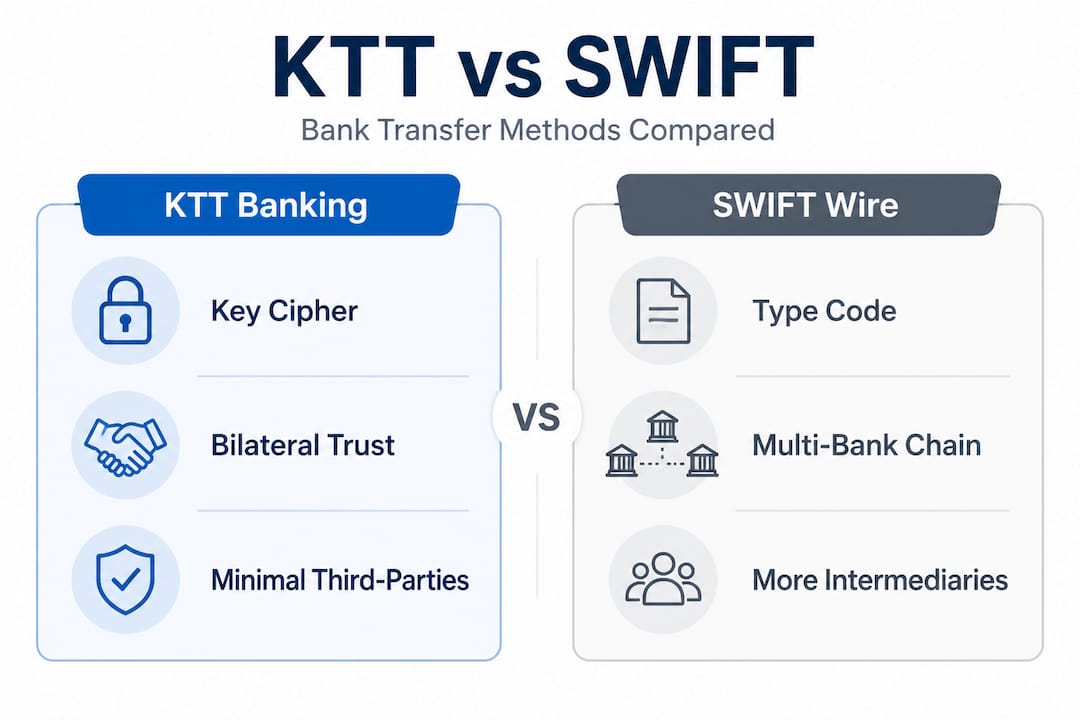
What makes KTT distinctive is not just its age. It is the deliberate architecture of trust it creates. Unlike standard wire instructions that pass through multiple correspondent banks and clearing networks, KTT transfer process relies on a direct, bank-to-bank authenticated channel. This means fewer intermediaries, fewer opportunities for interception, and a much tighter audit trail controlled by the principals involved.
Major private banks and institutional clients continue to value KTT precisely because of this architecture. According to KTT’s specific mechanism and its historic use in international finance, the protocol was designed specifically to prevent unauthorized fund movements by requiring both parties to verify a shared cipher before settlement proceeds. That design principle has not become obsolete.
Here is why sophisticated clients consistently prefer KTT over alternatives:
- Discretion: Transaction details are not broadcast through public clearing networks.
- Authentication: The key test cipher provides mutual verification that no third party can replicate.
- Minimal exposure: Fewer intermediary banks means fewer points of potential data leakage.
- Global reach: KTT operates across jurisdictions, making it suitable for cross-border private wealth transfers.
- Speed for large values: Once authentication clears, settlement moves quickly without the delays common in multi-correspondent wire chains.
“The strength of KTT lies not in complexity for its own sake, but in the deliberate limitation of who can see, touch, or redirect a transaction. For clients who value privacy above all, that limitation is the feature.”
KTT is rarely publicized by retail banks because it is simply not designed for everyday transactions. It is a tool built for telex transfer services at scale, for clients moving significant capital who cannot afford the exposure that comes with conventional payment infrastructure.
How KTT works: Step-by-step international transaction flow
Now that you’ve got the foundations, let’s examine exactly how a KTT transaction unfolds in practice compared to other cross-border options.

The process is more structured than a standard wire, and that structure is the source of its security. Each stage involves deliberate verification rather than automated routing.
The KTT transaction flow:
- Initiation: The client instructs their bank to prepare a KTT transfer, providing full beneficiary details, amount, currency, and purpose of payment.
- Key test generation: The sending bank generates a unique cipher based on the transfer details, date, and a pre-agreed algorithm shared with the receiving institution.
- Telex message transmission: The authenticated telex message is sent directly to the receiving bank, carrying both the payment instruction and the cipher.
- Verification at destination: The receiving bank independently calculates the expected cipher using the same algorithm. If the numbers match, the transfer is authenticated.
- Crediting: Upon successful verification, the receiving bank credits the beneficiary account. If the cipher does not match, the transaction is rejected and flagged immediately.
This five-step process eliminates the ambiguity present in standard wire transfers, where funds can sit in nostro accounts for days pending manual reconciliation.
KTT vs. standard SWIFT wire transfer:
| Feature | KTT | Standard SWIFT wire |
|---|---|---|
| Authentication method | Bilateral key cipher | Message type codes (MT103, etc.) |
| Intermediary exposure | Minimal, direct bank-to-bank | Multiple correspondent banks |
| Privacy level | High | Moderate |
| Typical settlement speed | Same day to 24 hours | 1 to 5 business days |
| Reversal risk | Very low | Moderate |
| Suitability | Large, private, institutional | General commercial use |
The KTT service benefits become especially clear when you compare the intermediary exposure column. Every correspondent bank that touches a standard wire is a potential delay, a potential compliance hold, and a potential data point visible to parties you did not authorize.
Pro Tip: KTT minimizes third-party system exposure because the key test cipher cannot be replicated by any bank outside the bilateral agreement. If you are moving capital above seven figures, this single feature alone justifies the additional setup process. For clients who want to understand financial triumph with KTT, the starting point is always understanding this authentication layer.
The common transaction structure and KTT’s advantages versus standard wire transfers confirm that the protocol consistently outperforms conventional methods on privacy and authentication metrics, particularly for transfers where confidentiality is a legal or strategic requirement.
KTT in modern offshore and private banking
With the process clear, the next question is: how are KTT services actually being used by today’s most discerning banking clients?
Private banks that offer KTT capabilities position the service as a premium feature, typically reserved for clients with significant account balances and a demonstrable need for discreet cross-border movement. The use of KTT in offshore and private wealth banking today spans several distinct client categories, each with specific reasons for choosing authenticated telex over conventional wire infrastructure.
Typical features: KTT-enabled vs. standard private accounts
| Feature | KTT-enabled account | Standard private account |
|---|---|---|
| Transfer authentication | Bilateral key cipher | Standard bank codes |
| Counterparty visibility | Restricted to principals | Visible across network |
| Compliance reporting | Enhanced, direct | Standard AML checks |
| Multi-currency support | Yes | Often limited |
| Minimum balance | High (institution-specific) | Variable |
| Offshore structuring | Fully supported | Partial |
The privacy architecture of a KTT-enabled offshore account is fundamentally different from a standard private account. The restricted counterparty visibility column is particularly significant for clients involved in sensitive negotiations or asset protection structures where premature disclosure of capital movements could create legal or commercial complications.
Real-world applications where KTT is actively used include:
- Corporate treasury management: Multinational companies moving operational capital between subsidiaries across jurisdictions without exposing intercompany transaction details to third-party networks.
- HNWI trust structures: High-net-worth individuals funding offshore trusts or family office accounts where discretion is a fiduciary obligation, not just a preference.
- International mergers and acquisitions: Escrow and deposit transfers during M&A processes where premature disclosure of fund movements could affect deal pricing or regulatory review.
- Asset protection restructuring: Clients repositioning capital across legal structures in multiple jurisdictions as part of estate planning or liability management.
- Private real estate transactions: Large property acquisitions in jurisdictions where buyer anonymity is legally protected and preferred.
Pro Tip: Before opening any KTT-enabled account, verify that your chosen institution has direct, operational KTT expertise and not just a marketing claim. Ask specifically about their bilateral banking relationships and whether their key test protocols are current. Reviewing an offshore account guide before initiating the process will clarify what documentation and structure you need to have in place.
Risks, realities, and regulatory considerations of KTT
No financial solution is perfect. Here’s what every client should know about the potential pitfalls and compliance realities of using KTT channels.
KTT’s privacy features are genuine, but they do not place transactions outside the reach of regulatory frameworks. In fact, the enhanced scrutiny that comes with KTT-enabled accounts is something every client must plan for, not resist. The detailed analysis of KTT’s risks and compliance matters makes clear that the protocol’s discretion is a feature of its architecture, not a shield from legitimate oversight.
The principal risks clients and institutions face include:
- Legal scrutiny: Large authenticated transfers can attract enhanced due diligence from correspondent banks and regulators, particularly if the originating or destination jurisdiction is on a monitoring list.
- Fraud potential if misused: KTT’s prestige has made it a target for fraudulent schemes. Fake KTT instruments and unauthorized “blocked funds” offers are a real threat. Only established, licensed institutions can execute genuine KTT transfers.
- Compliance holds: Even legitimate KTT transactions can be delayed if AML screening flags unusual patterns, particularly for first-time transfers or new counterparty relationships.
- Jurisdictional complexity: Regulatory requirements differ significantly between jurisdictions. A transfer that is fully compliant in one country may require additional documentation in another.
- Operational errors: Because KTT transactions are typically final and non-reversible, any error in beneficiary details or cipher generation creates a serious problem that is difficult and costly to resolve.
Due diligence steps every KTT client should complete:
- Verify the licensing and regulatory standing of your banking institution before initiating any KTT instruction.
- Confirm that the receiving institution has an active bilateral KTT agreement with your bank.
- Ensure all source of funds documentation is current, complete, and consistent with your account profile.
- Review the specific AML and KYC requirements for both the sending and receiving jurisdictions.
- Retain independent legal counsel familiar with cross-border private banking for any transfer above a material threshold.
Institutions that handle KTT properly maintain approval rates well above industry averages for high-value transfers precisely because their compliance infrastructure is built around the protocol’s requirements from the start.
“The clients who experience problems with KTT are almost always those who chose an institution based on cost or convenience rather than verified expertise. In private banking at this level, the institution’s track record is the product.”
Why KTT remains the best-kept secret in discreet global banking
Stepping back, it’s worth asking: with all today’s technology, why do elite banks and clients still rely on KTT?
The conventional answer is inertia. The real answer is more interesting. Every major wave of financial technology, from SWIFT modernization to blockchain-based settlement, has promised to replace legacy authenticated protocols. None has fully delivered on the specific combination of privacy, bilateral authentication, and legal standing that KTT provides for the clients who need it most.
The paradox here is counterintuitive. In an era where “digital first” is treated as synonymous with “most secure,” KTT’s security actually comes from what it does not do. It does not broadcast transaction details across a shared network. It does not route through automated clearing systems where pattern recognition algorithms flag and delay large transfers. It does not require a public ledger entry. The security comes from deliberate limitation, and that is something no amount of encryption layered onto a public network can fully replicate.
We have observed that clients who shift their thinking from “newest equals safest” to “most authenticated equals safest” consistently make better decisions about how to structure large cross-border movements. The KTT’s unique advantages are not relics. They are features that were designed for exactly the environment high-net-worth clients and institutional treasurers operate in today, where the biggest risks are not hackers but unauthorized disclosure, compliance delays, and counterparty exposure.
The challenge for most clients is not understanding KTT conceptually. It is finding an institution with genuine operational capability rather than theoretical familiarity. That distinction matters enormously when you are moving capital that cannot afford a failed authentication or a compliance hold at the destination bank.
Pro Tip: For major capital movements or asset preservation transfers, combine KTT with additional security layers such as multi-signature account authorization, legal escrow structures, and jurisdiction-specific compliance pre-clearance. No single protocol should be your only line of defense.
Discover discreet, secure KTT banking solutions with Prominence Bank
If you’re ready to explore elite banking solutions that combine digital convenience with real discretion, consider these next steps.
Prominence Bank operates specifically for clients who require more than a standard private banking relationship. Our KTT-enabled accounts are built for high-net-worth individuals and international corporations that need authenticated, discreet cross-border transfer capability alongside modern account management tools.
Every client relationship begins with a structured onboarding process that covers enhanced due diligence, AML compliance, and account configuration tailored to your specific transaction profile. Our multi-currency banking solutions give you full control over currency exposure across jurisdictions, while our corporate account setup process is designed for complex structures including holding companies, trusts, and international operating entities. For clients specifically seeking authenticated transfer capability, our KTT account details page outlines the full scope of services, minimum requirements, and the compliance framework that protects every transaction.
Frequently asked questions
What makes KTT transfers more discreet than other wire methods?
KTT uses authenticated telex messaging protocols that minimize third-party involvement, ensuring privacy for both sender and receiver by restricting transaction visibility to the two principal institutions only.
Can KTT be used for digital currencies or only fiat?
KTT is primarily used for fiat currency transfers, but it can be integrated into bank protocols that handle digital asset custody alongside traditional currencies within the same account structure.
Is there a minimum transfer value for using KTT in private banking?
Yes, most institutions set high minimum thresholds due to the security, compliance, and operational costs involved, though exact amounts vary by institution and client relationship.
What compliance steps are involved in KTT-enabled accounts?
Clients undergo enhanced due diligence procedures including AML screening, source of funds verification, and multi-layered identity checks as standard requirements for any KTT-enabled account relationship.
Are KTT transfers reversible in case of error?
Generally, KTT transactions are final and non-reversible once the key test cipher is verified and the transfer is authenticated, which is why pre-transfer verification of all details is critical.