
Resumen:
- Global banking standards establish essential frameworks for managing cross-border transactions, risk, and compliance. They enable operational efficiency, promote trust, and serve as safeguards during financial crises, while increasing regulatory complexity for multinational institutions. Most executives underestimate their importance unless they treat these standards as active management priorities rather than mere compliance requirements.
Global business banking standards are the universal frameworks that govern how financial institutions manage capital, process payments, and report risk across borders. For compliance officers, treasury teams, and executives running international operations, understanding why global business banking standards exist is not academic. It is the difference between smooth cross-border transactions and costly regulatory failures. Frameworks like Basel III, ISO 20022, and the Basel Committee on Banking Supervision (BCBS) set the minimum rules that every serious financial institution must follow. Without them, international finance fragments into incompatible local systems that raise costs, increase risk, and erode investor confidence.
Why global business banking standards drive operational efficiency
The most direct benefit of global banking standards is operational efficiency in payment processing. ISO 20022 replaces dozens of incompatible national messaging formats with a single structured data model. That shift eliminates the manual repair work that banks previously needed when payment messages arrived with missing or unstructured fields.

The efficiency gains are concrete. Unstructured address data will no longer be permitted in international payment messages as of november 2026. Banks that have not migrated to structured data models face compliance risk and increased manual intervention costs on every cross-border transaction. For treasury teams processing hundreds of payments daily, that is a significant operational liability.
ISO 20022 also enables end-to-end traceability across payment chains. Structured messaging reduces fragmentation and allows straight-through processing, meaning payments move from sender to recipient without human intervention at each step. That directly cuts processing time and error rates.
The transition is not instant, however. Hybrid messaging solutions remain common as banks run legacy and new systems in parallel. Most institutions operate multi-structured data flows during the transition period, which adds short-term complexity before delivering long-term gains.
Key operational improvements from ISO 20022 adoption include:
- Structured remittance data that reconciles automatically with ERP systems
- Richer transaction metadata that supports AML screening and fraud detection
- Reduced correspondent banking rejections caused by incomplete address fields
- Faster settlement cycles through improved straight-through processing rates
Consejo profesional: If your treasury or ERP system still relies on MT messaging formats, map your migration to ISO 20022 MX formats before the november 2026 deadline. Early adopters report fewer payment rejections and lower reconciliation costs from day one.
What role do global standards play in regulatory compliance and risk management?
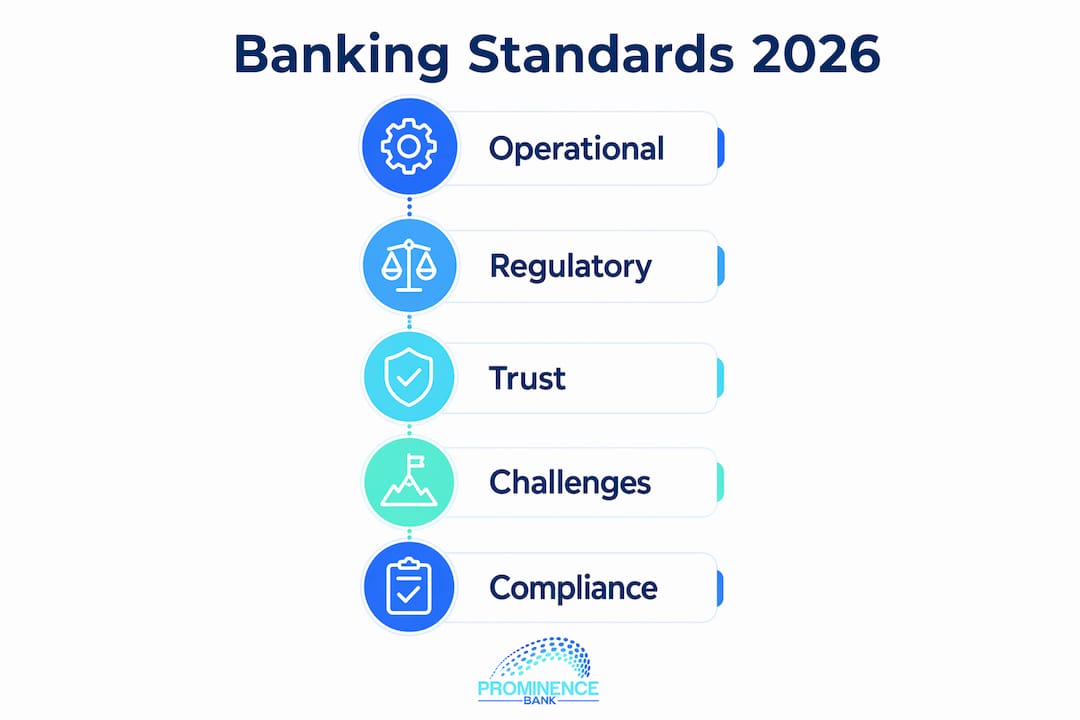
Basel III is the backbone of international capital adequacy regulation. About two-thirds of EU capital requirements stem directly from Basel standards, with the remainder coming from supervisory and macroprudential measures applied at the national level. That ratio shows how global standards set the floor while local regulators build on top.
The floor matters because it prevents the worst outcomes. A 5% decline in asset values can deplete minimum CET1 capital requirements under Basel III. That finding explains why regulators have shifted their focus from simply raising capital ratios to improving governance and risk culture. Capital buffers alone do not protect a bank whose internal controls are weak.
The risk of weakening these standards is real. Recent U.S. proposals to reduce GSIB capital requirements by 6% have drawn warnings about encouraging a race to the bottom. When one major jurisdiction loosens its standards, it creates competitive pressure on others to follow, which erodes the global baseline that protects financial stability.
The regulatory picture also includes national variations that go beyond the Basel minimum:
- Super-equivalences account for 4% of EU banking capital requirements, reflecting local systemic risk assessments
- National regulators apply additional supervisory measures on top of harmonized Basel rules
- Qualitative governance requirements now carry as much regulatory weight as quantitative capital ratios
“Prudential regulation acts as a supervisory disciplining mechanism, transferring control from shareholders to supervisors to prevent excessive risk-taking and support stability.”
European Central Bank, 2026
For compliance officers, this means that meeting Basel III minimums is necessary but not sufficient. You need to track the super-equivalences in every jurisdiction where your institution operates.
How do banking standards function as trust infrastructure for global markets?
Global banking standards act as invisible infrastructure that facilitates trust and reliable operations across borders. The World Economic Forum and ECB officials have both described these standards as the foundation of market stability, enabling cross-border transactions that would otherwise require bilateral negotiations between every pair of institutions.
The trust function is easy to underestimate because it works best when it is invisible. When a corporate treasurer in Singapore sends a payment to a supplier in Germany, neither party thinks about the ISO 20022 message format or the Basel III capital buffer held by the correspondent bank. The transaction simply works. That frictionless outcome is the product of decades of standard-setting work.
“When global banking standards function as intended, they should be ‘invisible infrastructure’ enabling seamless cross-border commerce without friction from localized regulatory patchworks.”
World Economic Forum, 2026
Standards also reduce systemic fragmentation. Without a common framework, each national banking system becomes an island. Investors price in the uncertainty of operating across incompatible regulatory regimes, which raises the cost of capital for international businesses. A shared global financial standards framework removes that uncertainty premium.
The importance of banking standards becomes most visible during crises. The 2008 financial crisis exposed the cost of regulatory gaps between jurisdictions. Basel III was the direct response, designed to prevent the capital depletion and liquidity failures that amplified that crisis. Institutions operating under strong global standards entered the COVID-19 period with capital buffers that allowed them to absorb losses without systemic failure.
What are the challenges in implementing banking standards across jurisdictions?
Regulatory divergence is not a failure of the global standards system. Local regulators strategically use super-equivalence to address domestic systemic risks that global minimums do not capture. A regulator overseeing a banking system heavily exposed to real estate, for example, may impose stricter loan-to-value limits than Basel III requires. That is a feature, not a bug.
The practical challenge for multinational banks is managing multiple overlapping rule sets simultaneously. Your compliance team must track Basel III as the baseline, then layer on EU-specific requirements, UK post-Brexit adaptations, and local rules in every market where you operate. The international banking compliance burden grows with each jurisdiction added.
The IIF has noted that the primary challenge facing the Basel framework today is complexity rather than lack of resilience. Modernization should prioritize efficiency and cost-benefit balance, not simply add more rules on top of existing ones. That insight matters for executives deciding where to invest in compliance infrastructure.
| Implementation challenge | Practical implication |
|---|---|
| Hybrid ISO 20022 messaging | Banks must support both legacy MT and new MX formats during transition |
| Super-equivalent capital rules | Compliance teams need jurisdiction-specific capital models, not just Basel minimums |
| Governance over capital ratios | Regulators assess risk culture and board oversight, not just balance sheet numbers |
| Legacy system integration | Structured data migration requires ERP and treasury system updates before deadlines |
Consejo profesional: Build a regulatory matrix that maps Basel III requirements against every jurisdiction you operate in. Flag where local super-equivalences apply and assign ownership to a named compliance lead for each market. That single document prevents the most common gap: assuming Basel compliance equals full local compliance.
Governance culture adds another layer of complexity. Regulators increasingly prioritize qualitative factors like board oversight, internal audit quality, and risk appetite frameworks over pure capital ratios. A bank with strong capital buffers but weak governance will still attract supervisory scrutiny. For executives, that means compliance investment must extend beyond finance teams to board-level governance structures.
Puntos clave
Global banking standards deliver operational efficiency, regulatory protection, and market trust only when institutions treat them as active management priorities rather than passive compliance checkboxes.
| Punto | Detalles |
|---|---|
| ISO 20022 deadline is firm | Unstructured address data in international payments becomes non-compliant after november 2026. |
| Basel III sets the floor, not the ceiling | About two-thirds of EU capital requirements come from Basel, with national super-equivalences adding more. |
| Governance outweighs capital ratios | A 5% asset decline can deplete CET1 minimums, so regulators now focus on risk culture and board oversight. |
| Regulatory divergence is intentional | Local super-equivalences address domestic systemic risks that global minimums do not cover. |
| Standards create invisible trust | Common frameworks remove the uncertainty premium that raises costs for international businesses. |
Why I think most executives underestimate these standards
The executives I have seen struggle most with global banking standards share one trait: they treat compliance as a cost center rather than a risk management tool. They fund the minimum required to pass audits and move on. That approach works until it does not.
The governance shift in prudential regulation is the part that catches most organizations off guard. Capital ratios are measurable and manageable. Risk culture is harder to quantify, and regulators know it. When a supervisor starts asking questions about your board’s understanding of liquidity risk or your internal audit function’s independence, no amount of excess capital makes those questions go away.
My strongest recommendation for compliance officers and CFOs right now is to treat the ISO 20022 migration as a treasury modernization project, not just a technical upgrade. The structured data it produces feeds directly into better AML screening, faster reconciliation, and cleaner regulatory reporting. The banks that migrate early gain operational advantages that persist long after the deadline passes.
The deregulatory pressure in some jurisdictions is a real risk to watch. When major economies weaken their capital standards, the competitive pressure on others to follow is genuine. Institutions that maintain strong internal standards regardless of the regulatory minimum build a credibility advantage with institutional counterparties and regulators alike. That credibility has real financial value when you need a regulator’s cooperation during a difficult period.
- Harold
Prominencebank supports your global compliance and banking needs
Global banking standards require a banking partner that operates within them by design, not by retrofit.

Prominencebank is built for international businesses that need Soluciones bancarias corporativas aligned with AML/KYC standards, multi-currency operations, and cross-border payment efficiency. Its multi-currency business accounts support structured payment flows that align with ISO 20022 requirements, reducing the compliance friction that slows international transactions. For executives managing complex corporate structures, Prominencebank offers Configuración de cuentas corporativas designed for multinational operations. The institution operates under full licensing with direct access to global financial infrastructure, giving your treasury team the tools to meet 2026 regulatory requirements without rebuilding your banking relationships from scratch.
FAQ
What are global business banking standards?
Global business banking standards are regulatory and technical frameworks, including Basel III and ISO 20022, that govern capital adequacy, payment messaging, and risk management across international banking systems. They set minimum requirements that financial institutions must meet to operate safely across borders.
Why does ISO 20022 matter for compliance officers?
ISO 20022 replaces unstructured payment messaging with structured data models, and unstructured address data becomes non-compliant in international payments after november 2026. Compliance officers must confirm their institution’s payment systems meet the structured data requirements before that deadline.
What is a super-equivalence in banking regulation?
A super-equivalence is a national regulation that exceeds the Basel III minimum standard. As of mid-2026, super-equivalences account for 4% of EU banking capital requirements, reflecting domestic systemic risk assessments that go beyond the global baseline.
How do banking standards affect investor confidence?
Common frameworks remove the uncertainty premium that investors price into cross-border operations. Without shared standards, each jurisdiction becomes an incompatible regulatory island, which raises the cost of capital for international businesses operating across multiple markets.
Why do regulators focus on governance rather than just capital ratios?
A 5% decline in asset values can deplete minimum CET1 capital requirements under Basel III, which shows that capital buffers alone do not guarantee resilience. Regulators now prioritize qualitative factors like board oversight and risk culture because weak governance creates vulnerabilities that capital ratios cannot measure.