
TL;DR:
- Many high-net-worth investors view custody accounts as passive storage spaces; however, a well-structured custody account actively safeguards ownership through legal segregation and regulatory oversight. Custody accounts, held by qualified custodians, protect assets from insolvency and misuse, with operational controls like independent audits and secure transfer methods ensuring true asset protection. Understanding the legal framework, regulatory requirements, and operational safeguards is essential for evaluating and optimizing custody arrangements beyond superficial features.
Most high-net-worth investors treat custody accounts as glorified storage lockers, a place where assets sit quietly while the real work happens elsewhere. That framing is dangerously incomplete. A well-structured custody account is an active legal and operational shield, one that determines whether you retain ownership of your assets when a counterparty fails, a regulator intervenes, or a digital platform collapses. This guide breaks down what custody accounts actually do, how they protect wealth at the structural level, and what sophisticated investors need to evaluate before trusting any custodian with their portfolio.
Table of Contents
- What is a custody account?
- How custody accounts safeguard your assets
- Beyond basics: complex custody arrangements and digital assets
- Key considerations when opening or evaluating a custody account
- The overlooked realities of custody accounts
- Explore advanced custody solutions
- Frequently asked questions
Key Takeaways
| Point | Details |
|---|---|
| Custody account basics | A custody account is a secure account managed by a custodian to hold and protect clients’ assets. |
| Asset protection features | Custody accounts provide regulatory safeguards, asset segregation, and legal protections vital for high-value assets. |
| Digital and traditional coverage | Both traditional and digital assets can be protected under specialized custody arrangements. |
| Advanced considerations | Complex trust accounting and digital assets require extra due diligence on custody structures and regulations. |
| Selecting the right custodian | Evaluating legal, operational, and reporting safeguards is essential for anyone opening or maintaining a custody account. |
What is a custody account?
A custody account is a financial account in which a third party, the custodian, holds, services, and reports on assets on behalf of a client. The custodian does not own those assets. Their job is to protect them, process transactions, maintain records, and ensure the assets are available when needed. That distinction between ownership and control is foundational to everything that follows.
For high-net-worth and institutional investors, custodied brokerage or trust accounts held by a financial intermediary are the standard vehicle, with processes and controls specifically aimed at protecting client assets from misuse, loss, or legal dispute. These are not standard bank accounts. A regular checking or savings account pools your money with the bank’s own funds and grants you a creditor claim. A custody account keeps your assets legally separate and identifiable as yours.
Custody accounts appear in several forms:
- Custodied brokerage accounts: Used for managing securities portfolios, with the custodian holding stocks, bonds, and funds on your behalf
- Trust custody accounts: Structured for estate planning, with the custodian managing assets according to trust documents and fiduciary obligations
- Digital asset custody accounts: Designed to hold cryptocurrencies and tokenized assets with specialized security architecture
- Institutional custody accounts: Used by pension funds, endowments, and family offices to manage large, diversified portfolios across multiple asset classes
The core benefits of a properly structured custody account include:
- Legal segregation of your assets from the custodian’s balance sheet
- Regulatory oversight from qualified financial authorities
- Complete audit trails for every transaction and asset movement
- Legal clarity in ownership disputes or insolvency events
- Efficient settlement and transfer processes across markets
“In practice for HNW and institutional investors, custody accounts commonly appear as custodied brokerage or trust accounts held by a financial intermediary (the custodian) with processes and controls aimed at protecting client assets.” This is not a passive function. It is an active, legally defined relationship with real consequences for wealth preservation.
If your custodian issues safekeeping receipts, those documents serve as formal proof of ownership and are critical in cross-border transactions and institutional financing arrangements.
How custody accounts safeguard your assets
Understanding the account type is only the first step. What actually makes custody effective is the operational and regulatory infrastructure behind it.
Asset segregation is a core nuance of custody: client assets are segregated from the custodian’s own assets to help protect client ownership in insolvency. This means if your custodian files for bankruptcy tomorrow, your portfolio is not part of their estate. Creditors cannot touch it. That protection does not exist in a standard bank account.
In the United States, custody mechanics for regulated investment advisers require client assets to be held with a qualified custodian and protected from theft or misuse. The SEC’s Custody Rule sets out specific requirements that govern how advisers handle client funds and securities, and it mandates independent verification of those holdings.

Here is how custodial safeguards compare to what you get from a standard bank account:
| Feature | Custody account | Standard bank account |
|---|---|---|
| Asset segregation | Yes, legally separate from custodian | No, pooled with bank funds |
| Independent audits | Required (surprise exams for advisers) | Not required |
| Insurance coverage | SIPC and/or private coverage on securities | FDIC on deposits only |
| Regulatory oversight | SEC, FINRA, or equivalent | Banking regulators |
| Legal ownership in insolvency | Client retains ownership | Client is unsecured creditor |
| Transaction audit trail | Full, asset-level reporting | Account-level statements |
The required controls for a properly regulated custody arrangement include:
- Qualified custodian requirement: Assets must be held at a bank, broker-dealer, or other qualified institution
- Independent account statements: Clients must receive statements directly from the custodian, not just through the adviser
- Surprise examinations: Independent accountants must conduct unannounced audits of client assets annually
- Reconciliation processes: Internal records must be regularly reconciled against custodian records
Pro Tip: Request custody audit documentation annually, not just account statements. If your custodian cannot produce evidence of independent verification, treat that as a red flag regardless of how polished their platform looks.
Use a wealth protection checklist to systematically evaluate whether your current custodial arrangement meets these standards. Pairing that with security tips for HNW banking and an understanding of digital bank security gives you a complete picture of where vulnerabilities may exist.
Beyond basics: complex custody arrangements and digital assets
Standard securities custody is well-mapped territory. But high-net-worth clients and institutions increasingly operate in spaces where custody gets significantly more complicated.
Trust-level custody requires principal and income separation, which means tracking which assets generate income and which represent the underlying capital, and reporting on both streams independently. Cross-border structures add layers of jurisdictional complexity, with different legal frameworks governing ownership, transfer, and insolvency protection in each country. For futures and cleared swaps, customer segregated accounts are maintained on the firm’s internal books and records with segregation protections distinct from securities custody, reflecting the unique risk profile of derivatives exposure.
Digital assets present the most rapidly evolving custody challenge. Unlike securities, which have decades of established legal infrastructure, digital asset custody is still being defined by regulators globally. Critically, custody design for digital assets can vary, and some regulators focus on outcomes, specifically insolvency protection and preservation of ownership rights, rather than requiring one specific segregation mechanic. That is a meaningful distinction. It means the legal outcome matters more than the technical architecture.
Here is how traditional and digital asset custody compare across key dimensions:
| Dimension | Traditional custody | Digital asset custody |
|---|---|---|
| Asset type | Securities, cash, physical assets | Cryptocurrencies, tokens, NFTs |
| Storage method | Ledger entries, physical vaults | Hot/cold wallets, multi-sig |
| Legal framework | Established, decades-old | Evolving, jurisdiction-dependent |
| Insolvency protection | Well-defined creditor hierarchy | Outcome-focused, varies by regulator |
| Transfer mechanism | Settlement systems (DTC, SWIFT) | Blockchain transactions |
| Key risk | Operational failure, fraud | Key loss, smart contract failure |
Advanced custody scenarios that institutional and HNW clients commonly encounter include:
- Irrevocable trust structures requiring independent trustee custody and strict distribution controls
- Cross-border family office arrangements with assets held across multiple jurisdictions under different legal regimes
- Cleared derivatives accounts where margin and collateral must be segregated from proprietary firm assets
- Tokenized real estate or private equity where digital representations of physical assets require hybrid custody solutions
Pro Tip: For digital assets, do not evaluate a custodian solely on their wallet architecture or cold storage percentage. Ask specifically about their legal framework for ownership transfer in insolvency, their disaster recovery protocols, and whether they carry crime insurance covering private key loss.
The growth of digital banking for HNW clients is accelerating demand for these hybrid solutions. Understanding how technology shapes private banking helps you evaluate which custodians are genuinely prepared for this complexity. If you hold or are considering digital currencies, review dedicated custody for digital currency frameworks before committing to any provider.
Key considerations when opening or evaluating a custody account
Knowing how custody works is valuable. Knowing what to ask before you sign anything is essential.
One underappreciated regulatory reality: “custody” is not limited to situations where a firm physically holds securities. Regulators can treat certain authority or control arrangements as custody, including standing authorizations or the ability to access or withdraw client funds, even without direct physical possession. This means your adviser or asset manager may already have custody over your assets in a regulatory sense, which triggers specific compliance obligations you should verify are being met.
When opening or evaluating a custody account, ask these five questions:
- Is the custodian qualified under applicable regulations? Verify their registration status, not just their marketing claims.
- Are client assets legally segregated from the custodian’s own balance sheet? Get this confirmed in writing, not just verbally.
- What independent verification processes are in place? Ask specifically about surprise exam frequency and who conducts them.
- What insurance covers assets held in custody? Understand the limits, exclusions, and whether coverage extends to digital assets.
- How are account statements generated and delivered? Statements should come directly from the custodian, not filtered through an intermediary.
Common mistakes investors make when evaluating custodians:
- Relying on brand reputation alone without verifying regulatory standing or audit history
- Ignoring the legal jurisdiction governing the custody relationship and its insolvency implications
- Overlooking fee structures that may incentivize the custodian to act against client interests
- Failing to distinguish between the adviser and the custodian, two separate relationships with different obligations
- Assuming digital asset platforms operate under the same protections as regulated securities custodians
For institutional clients managing complex corporate structures, advanced corporate account tips provide additional frameworks for evaluating custodial relationships at scale. If asset protection across borders is a priority, corporate asset protection strategies offer practical guidance on structuring custody arrangements internationally.
The overlooked realities of custody accounts
Most conversations about custody focus on features: what assets can be held, what the fees are, how the platform looks. That focus misses the point almost entirely.
The real question is not what your custodian holds. It is what legal and operational framework governs that holding. We have seen regulatory enforcement actions where clients assumed their assets were protected, only to discover that the arrangement they were in did not meet the legal definition of qualified custody. The assets were accessible to the adviser in ways that triggered regulatory custody rules, but the required protections were never put in place. The clients had no idea until something went wrong.
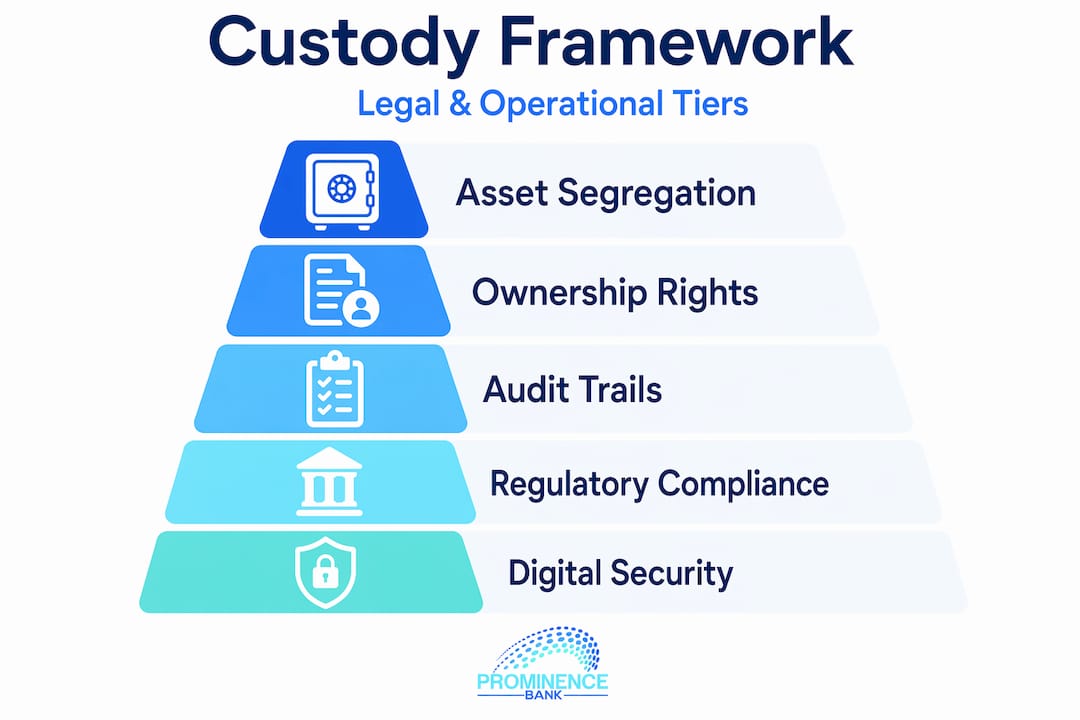
Digital transformation makes this more urgent, not less. New platforms offer impressive interfaces and real-time reporting, but the underlying legal structure may be thinner than the technology suggests. A beautifully designed dashboard does not create asset segregation. Only the legal architecture does.
What we consistently find is that the most protected clients are not necessarily those with the most sophisticated technology. They are the ones who ask hard questions about legal frameworks, insolvency scenarios, and operational controls, and who get documented answers. Continuous due diligence is not paranoia. It is the minimum standard for anyone managing significant wealth.
The evolution of private banking technology is genuinely exciting, and it is creating real improvements in custody efficiency and transparency. But technology is a tool. The legal and regulatory framework is the foundation. Never let one substitute for the other.
Explore advanced custody solutions
Understanding custody at this depth puts you in a position to make genuinely informed decisions about where and how your assets are protected.
Prominence Bank offers tailored custody, multi-currency account solutions, and advanced corporate banking structures designed specifically for high-net-worth individuals and institutional clients who demand more than standard safekeeping. Our digital-first infrastructure combines rigorous legal segregation, international regulatory compliance, and direct access to global financial networks. Whether you are building a new custody structure or evaluating an existing one, our specialists can help you identify gaps and implement solutions. Explore how to secure your corporate banking with a framework built for the complexity your wealth demands.
Frequently asked questions
Who can open a custody account?
Both individuals and institutions can open custody accounts, but requirements and types vary based on client profile, asset complexity, and the regulatory jurisdiction governing the custodian.
How does a custody account protect my assets in case of bank bankruptcy?
Client assets are legally segregated from the custodian’s own assets, preserving your ownership rights and shielding your portfolio from the custodian’s creditors in insolvency.
What assets can be held in a custody account?
Custody accounts can hold securities, cash, real estate, digital assets, and alternative investments, with the specific range depending on the custodian’s capabilities and regulatory authorization.
Are digital assets covered by the same custody protections as other assets?
Digital asset custody design can vary, and regulators often focus on achieving insolvency protection and ownership preservation as outcomes rather than mandating a single technical structure.
Does a custodian need to physically hold assets to have custody under the law?
No. Regulators can treat certain authority or access arrangements as custody, including standing authorizations to withdraw funds, even when assets are not directly held by the firm.