
TL;DR:
- Secure international transfers rely on layered protection such as encryption, multi-factor authentication, and real-time fraud monitoring. Choosing a provider depends on transfer size, destination, and transparency of fees, with traditional banks and specialized services offering different speed and cost balances. Following a step-by-step process ensures safety, with prompt action crucial when dealing with fraud or errors in cross-border payments.
Secure international transfers are defined as cross-border payments protected by encryption, multi-factor authentication, and continuous fraud monitoring to safeguard both funds and personal data. For individuals and businesses moving money across borders, the difference between a safe transfer and a compromised one often comes down to the provider’s security architecture. Providers like Wise use HTTPS encryption and two-step verification alongside millions of automated fraud checks daily, setting the baseline for what reliable global money transfers look like in 2026. US consumers also benefit from federal protections requiring providers to investigate errors within 90 days and disclose all fees upfront. This guide covers the technologies, provider comparisons, step-by-step processes, and business-level considerations you need to transfer money safely and confidently.
What technologies and features ensure security in international transfers?
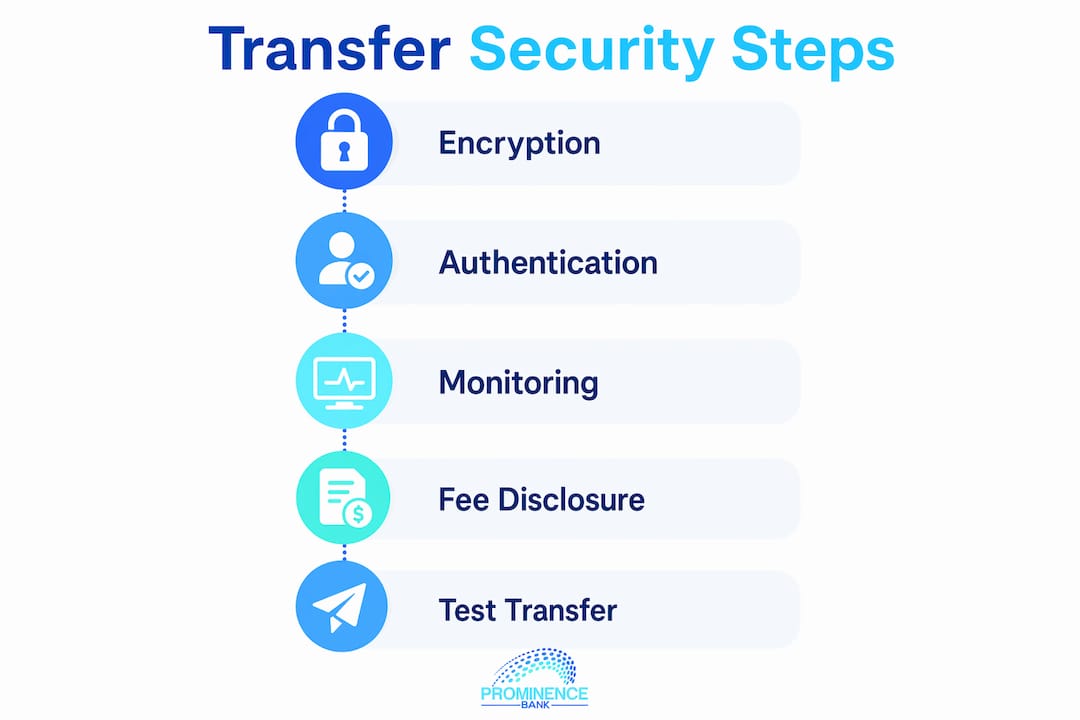
Layered security is the defining characteristic of any trustworthy international money transfer service. No single feature is sufficient on its own. The strongest providers combine HTTPS encryption, two-factor authentication (2FA), and real-time fraud monitoring into a single protection stack.

HTTPS encryption protects data as it moves between your browser and the provider’s servers. Without it, your account credentials and payment details travel in plain text, readable by anyone intercepting the connection. Every reputable provider, from major banks to specialized services, operates exclusively over HTTPS.
Two-factor authentication adds a second verification step beyond your password, typically a one-time code sent to your phone or generated by an authenticator app. This means a stolen password alone is not enough to access your account or authorize a transfer. Enabling 2FA is the single highest-impact security action you can take as a user.
Continuous fraud monitoring is where modern fintech providers differentiate themselves. Millions of fraud checks daily run automatically in the background, flagging unusual patterns before a transfer is approved. This kind of real-time surveillance catches threats that static rule-based systems miss entirely.
Beyond these three pillars, look for:
- Fee transparency before confirmation. You should see the exact amount the recipient receives, including any intermediary deductions, before you approve the transfer.
- Transfer tracking. End-to-end status updates let you confirm funds are moving as expected and catch delays early.
- Segregated funds. Reputable providers hold customer funds separately from their own operating balances, protecting your money if the provider faces financial difficulty.
Pro Tip: Before using any transfer service, check whether it discloses fees for intermediary banks in the transfer flow. Hidden deductions at the SWIFT network level are one of the most common sources of “missing” funds on arrival.
How do you choose a secure international transfer provider?
The right provider depends on your transfer size, destination, and tolerance for cost versus speed. The table below compares the three most common options across the criteria that matter most for international money security.
| Transfer type | Typical cost | Speed | Security features | Best for |
|---|---|---|---|---|
| Bank wire (SWIFT) | High (fixed fees plus FX spread) | 1 to 5 business days | Bank-grade encryption, regulatory oversight | Large, infrequent transfers |
| Specialized service (e.g., Wise) | Low to mid (transparent FX rate) | 95% within one day | HTTPS, 2FA, real-time fraud monitoring | Frequent, cost-sensitive transfers |
| Correspondent bank network | Variable | 2 to 7 business days | Regulated but less transparent on fees | Complex multi-currency corridors |
Bank wire transfers through SWIFT are well-established and carry the regulatory weight of licensed banking institutions. The tradeoff is cost. Intermediary banks in SWIFT networks can deduct their own fees from the transfer amount before it reaches the recipient, and the sender often has no visibility into this until the money arrives short. Providers that show expected intermediary fees before you confirm the transfer solve this problem directly.
Specialized transfer services have closed the security gap with traditional banks while maintaining significantly lower costs. The speed advantage is real: 74% of Wise transfers arrive within 20 seconds, which matters when you are paying a supplier or covering a time-sensitive obligation abroad.
One factor that often surprises senders is destination-side friction. Capital controls in emerging markets cause delays of 4 to 8 hours at the beneficiary end, regardless of how fast the sending provider processes the transfer. This is not a provider failure. It is a regulatory reality in certain corridors, and understanding it prevents unnecessary disputes. For a detailed breakdown of SWIFT fee structures and how they affect your total transfer cost, Prominencebank’s resource on direct bank transfers covers the mechanics clearly.
How to send money internationally: a step-by-step secure process
Executing a safe money transfer is not complicated, but each step has a specific security purpose. Skipping any one of them increases your exposure to fraud or error.
-
Create and verify your account. Choose a licensed provider and complete full identity verification (KYC). Enable two-factor authentication immediately during setup. Do not skip this step even if the platform makes it optional.
-
Prepare recipient details carefully. Collect the recipient’s full legal name, bank account number, routing or IBAN number, and the bank’s SWIFT/BIC code. A single digit error in an account number can send funds to the wrong account, and recovery is not guaranteed.
-
Initiate the transfer with full fee visibility. Enter the amount and review the complete fee breakdown before confirming. This includes the exchange rate, the provider’s fee, and any disclosed intermediary charges. If the platform does not show you the recipient’s expected amount before confirmation, treat that as a red flag.
-
Review and approve. Read the transfer summary one final time. Confirm the recipient name matches your records exactly. Approve only when you are certain every detail is correct.
-
Track the transfer. Use the provider’s tracking tool to monitor status. Most modern services provide real-time or near-real-time updates. If a transfer stalls unexpectedly, contact support before assuming it will resolve itself.
-
Report errors promptly. Under CFPB guidelines, US consumers have the right to report errors within 180 days of the transfer date. Providers must investigate within 90 days and communicate results. Knowing this process exists is part of how to transfer money safely. Document every transfer with screenshots of the confirmation and fee disclosure.
Pro Tip: Always initiate a small test transfer to a new recipient before sending a large amount. This confirms the account details are correct and that the recipient’s bank accepts transfers from your provider, at minimal cost.
Advanced security considerations for businesses making international transfers
Businesses face a different risk profile than individuals. The transaction volumes are larger, the internal processes are more complex, and the consequences of a compromised transfer are proportionally more severe.
The most critical business-specific risks and protections include:
-
Accounts-payable alignment. Your internal AP team must reconcile the disclosed transfer fees and arrival times against what actually hits the recipient’s account. Discrepancies between expected and received amounts are often the first sign of an intermediary issue or, in worse cases, a compromised payment instruction.
-
Multi-currency corporate accounts. Holding balances in multiple currencies eliminates the need for repeated conversions and reduces exposure to exchange rate volatility on time-sensitive payments. This is one of the most practical tools for businesses running regular cross-border payroll or supplier payments.
-
Privacy-compliant security design. Privacy can coexist with AML and sanctions compliance through technologies that screen transactions against regulatory requirements without exposing unnecessary personal data. Businesses operating across multiple jurisdictions should confirm their provider meets both obligations. The compliance obligations for high-net-worth clients and international businesses are detailed in Prominencebank’s compliance guide.
-
Incident response speed. Recovery from fraudulent wire transfers depends on action within minutes to hours, not days. The moment you suspect a fraudulent instruction has been executed, contact your bank and the receiving institution simultaneously. Waiting even a few hours can make recovery impossible once funds clear to the next account. Build this response protocol into your treasury procedures before you need it.
-
Vendor verification controls. Business email compromise (BEC) attacks specifically target payment instruction changes. Require a secondary verbal confirmation via a known phone number for any change to a supplier’s banking details, regardless of how legitimate the email request appears.
For businesses that need a global privacy and wealth protection checklist, Prominencebank’s resource covers the specific controls relevant to cross-border corporate transfers.
Key takeaways
Secure international transfers require layered protection: encryption, two-factor authentication, transparent fee disclosure, and a clear incident response plan are non-negotiable for both individuals and businesses.
| Point | Details |
|---|---|
| Layered security is mandatory | HTTPS, 2FA, and real-time fraud monitoring must work together, not independently. |
| Fee transparency protects you | Confirm the recipient’s exact amount before approving any transfer, including intermediary deductions. |
| Destination-side delays are real | Capital controls in emerging markets cause 4 to 8 hour delays that no sender-side provider can prevent. |
| Error rights have a deadline | US consumers must report transfer errors within 180 days; providers have 90 days to investigate. |
| Businesses need incident speed | Fraudulent wire transfer recovery depends on action within minutes to hours, not days. |
What I’ve learned about trusting the transfer process
Working with international payment flows across multiple jurisdictions has taught me one thing above all: the providers that earn long-term trust are the ones that tell you what will go wrong before it does.
The most frustrating transfer experiences I have encountered were not caused by fraud or technical failure. They were caused by a sender expecting instant delivery to a market with strict capital controls, with no warning from the platform that the last mile would take hours longer than the sending side. That gap between sender expectation and beneficiary reality is where most complaints originate, and it is entirely preventable with honest upfront disclosure.
I am also watching the Project Agorá prototype closely. Tokenized central bank reserves enabling atomic settlement across borders represent a genuine shift in how transaction finality and privacy compliance could work at the wholesale level. This is not a near-term retail story, but it signals where the industry’s security architecture is heading.
My practical advice: prioritize providers with transparent dispute processes and documented international banking security practices over those competing purely on headline exchange rates. The rate you see is not always the rate your recipient receives. The provider that shows you the full picture before you confirm is the one worth trusting.
— Harold
How Prominencebank supports secure global transfers
Prominencebank is built for individuals and businesses that cannot afford ambiguity in their international transfers. The bank’s multi-currency account solutions let you hold, send, and receive funds in multiple currencies without repeated conversions, reducing both cost and exposure on every transaction. For corporate clients, Prominencebank’s advanced corporate banking services combine AML/KYC-compliant security architecture with the discretion and global connectivity that complex business structures require. Every account comes with direct access to global financial infrastructure and the privacy-first design that high-net-worth clients and institutional operators expect. If your current provider leaves you guessing on fees, timing, or dispute resolution, Prominencebank offers a structured alternative built around clarity and protection.
FAQ
What makes an international transfer secure?
A secure international transfer uses HTTPS encryption, two-factor authentication, and real-time fraud monitoring to protect funds and data. Providers that disclose all fees before confirmation and hold customer funds separately from operating balances add additional layers of protection.
How long do I have to report an international transfer error?
US consumers have 180 days from the transfer date to report an error under CFPB rules. The provider must then investigate within 90 days and notify you of the results.
Why did my international transfer arrive short of the expected amount?
SWIFT intermediary banks can deduct their own fees from the transfer amount in transit. Providers that disclose expected intermediary charges before confirmation reduce this risk, but not all platforms show this information upfront.
How quickly must I act if I suspect wire fraud?
Fraudulent wire transfer recovery depends on action within minutes to hours. Contact your bank and the receiving institution immediately. Waiting until the next business day typically makes recovery impossible.
Are transfer delays always the sender’s provider’s fault?
No. Capital controls in emerging markets regularly cause delays of 4 to 8 hours at the beneficiary end, regardless of how efficiently the sending provider processes the payment. These are regulatory restrictions in the destination country, not provider failures.