
TL;DR:
- Choosing the right corporate accounts is a strategic decision that impacts compliance, operations, and liability protection for businesses.
- Different account types, such as checking, savings, merchant, and multi-currency, serve distinct operational and international needs.
Choosing the right corporate entity accounts is one of the most consequential financial decisions a business makes, yet most owners approach it without a clear framework. The wrong structure creates compliance gaps, limits operational flexibility, and can even expose personal assets to liability. This guide breaks down the most practical examples of corporate entity accounts across different business scenarios, explains what distinguishes each type, and gives you the criteria to match account structures to real operational needs.
Table of Contents
- Key takeaways
- Examples of corporate entity accounts and how to evaluate them
- 1. Business checking accounts
- 2. Business savings accounts
- 3. Merchant accounts
- 4. Multi-currency accounts
- 5. Money market accounts
- 6. Escrow and trust accounts (for specific entity structures)
- 7. Corporate investment accounts
- Comparing account types at a glance
- Choosing the right account for your situation
- My take on what most businesses get wrong
- How Prominencebank supports your corporate account structure
- FAQ
Key takeaways
| Point | Details |
|---|---|
| Multiple account types exist | Corporate entity accounts span checking, savings, merchant, multi-currency, and money market categories. |
| Documentation is non-negotiable | EIN, formation documents, and board resolutions are required before most banks will process your application. |
| Account type should match operations | High-volume merchants need merchant accounts; international firms need multi-currency accounts with FX capabilities. |
| Authorized signatories matter | Foreign-owned entities face extra scrutiny on who signs, requiring careful selection of authorized individuals. |
| Digital onboarding is now standard | Leading institutions offer fully online corporate account setup with KYC compliance built into the process. |
Examples of corporate entity accounts and how to evaluate them
Before you look at specific corporate account examples, you need a clear set of criteria. The account type that works for a domestic LLC with three employees is not the same one that works for a foreign-owned holding company processing payments in six currencies.
The foundational question is function. Corporate accounts differ from basic business accounts by offering structured controls, approval workflows, multi-user access, and global payment features. A business checking account handles daily inflows and outflows. A savings account holds reserves. A merchant account processes customer payments. Each serves a distinct operational role, and most mature businesses need more than one.
Regulatory requirements form the next layer of evaluation. Opening a corporate bank account in 2026 requires a standard set of documents:
- Employer Identification Number (EIN)
- Photo ID for all authorized signers
- Articles of Incorporation or Organization
- Corporate Bylaws or Operating Agreement
- Board-authorized resolution designating who may open and manage the account
That last item trips up more applicants than any other. Even a senior officer can be denied account access if no corporate resolution explicitly names them. Missing or expired state registrations are another leading cause of automatic rejections, so audit your compliance filings before you apply anywhere.
For international operations, the criteria expand further. You need to evaluate whether an account supports multi-currency holdings, international wires, and foreign exchange settlement. You also need to consider user access levels, particularly if your finance team needs tiered approval rights for large transactions.
Pro Tip: Before contacting any bank, create a one-page document checklist specific to your entity type. Sole proprietors need fewer documents than C-corps, but the gap in documentation requirements also reflects a gap in personal liability protection. The more robust your formation documents, the stronger your account application.
1. Business checking accounts
The business checking account is the most common starting point in any list of corporate account examples. It handles the daily volume of corporate life: payroll, vendor payments, tax deposits, and operating expenses. For most entities, this account functions as the financial center of gravity.

A standard C-corp or LLC will open a business checking account immediately after formation. The account is tied to the company’s EIN, not the owner’s Social Security number, which is the first concrete step toward separating personal and business liability. Banks typically offer tiered checking products based on monthly transaction volume, so a startup with 50 monthly transactions has different needs than a logistics firm processing 5,000.
What distinguishes a corporate-grade checking account from a small business checking account is the service architecture. Corporate versions include sub-account structures, dual-signature requirements for large disbursements, and integration with enterprise accounting software.
2. Business savings accounts
Business savings accounts serve a specific and often underutilized function: holding reserves. These accounts earn interest on idle cash while keeping funds legally and operationally separated from operating capital.
A manufacturing company, for example, might maintain a business savings account funded with a percentage of monthly revenue to cover quarterly tax obligations or equipment replacement cycles. The interest rate is typically modest, but the discipline of separation pays dividends in cash flow predictability.
Different business entity types carry different liability implications, and a properly structured savings account reinforces the legal separation that protects owners of LLCs and corporations from personal exposure.
3. Merchant accounts
Merchant accounts are purpose-built for companies that accept customer payments, whether online, in-store, or through invoicing. A common real-world example is a private limited company using its merchant account to receive customer payments and then pay GST obligations, employee salaries, and supplier invoices from the same account.
The merchant account sits between your customer’s payment method and your operating account. It temporarily holds funds during the settlement process before transferring cleared amounts to your checking account. For e-commerce businesses or any company with high card transaction volume, this is not optional. It is a functional requirement.
Setup requires a payment processor relationship in addition to standard bank documentation. Underwriting for merchant accounts also evaluates your industry’s chargeback risk, which is why high-risk sectors like travel or subscription software face more stringent terms.
4. Multi-currency accounts
Multi-currency accounts are among the most strategically valuable business entity account types for internationally active companies. Rather than converting every foreign receipt into domestic currency (and paying conversion fees each time), a multi-currency account holds balances in multiple currencies simultaneously.
A U.S.-based holding company with subsidiaries in the EU and Southeast Asia, for example, can receive euros and Singapore dollars directly, hold them until exchange rates are favorable, and pay foreign vendors without unnecessary conversion costs. Proper FX risk management in this context is not just a treasury preference. It is a material factor in net margin.
These accounts typically require more documentation during onboarding and may require proof of international business activity. The tradeoff in complexity is worth it for any company with recurring cross-border cash flows.
5. Money market accounts
Money market accounts occupy the space between business savings accounts and short-term investment vehicles. They offer higher interest rates than standard savings while maintaining relatively easy access to funds. For a corporate treasury function managing six to eight figures in liquid reserves, the yield difference matters.
A private equity holding company or a capital-intensive manufacturer might park surplus cash in a money market account between deployment cycles. The account earns a return on idle capital without locking funds into longer-term instruments.
The tradeoff is that money market accounts often carry minimum balance requirements and limit the number of monthly withdrawals. They are not designed for operational cash management. They are designed for intelligent cash storage.
6. Escrow and trust accounts (for specific entity structures)
Less commonly discussed but critically important for certain corporate structures, escrow accounts hold funds on behalf of third parties during transactions. Law firms, real estate entities, and M&A structures frequently use these as a formal example of business accounts that serve legal rather than operational functions.
A real estate investment company, for instance, holds buyer deposits in a separate escrow account until closing conditions are satisfied. The funds are not the company’s operating capital. They are held in trust, and misusing them creates both legal and regulatory consequences.
7. Corporate investment accounts
For entities with treasury functions, corporate investment accounts hold securities, bonds, and other financial instruments owned by the company. These differ from money market accounts in that they are subject to market risk and are managed with longer time horizons.
Corporate financial accounts are organized into Assets, Liabilities, and Equity categories on the balance sheet, and investment accounts fall under assets. Retained earnings, which represent cumulative net profits kept within the business rather than distributed, often fund these investment positions. Understanding that retained earnings and contributed capital from investors represent distinct equity components is foundational knowledge for any financial professional managing these accounts.
Comparing account types at a glance
Here is a side-by-side look at how these different corporate account examples stack up across the features that matter most to business owners and financial professionals.
| Account type | Best for | International capability | Interest earned | Typical minimum balance |
|---|---|---|---|---|
| Business checking | Daily operations | Limited | None | Low to none |
| Business savings | Cash reserves | None | Low | Moderate |
| Merchant account | Payment processing | Yes (card networks) | None | Varies by processor |
| Multi-currency | Global trade | High | Varies | Often higher |
| Money market | Treasury cash storage | None | Moderate to high | High |
| Escrow/trust | Transaction holding | Varies | None | None |
| Corporate investment | Capital deployment | Yes | Market-dependent | High |
The table above confirms something experienced treasury managers already know: no single account type covers every function. The question is not which account to open, but which combination to build.
For foreign-owned corporate entities, there is an additional layer of complexity. Banks increasingly require authorized signatories to hold local digital identity credentials, which makes the choice of who represents your entity at the bank a decision with real operational consequences. Foreign company founders often discover this only after their application stalls.
Pro Tip: If your company operates across borders, work with a financial institution that has explicit experience with cross-border corporate onboarding. The documentation requirements for a foreign-owned Delaware LLC are meaningfully different from those for a domestic entity, and most retail banks are not equipped to handle the nuance.
Choosing the right account for your situation
The most effective corporate account structure is built around operational reality, not theoretical best practices. Here is how to think through it by scenario.
For startups and early-stage companies, the priority is separation and simplicity. Open a business checking account immediately. Avoid conflating personal and business finances from day one, because unwinding that later is expensive and can create tax exposure.
For established domestic businesses with predictable cash cycles, adding a business savings or money market account creates a disciplined reserve structure. The operational account handles spending; the reserve account holds tax provisions, emergency capital, or reinvestment funds.
For international businesses and foreign-owned entities, multi-currency accounts are non-negotiable. Combined with a global account setup designed for cross-border compliance, these accounts reduce both transaction costs and currency risk. Documentation preparation is more involved, so start early.
For high-volume merchants and e-commerce operations, a dedicated merchant account paired with a primary checking account is the baseline structure. Consider adding a savings account for chargeback reserves, which processors sometimes require as collateral.
- Domestic LLC or S-Corp: Business checking + savings account
- C-Corp with investors: Checking + investment account + money market for reserves
- Foreign-owned holding company: Multi-currency account + dedicated asset protection structure
- High-volume retailer or SaaS company: Merchant account + operating checking + reserve savings
My take on what most businesses get wrong
I have reviewed enough corporate account setups to spot the pattern immediately. Most business owners open one account, call it done, and then spend years managing around a structure that was never built for their actual needs.
The most common mistake is treating account selection as a one-time administrative task rather than a strategic financial decision. The second most common mistake is underestimating documentation. I have seen well-capitalized companies get rejected because their corporate resolution was missing or signed by someone not named in their bylaws. It is entirely preventable.
What I find genuinely underappreciated is how much account structure shapes financial reporting. When retained earnings fund a corporate investment account and that position appreciates, the accounting treatment differs from operating income. Shareholders’ equity statements track these movements, and financial professionals who ignore that layer of reporting create reporting gaps that surface at the worst times, usually during fundraising or due diligence.
My practical advice: audit your account structure annually. As your business grows, so do your needs. The accounts that served you at $2 million in revenue may be inadequate at $20 million. Flexibility matters, and that means choosing banking partners who can grow with you rather than forcing you to restart the onboarding process every time your structure evolves.
— Harold
How Prominencebank supports your corporate account structure
Managing corporate entity accounts across multiple jurisdictions and currencies requires a banking partner built for that complexity, not one that merely tolerates it.
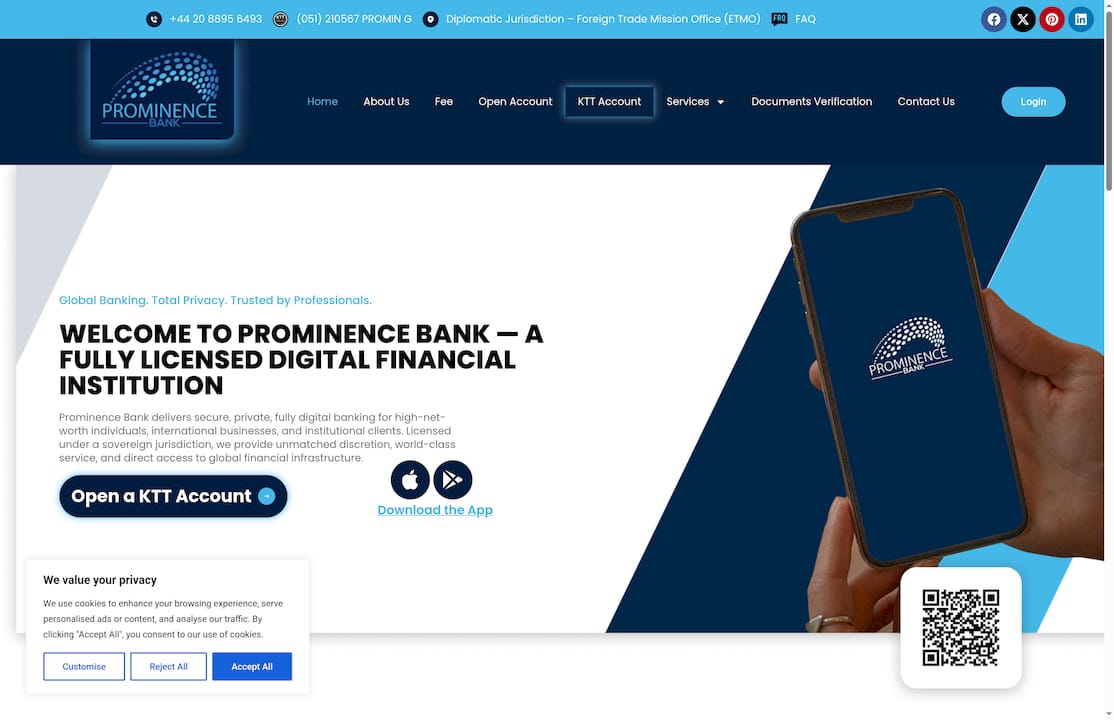
Prominencebank offers fully digital corporate banking solutions designed for international businesses, high-net-worth entities, and complex corporate structures. From multi-currency account management to advanced corporate banking solutions built for global operations, the platform handles the account types and compliance layers that most traditional banks are not equipped to manage. KYC-compliant onboarding, tiered user access, and treasury-grade security come standard. If your current banking structure is holding your operations back, it is worth exploring what a purpose-built institution can do differently.
FAQ
What are the main types of corporate entity accounts?
Corporate entity accounts include business checking, business savings, merchant accounts, multi-currency accounts, and money market accounts as the primary functional categories. Complex entities may also use escrow, trust, or corporate investment accounts depending on their structure.
What documents are required to open a corporate bank account?
Standard requirements include an EIN, photo ID for authorized signers, Articles of Incorporation or Organization, Corporate Bylaws or an Operating Agreement, and a corporate resolution authorizing specific individuals to manage the account.
Why would a business need a multi-currency account?
A multi-currency account lets companies hold and transact in foreign currencies without converting each payment, reducing FX fees and currency risk for businesses with cross-border revenue or supplier payments.
Can a foreign-owned company open a corporate bank account?
Yes, but foreign-owned entities face additional scrutiny. Banks may require authorized signatories to hold local digital identity credentials, and the documentation process is typically more involved than for domestic entities.
How many corporate accounts does a business typically need?
Most businesses need at least two: an operating checking account and a reserve savings or money market account. International companies and high-volume merchants typically require three or more account types to cover their full range of financial operations.