
TL;DR:
- Family offices face targeted cyber threats that threaten their privacy and assets without specialized security measures. Implementing advanced encryption, strict access controls, and proactive physical and digital protections is essential to mitigate risks and ensure operational continuity. Prominencebank offers a compliant, secure, and confidential digital banking platform tailored to meet these high-level security demands.
Family offices managing substantial wealth face a threat environment that most corporate security frameworks were never designed to address. Secure banking, meaning banking that integrates advanced encryption, strict access controls, AML/KYC compliance, and confidentiality protocols, is the operational foundation that keeps assets protected and family privacy intact. Without it, a single breach can expose trust structures, beneficiary identities, real estate holdings, and liquid positions all at once.
The stakes are concrete. Cyber losses are projected to reach $10 trillion globally by 2025, and more than 40% of family offices managing assets above $1 billion have already experienced a breach. Core reasons why secure banking is indispensable:
- Asset protection: Prevents unauthorized access to liquid positions, investment accounts, and wire transfer authority.
- Confidentiality: Shields beneficiary identities, estate plans, and trust structures from exposure.
- Regulatory compliance: Satisfies AML/KYC obligations and, where applicable, GDPR requirements.
- Operational continuity: Maintains banking access and transaction capability during and after an incident.
- Reputational defense: Limits the reputational damage that follows a public breach of private family data.
Table of Contents
- What security risks do family offices actually face?
- How should you classify and protect sensitive family office data?
- Why proactive executive protection belongs in your banking security plan
- Key security measures and compliance protocols in specialized banking
- Prominencebank: built for the security demands of family offices
- FAQ
- Key Takeaways
What security risks do family offices actually face?
Family offices are not typical corporate targets. Their adversaries are patient, targeted, and financially motivated in a direct, personal way. A successful intrusion into a single-family office yields actionable intelligence on liquid positions, real estate, trust structures, and personal schedules, all in one repository.
The threat categories are specific:
- Phishing and business email compromise: Attackers impersonate attorneys, advisors, or known counterparties to redirect wire transfers. Because family offices process large, irregular transactions with informal authorization cultures, a single successful attack can cause losses in the millions.
- Ransomware as privacy extortion: Attackers do not just encrypt files. They threaten to release medical records, travel schedules, and private correspondence publicly or to counterparties.
- Social engineering and deepfakes: AI-augmented attacks now produce convincing voice and video impersonations of principals.
- Insider threats: Household staff, domestic employees, and contractors with network access create exposure that corporate security models ignore entirely.
- Cyber-physical convergence: Digital leaks translate directly into physical vulnerabilities. GPS metadata in social media posts, leaked travel itineraries, and compromised home Wi-Fi systems have enabled physical crimes including kidnappings.
Despite this, nearly 31% of family offices globally still operate without a formal cyber incident response plan. The Deloitte Family Office Cybersecurity Report also found that Many have not adopted “know your vendor” protocols, leaving third-party access largely unvetted.
How should you classify and protect sensitive family office data?
Not all data carries the same risk. A practical classification scheme separates information into four tiers: public, internal, confidential, and restricted. Restricted data, covering beneficiary identity documents, health records, trust structures, security arrangements, and unpublished estate plans, requires the highest level of protection.
Recommended data protection practices for family offices:
- Encrypt restricted data at rest and in transit, without exception.
- Maintain a data map documenting what personal and financial data the office holds, where it is stored, who can access it, and which third parties have received it.
- Apply retention policies that limit how long restricted data remains accessible.
- Conduct vendor security assessments before granting any external party access to family data, with periodic reviews thereafter.
- Require data processing agreements with every vendor that handles personal data on the office’s behalf, including incident notification clauses.
- Review GDPR obligations if the office processes data of EU residents, regardless of where the office is domiciled. Non-compliance carries fines of up to 4% of annual global turnover.
Pro Tip: Review your secure banking checklist annually and update your data map every time a vendor relationship changes or a staff member departs.
Identity and access management with multi-factor authentication and least privilege policies consistently delivers the highest return of any security investment a family office can make. The household manager should not be able to access investment records. The investment associate should not be able to access medical files. These are not aspirational policies; they are the minimum credible posture.
Why proactive executive protection belongs in your banking security plan
Most principals conflate a bodyguard with an executive protection specialist. The distinction matters operationally. Proactive executive protection operates covertly, using intelligence-led risk mitigation to neutralize threats before they escalate, rather than responding visibly after a threat appears.

For family offices, this integration with banking security is direct. Financial negotiations, wire authorizations, and asset transfers all involve travel, communication, and physical meetings where exposure is real.
Core elements of executive protection relevant to family offices:
- Digital footprint reduction: Actively limiting public exposure of principals’ schedules, locations, and family relationships.
- Travel security coordination: Pre-trip threat assessments, secure transit protocols, and coordination with local security teams.
- Discretion in financial meetings: Technical sweeps of meeting spaces before sensitive negotiations, particularly for deals involving significant asset transfers.
- Communication security: Encrypted channels for all discussions involving transaction details or personal schedules.
Integrated digital and physical risk management is now a baseline requirement, not an upgrade. Attackers exploit digital data to create physical vulnerabilities. A security program that addresses wire fraud but ignores the physical exposure created by a leaked travel itinerary is managing only part of the threat surface.
Key security measures and compliance protocols in specialized banking
Family office banking security rests on a specific set of technical controls and governance structures. The Deloitte Cybersecurity Report found that while 85% of family offices use MFA and strong passwords, fewer than half have a disaster recovery plan, and 63% lack cybersecurity insurance.
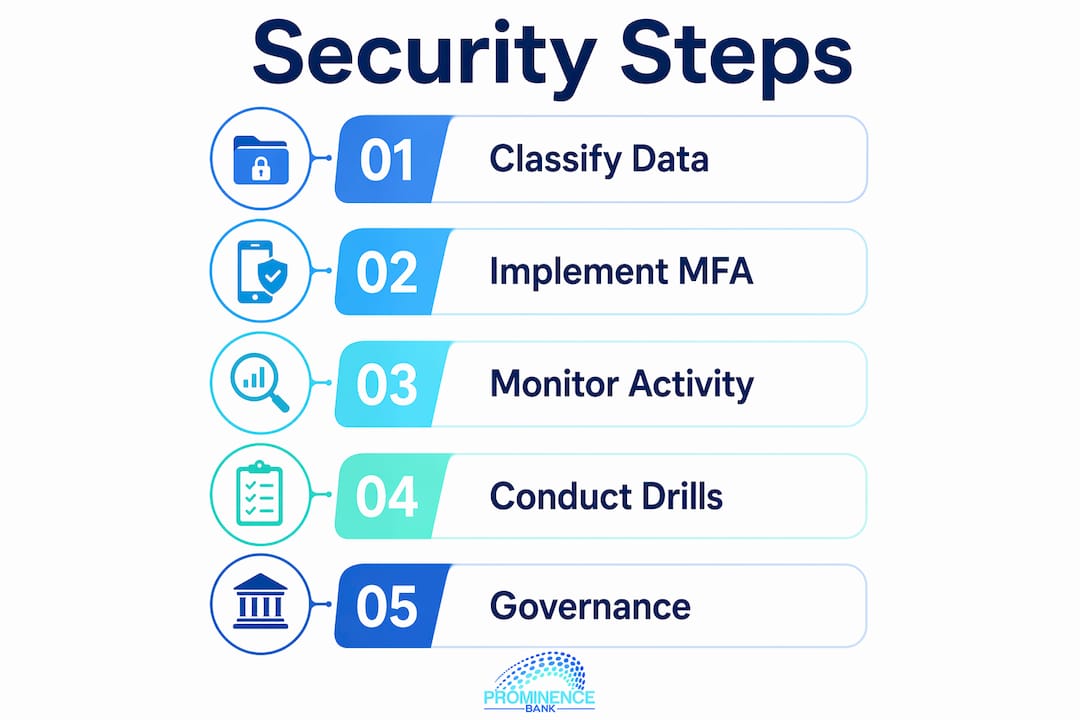
| Security Control | Purpose | Family Office Relevance |
|---|---|---|
| Multi-factor authentication | Blocks unauthorized account access | Required for all financial systems |
| End-to-end encryption | Protects data in transit and at rest | Covers wire instructions, beneficiary data |
| Network segmentation | Isolates office systems from household networks | Prevents lateral movement after home breach |
| Endpoint detection | Monitors all devices for threats | Includes mobile phones used for approvals |
| Incident response plan | Defines roles and notification steps | Reduces breach duration and cost |
| AML/KYC compliance | Meets regulatory obligations | Required for all banking relationships |
| Vendor due diligence | Vets third-party access | Addresses the significant gap in “know your vendor” adoption |
Effective governance requires designating a named senior-level individual as accountable for information security. This does not require a full-time hire. A part-time virtual CISO engagement, paired with a clear internal accountability owner who has direct access to the principal, provides the oversight structure most single-family offices need.
Cyber insurance now requires documented evidence of MFA deployment, endpoint detection, network segmentation, and a tested incident response plan as conditions for coverage. Offices that cannot demonstrate these controls face either coverage denial or policies with exclusions that limit payout in the most likely loss scenarios.
Pro Tip: Run incident response drills at least annually using scenarios specific to your office’s actual workflows, such as an urgent wire request from a traveling principal’s personal email. Generic phishing simulations produce limited awareness in a family office context.
Balancing security with privacy means choosing banking partners who treat confidentiality as a structural feature, not a policy add-on, as explained in this guide pratique on secure agency transactions. AML/KYC compliance and strict privacy are not in tension; the right banking partner builds both into the same account architecture.
Prominencebank: built for the security demands of family offices
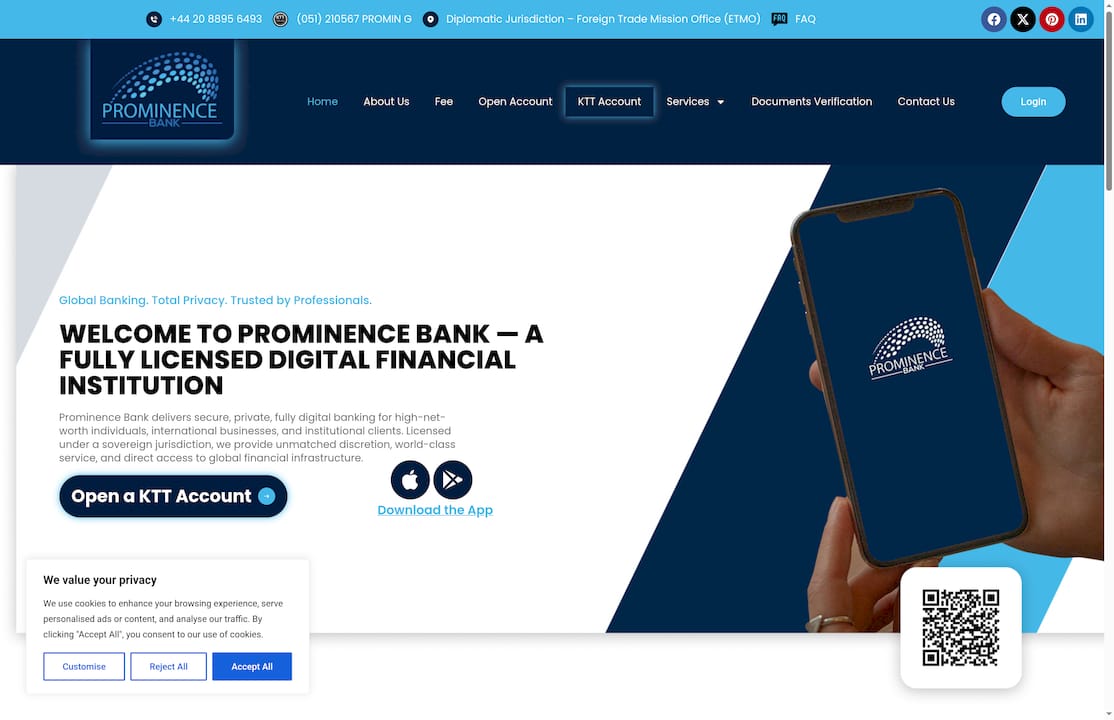
Family offices need a banking partner that treats privacy and compliance as core infrastructure, not optional features. Prominencebank is a fully licensed digital banking institution operating under ETMO sovereignty, purpose-built for high-net-worth individuals, complex corporate structures, and institutional clients who cannot afford the exposure that comes with generic banking relationships.
The concrete difference: Prominencebank combines multi-currency accounts, full AML/KYC compliance, and advanced encryption in a single online platform, with no branch dependency and no compromise on confidentiality. For family offices managing cross-border assets, the multi-currency account structure eliminates the fragmentation risk that comes with holding accounts across multiple institutions with inconsistent security standards.
If you are ready to move your family office to a banking structure that matches your security requirements, review Prominencebank’s corporate banking solutions and start your account setup today.
FAQ
Why is secure banking especially critical for family offices?
Family offices concentrate financial, legal, and personal data in a single repository, making them high-value targets for patient, targeted attackers. A breach can expose trust structures, beneficiary identities, and liquid positions simultaneously, with consequences that are difficult to reverse.
What percentage of family offices lack a cyber incident response plan?
Nearly 31% of family offices globally operate without a formal cyber incident response plan, according to the Deloitte Family Office Cybersecurity Report.
What AML/KYC compliance requirements apply to family office banking?
Family offices must satisfy Anti-Money Laundering and Know Your Customer standards as part of any regulated banking relationship in the United States. These obligations require verified identification of beneficial owners, transaction monitoring, and documented due diligence on counterparties.
How does Prominencebank address family office security needs?
Prominencebank offers fully licensed digital banking with built-in AML/KYC compliance, end-to-end encryption, and multi-currency account structures designed for complex ownership arrangements. Its online banking guide for HNWIs covers the specific steps for setting up and managing accounts securely.
What is the single highest-return security investment for a family office?
Rigorous identity and access management, including MFA on every system that touches financial data and strict least-privilege access controls, consistently delivers the highest return of any security investment a family office can make.
Key Takeaways
Secure banking for family offices requires integrating technical controls, governance accountability, and a banking partner that treats confidentiality as a structural feature, not a policy option.
| Point | Details |
|---|---|
| Breach risk is concentrated at the top | Over 40% of family offices managing assets above $1 billion have experienced a cyber breach. |
| Incident response gaps are widespread | Nearly 31% of family offices globally still operate without a formal cyber incident response plan. |
| Identity management delivers the highest return | MFA and least-privilege access controls are the most cost-effective security investments available. |
| Physical and digital risks are inseparable | Digital leaks directly enable physical threats; integrated security programs must address both perimeters. |
| Prominencebank fits the family office model | Its AML/KYC-compliant, multi-currency, fully online structure matches the confidentiality and compliance demands of complex family wealth. |