
TL;DR:
- Offshore finance helps institutional clients optimize taxes, protect assets, and access global markets within credible, transparent legal frameworks.
- It relies on economic substance, legal stability, and regulatory compliance, not just low tax rates, to ensure benefits are legitimate.
- Structured correctly, offshore entities streamline international operations and reduce risks while meeting transparency standards.
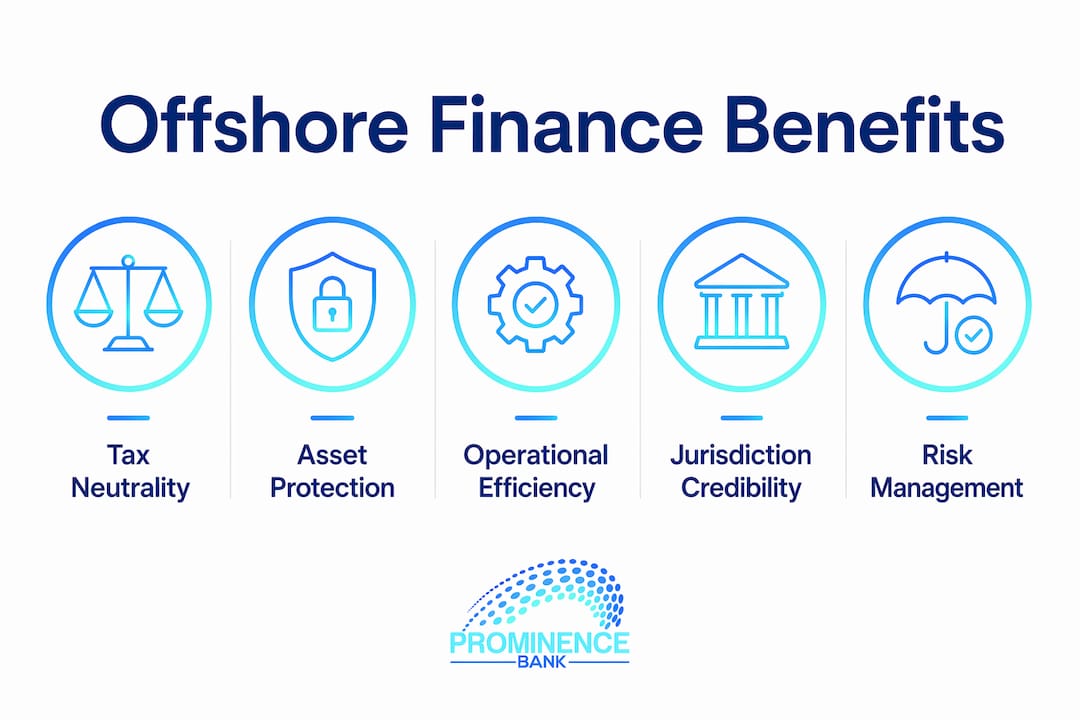
Offshore finance is the strategic use of foreign jurisdictions by institutional clients to optimize tax liabilities, safeguard assets, and access global markets efficiently. The reasons why institutional clients prefer offshore finance go well beyond simple tax avoidance. Established frameworks like the Cayman Islands, OECD Common Reporting Standard (CRS), and FATF compliance regimes have transformed offshore centers into credible, transparent financial hubs. Institutions use structures including trusts, special purpose vehicles (SPVs), captive insurance companies, and master-feeder funds to facilitate global capital flow. Tax neutrality, legal predictability, and operational scalability drive the decision at every level of institutional asset management.
What tax advantages do institutional clients gain from offshore finance?
Tax neutrality is the primary financial benefit that offshore structures deliver to institutional clients. A tax-neutral jurisdiction does not impose an additional layer of tax on income that has already been taxed in the investor’s home country. Without this structure, cross-border investment returns face double or even triple taxation, which erodes net performance significantly.

The most cited example of legal tax optimization involves subsidiary placement in low-rate jurisdictions. A U.S. business subject to a 21% corporate tax rate can use an Irish subsidiary taxed at 12.5% to reduce its global effective tax rate, provided it meets economic substance requirements. That difference compounds materially over multi-year investment horizons.
Economic substance rules are the critical compliance condition that determines whether offshore tax advantages hold. Offshore entities must conduct genuine commercial activity locally. Without that substance, tax authorities in the home jurisdiction apply Controlled Foreign Corporation (CFC) rules and attribute the offshore income back to domestic taxpayers, eliminating the tax benefit entirely.
Offshore investment bonds add another layer of tax planning for institutional wealth managers. These structures allow tax-deferred investment growth and permit annual withdrawals of up to 5% of the original investment without triggering immediate tax charges. That 5% allowance accumulates if unused, creating a flexible cash flow tool over a 10–20 year planning horizon.
The compliance landscape has also shifted. Offshore centers now comply with OECD CRS and FATF transparency standards, meaning institutions operate within a fully reportable framework. Transparency does not eliminate tax efficiency. It simply means the efficiency must be structurally legitimate from the outset.
- Confirm the jurisdiction offers tax neutrality for your investor base.
- Establish genuine economic substance with local staff, directors, and operations.
- Align the offshore entity with CFC rules in your home jurisdiction.
- Use offshore investment bonds for long-term tax deferral where appropriate.
- File all required OECD CRS disclosures annually to maintain compliance.
Pro Tip: Structure your offshore entity before opening banking relationships. Banks test commercial rationale at onboarding, and a poorly structured entity will face account rejection regardless of jurisdiction quality.
How does offshore finance enhance asset protection and risk management?
Asset protection through offshore structures rests on two foundations: legal system stability and structural separation. Jurisdictions like the Cayman Islands and Jersey operate under English common law, which provides predictable creditor protection rules and well-tested trust law. Institutions place assets into offshore trusts or SPVs to create legal separation between operating entities and capital reserves.
Political and economic stability matter as much as the legal framework. Offshore financial centers are specifically designed to remain neutral during domestic political cycles in the investor’s home country. An institution holding assets in a jurisdiction with an independent judiciary and no capital controls retains access to those assets regardless of home-country regulatory shifts.
Centralized treasury functions represent the operational risk management benefit that often goes underappreciated. Offshore Financial Centres reduce friction by centralizing foreign exchange hedging, intercompany lending, and cash pooling for multinational corporations. That centralization cuts transaction costs and reduces currency exposure across dozens of operating subsidiaries.
The reputational dimension also matters for institutional clients. Investors and limited partners conduct due diligence on fund structures before committing capital. A fund domiciled in a credible offshore center with a recognized legal framework signals governance quality. That signal reduces friction during capital raising and shortens investor onboarding timelines.
Key asset protection benefits of offshore finance for institutions:
- Legal separation: SPVs and trusts isolate capital from operating liabilities.
- Creditor protection: English common law jurisdictions provide tested, predictable rules.
- Currency risk management: Centralized FX hedging reduces multi-currency exposure.
- Political insulation: Neutral jurisdictions protect assets from home-country regulatory shifts.
- Investor confidence: Credible domiciles reduce due diligence friction during fundraising.
Pro Tip: Pair your offshore entity formation with discreet banking arrangements from the start. Banking relationships structured alongside entity formation avoid the operational roadblocks that derail offshore vehicles after setup.
Why do institutional investors prioritize established jurisdictions like the Cayman Islands?
The Cayman Islands is the dominant global fund domicile for one measurable reason: institutional acceptance. The jurisdiction hosts over 13,000 regulated funds and offers a legal framework built on English common law that institutional legal teams recognize without additional analysis. That familiarity directly reduces onboarding costs and due diligence timelines.
Institutional investors do not simply chase the lowest tax rate. Credibility, scalability, and access drive jurisdiction selection in 2026. A fund domiciled in an unfamiliar or less-regulated jurisdiction forces every prospective investor’s legal team to conduct fresh analysis. That friction delays capital commitments and increases legal costs for the fund manager.
The Cayman Islands also offers a deep service provider network. Experienced fund administrators, auditors, legal counsel, and custodians operate locally, which means institutional fund managers can build a full operational infrastructure without sourcing providers across multiple time zones. Jersey and Guernsey offer a comparable model, providing incubator-style environments for efficient, cost-effective fund launches with access to experienced local service providers.
| Jurisdiction | Fund count | Legal framework | Setup time | Annual regulatory cost |
|---|---|---|---|---|
| Cayman Islands | 13,000+ regulated funds | English common law | 2–6 weeks | ~$4,268 |
| British Virgin Islands | Smaller scale | English common law | Varies | Lower than Cayman |
| Bermuda | Smaller scale | English common law | Varies | Comparable to BVI |
| Jersey / Guernsey | Growing | English common law | Varies | Not publicly listed |
Cayman fund setup times of 2–6 weeks with annual regulatory costs around $4,268 reflect the jurisdiction’s mature infrastructure. That speed and cost predictability matter when institutions need to launch vehicles ahead of market windows. Smaller jurisdictions may offer lower costs but cannot match the institutional acceptance that Cayman delivers.
Institutional due diligence consistently favors Cayman-domiciled master-feeder fund structures because legal teams can rely on precedent rather than conducting fresh analysis for each new fund. That reliance translates directly into faster capital commitments and lower legal costs for the fund manager.
What operational efficiencies do offshore finance structures enable?
Offshore finance functions as friction-reducing infrastructure for global capital allocation. The primary role of offshore centers is not to provide low tax rates but to create neutral, efficient infrastructure that allows capital to move across borders without unnecessary regulatory or currency barriers. Institutions managing assets across multiple jurisdictions depend on that neutrality to execute cross-border transactions at scale.
Master-feeder fund structures are the most widely used operational tool for multi-jurisdiction investor bases. A master fund domiciled in the Cayman Islands accepts capital from multiple feeder funds, each structured to meet the regulatory requirements of a specific investor jurisdiction. U.S. taxable investors, U.S. tax-exempt investors, and non-U.S. investors each access the same underlying portfolio through separate feeders. That structure eliminates the need to manage multiple standalone funds with duplicated operational costs.
Fintech integration has expanded the operational benefits of offshore finance significantly. Offshore accounts now connect to global payment rails, multi-currency wallets, and real-time treasury management platforms. Institutions can execute FX conversions, intercompany transfers, and custody movements through a single digital interface rather than managing relationships across multiple domestic banking systems.
The challenges are real and should not be minimized. Regulatory complexity increases as jurisdictions adopt OECD CRS, FATF recommendations, and local substance requirements simultaneously. Institutions must maintain compliance teams capable of monitoring obligations across multiple jurisdictions. The cost of that compliance is the price of operating at institutional scale in global markets, and it is a cost that credible offshore structures are specifically designed to manage efficiently.
Key operational advantages of offshore finance structures:
- Master-feeder structures consolidate multi-jurisdiction investor capital into a single portfolio.
- Centralized treasury reduces FX hedging costs and intercompany lending complexity.
- Fintech integration connects offshore entities to global payment and custody infrastructure.
- Neutral domicile removes home-country regulatory barriers from cross-border transactions.
- Scalable compliance frameworks align with OECD CRS and FATF standards across jurisdictions.
Key Takeaways
Institutional clients prefer offshore finance because it combines legal tax efficiency, asset protection, and operational scalability within compliant, internationally recognized frameworks.
| Point | Details |
|---|---|
| Tax neutrality is the core driver | Offshore structures eliminate double taxation on cross-border returns when economic substance rules are met. |
| Jurisdiction credibility outweighs tax rate | Cayman Islands dominates with 13,000+ funds because institutional due diligence favors familiar legal frameworks. |
| Economic substance is non-negotiable | Offshore entities must conduct genuine local commercial activity or CFC rules negate all tax advantages. |
| Operational efficiency scales globally | Master-feeder structures and centralized treasury functions reduce friction across multi-jurisdiction portfolios. |
| Compliance is now built in | Leading offshore centers comply with OECD CRS and FATF, making transparency a feature rather than a risk. |
What I’ve learned about offshore finance that most articles get wrong
The conversation about offshore finance still gets framed as a tax story. After years of working with institutional clients on cross-border structures, I can tell you the tax rate is rarely the deciding factor. The institutions that build durable offshore structures choose jurisdictions for their legal infrastructure, service provider depth, and regulatory predictability. The ones that chase the lowest possible rate almost always rebuild their structures within five years.
The shift toward transparency has been the most consequential change in this space. OECD CRS reporting and FATF compliance have not killed offshore finance. They have filtered out the structures that were built on secrecy rather than substance. What remains is a cleaner, more credible market where institutions can operate without reputational risk. That is a better environment for serious capital, not a worse one.
The practical advice I give every financial manager entering this space is to treat banking as part of the structure, not an afterthought. Banks evaluate commercial rationale when they onboard offshore entities. A fund with a credible domicile, genuine substance, and a clear investment mandate opens accounts without friction. A fund that chose its jurisdiction for tax rate alone and has no local operations will struggle to bank anywhere that matters. Get the offshore corporate structure right first, then build the banking relationship around it.
— Harold
Prominencebank supports institutional offshore banking needs
Institutional clients managing cross-border capital need more than a jurisdiction. They need a banking partner that understands the operational demands of offshore structures, multi-currency portfolios, and global compliance requirements.
Prominencebank provides fully licensed corporate banking solutions built for institutions operating across multiple jurisdictions. Multi-currency accounts, treasury management, and AML/KYC-compliant onboarding are available through a single digital platform. Clients managing offshore fund structures, SPVs, or international holding companies can access global banking infrastructure without the friction of traditional correspondent banking. Prominencebank’s institutional team works directly with financial managers to align banking relationships with entity structure from day one.
FAQ
Why do institutional clients prefer offshore finance over domestic banking?
Offshore finance provides tax neutrality, legal asset separation, and access to globally recognized fund structures that domestic banking cannot replicate. Jurisdictions like the Cayman Islands offer institutional-grade legal frameworks and service provider networks that reduce due diligence friction.
What is economic substance and why does it matter for offshore structures?
Economic substance requires that an offshore entity conduct genuine commercial activity in its jurisdiction of registration. Without it, home-country tax authorities apply CFC rules and attribute offshore income back to domestic taxpayers, eliminating tax advantages.
How long does it take to set up an offshore fund in the Cayman Islands?
Cayman Islands fund setup typically takes 2–6 weeks, with annual regulatory costs around $4,268. That speed and cost predictability make it the preferred domicile for institutional fund launches.
What is a master-feeder fund structure and who uses it?
A master-feeder structure pools capital from multiple feeder funds into a single master fund, allowing U.S. taxable, U.S. tax-exempt, and non-U.S. investors to access the same portfolio through jurisdiction-appropriate vehicles. Institutional fund managers use this structure to reduce operational duplication across investor bases.
Are offshore financial centers still confidential under OECD CRS?
Offshore centers now operate under OECD CRS and FATF reporting requirements, meaning account and income information is shared with relevant tax authorities. Confidentiality applies to commercial privacy, not tax reporting, and credible offshore structures are fully compliant with international transparency standards.