
TL;DR:
- E-banking privacy involves protecting personal and financial data through strict management and regulatory compliance. It is essential for maintaining trust, especially amid rising digital banking use and evolving cyber threats. Implementing technical safeguards like encryption, multi-factor authentication, and privacy-by-design strengthens data security and user confidence.
E-banking privacy is defined as the protection and proper management of personal and financial data within electronic banking systems, ensuring confidentiality, user control, and compliant data handling by financial institutions. The industry term for this practice is “financial data privacy,” though “e-banking privacy” captures the full scope of digital channel protections most clients encounter daily. Consumer preference for digital banking rose from 47% to 55% during the pandemic, making the importance of e-banking privacy more urgent than ever. Standards like GDPR, Transport Layer Security (TLS), and privacy-by-design now define what responsible digital banking looks like. Understanding these protections helps you make smarter decisions about where you bank and how you share your data.
What is e-banking privacy and why does it matter?
E-banking privacy governs how financial institutions collect, store, process, and share your data during online transactions. It covers everything from your login credentials to your transaction history and behavioral patterns. Without clear privacy controls, that data can be sold, misused, or exposed in a breach.

The importance of e-banking privacy goes beyond personal comfort. Businesses moving large sums across borders face regulatory scrutiny if their banking partners mishandle data. High-net-worth individuals risk identity theft and financial fraud when privacy controls are weak. Privacy is not a feature. It is a foundational requirement for any trustworthy digital banking relationship.
Privacy-aware design has a measurable impact on user trust and satisfaction. A study of 166 and 189 e-banking users confirmed this directly. That finding tells you something practical: banks that embed privacy into their systems from the start earn more loyal clients than those that bolt it on as an afterthought.
What are the main security features supporting e-banking privacy?
Security and privacy are related but distinct. Security protects data from unauthorized access, while privacy governs how data is managed and who can access it. A bank can be secure but still sell your data to third parties. True e-banking privacy requires both.
The core e-banking security features that underpin privacy include:
- TLS encryption: Industry standards require at least 128-bit TLS encryption for all client-server data exchange. This prevents interception and tampering during transmission.
- Multi-factor authentication (MFA): MFA requires users to verify identity through two or more methods, such as a password combined with a biometric scan or a one-time code. This blocks unauthorized access even when passwords are compromised.
- Data encryption at rest: Sensitive data stored on bank servers must be encrypted, not just data in transit. This limits damage if a server is physically compromised.
- Zero-knowledge proofs (ZKPs) and homomorphic encryption: Banks use ZKPs and homomorphic encryption to process financial computations without ever exposing the underlying sensitive data. These techniques are becoming standard in privacy-preserving banking infrastructure.
- Privacy-by-design (PbD): PbD embeds data minimization, transparency, and built-in privacy controls into system architecture from day one. Banks using PbD collect only what they need and limit internal access by default.
Pro Tip: Ask your bank directly whether it uses privacy-by-design or simply meets minimum compliance requirements. The answer tells you whether privacy is a value or just a checkbox.
What are the key risks and privacy challenges in e-banking?
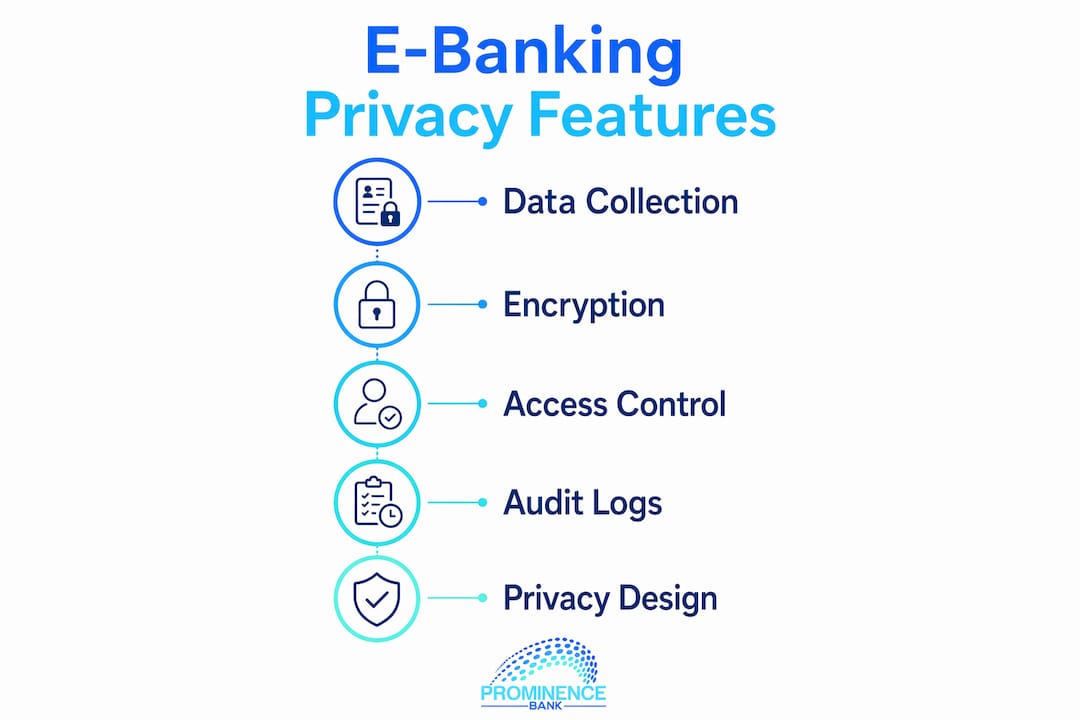
E-banking privacy risks are real, frequent, and growing in sophistication. Digital banking is regularly targeted by phishing, malware, and credential theft. Knowing the specific threats helps you respond to them rather than react after the fact.
The most common risks fall into five categories:
- Data breaches: Attackers gain unauthorized access to bank databases, exposing account numbers, passwords, and personal identifiers for thousands of clients at once.
- Phishing and social engineering: Fraudsters impersonate banks through fake emails, SMS messages, or websites to trick clients into surrendering login credentials.
- Malware and keyloggers: Malicious software installed on a device captures keystrokes and session data, bypassing even strong passwords.
- Third-party data leakage: Fintech integrations and open banking APIs expand the data surface. Each third-party partner that touches your account data is a potential point of failure.
- AI and cloud banking risks: As banks move to cloud infrastructure and AI-driven analytics, new questions arise about where data is stored, who processes it, and under which jurisdiction’s laws.
Regulatory compliance gaps compound these risks. Many institutions meet the letter of the law but fail to audit their vendor chains thoroughly. Institutional e-banking privacy depends heavily on third-party partnerships and compliance audits. Your device security matters, but it is only one link in a longer chain of trust. For clients evaluating digital finance platforms globally, understanding how online lending and banking platforms analyze privacy protocols offers useful context on what responsible data handling looks like across markets.
How do privacy regulations and frameworks protect e-banking users?
Regulations are the floor, not the ceiling, of e-banking data protection. GDPR and India’s Digital Personal Data Protection Act enforce data minimization, explicit consent, and strict security requirements for any institution handling personal financial data. These laws give clients the right to know what data is collected, why it is collected, and how to request its deletion.
Key regulatory frameworks shaping e-banking privacy in 2026 include:
- GDPR (European Union): Requires lawful basis for data processing, explicit consent for sensitive data, and mandatory breach notification within 72 hours.
- Digital Personal Data Protection Act (India): Mandates data localization for certain categories and gives individuals the right to correct or erase their data.
- Basel IV: Primarily a capital adequacy framework, but its operational risk components require banks to manage data integrity and system resilience, which directly affects privacy infrastructure.
- Privacy-by-design mandates: Several jurisdictions now encourage or require PbD as part of regulatory compliance, pushing banks to build privacy into systems rather than apply it retroactively.
| Regulation | Core Privacy Requirement | Geographic Scope |
|---|---|---|
| GDPR | Explicit consent, breach notification, data minimization | European Union |
| DPDP Act | Data localization, right to erasure, consent | India |
| Basel IV | Operational risk management, data integrity | Global (Basel member states) |
| Privacy-by-Design | Embedded controls, minimal data collection | International standard |
Regulations also impose vendor audit obligations. Banks must verify that every third-party partner handling client data meets the same privacy standards the bank itself is held to. For a deeper look at how global institutions meet these obligations, the international banking compliance guide covers the current regulatory landscape in detail.
What practical strategies protect your e-banking data?
Protecting your e-banking data requires consistent habits, not one-time fixes. Best practices include strong passwords, multi-factor authentication, and staying alert to phishing. Each of these reduces a specific, documented attack vector.
Apply these e-banking data protection tips consistently:
- Use strong, unique passwords for every banking platform. A password manager removes the burden of memorizing them.
- Enable MFA on every account. Biometric options like fingerprint or face recognition add a layer that passwords alone cannot provide.
- Review your bank’s privacy settings at least quarterly. Many platforms add new data-sharing options silently through terms-of-service updates.
- Read privacy notices before accepting. Most clients skip this step. The notice tells you exactly what data the bank shares and with whom.
- Monitor account activity weekly. Catching an unauthorized transaction within days limits financial and legal exposure significantly.
- Limit data shared with third-party apps. Open banking integrations are convenient but each connection expands your data footprint.
- Choose banks with transparent privacy policies. Institutions that publish clear, plain-language policies and undergo independent audits demonstrate accountability.
Pro Tip: Search your bank’s name alongside “privacy policy third-party sharing” before opening an account. The results often reveal data-sharing practices that the bank’s marketing materials never mention.
Data minimization in privacy-by-design sometimes limits features you expect, but it also reduces the risk of large-scale breaches by isolating sensitive data to smaller systems. That tradeoff is worth understanding before you demand every convenience feature a platform offers. For clients who want a deeper framework, Prominencebank’s guide on discreet online banking practices covers how privacy-first institutions structure their client protections.
Key Takeaways
E-banking privacy is the combination of regulatory compliance, technical safeguards, and institutional design choices that determine how safely your financial data is handled online.
| Point | Details |
|---|---|
| Privacy differs from security | Security blocks unauthorized access; privacy governs how data is used and shared. |
| TLS and MFA are baseline requirements | Minimum 128-bit TLS encryption and multi-factor authentication are non-negotiable standards. |
| Regulations set the floor | GDPR, DPDP Act, and Basel IV define minimum obligations but do not guarantee best practice. |
| Privacy-by-design builds trust | Banks embedding PbD from the start earn measurably higher client trust and satisfaction. |
| User habits close the gap | Reviewing privacy settings, monitoring activity, and limiting third-party access reduce personal exposure. |
Privacy in e-banking is moving faster than most clients realize
I have spent years watching financial institutions treat privacy as a compliance exercise. The banks that win long-term client relationships do something different. They treat privacy as a product feature, not a legal obligation.
The shift I find most significant right now is federated learning in fraud detection. Banks can now train AI models across client data without ever centralizing that data on a single server. The model learns. The raw data never moves. That is a genuine architectural breakthrough, not marketing language.
Blockchain-based privacy solutions are promising but still early. Hybrid models that combine on-chain transparency with off-chain data storage are the most practical path forward for institutions that need both auditability and confidentiality. I am cautiously optimistic here, but clients should not assume a bank using blockchain is automatically more private.
The risk I see most often ignored is user experience degradation from overcomplicated privacy controls. When privacy settings require a law degree to understand, clients click “accept all” and move on. The best privacy design is invisible. It protects you without asking you to become an expert. Banks that get this right will define the next decade of digital financial services.
— Harold
Prominencebank and the standard for private digital banking
Prominencebank operates as a fully licensed digital institution built around the principle that privacy is not optional for high-net-worth individuals and international businesses. Its architecture reflects privacy-by-design from account opening through every transaction, with encryption and AML/KYC compliance embedded at every layer.
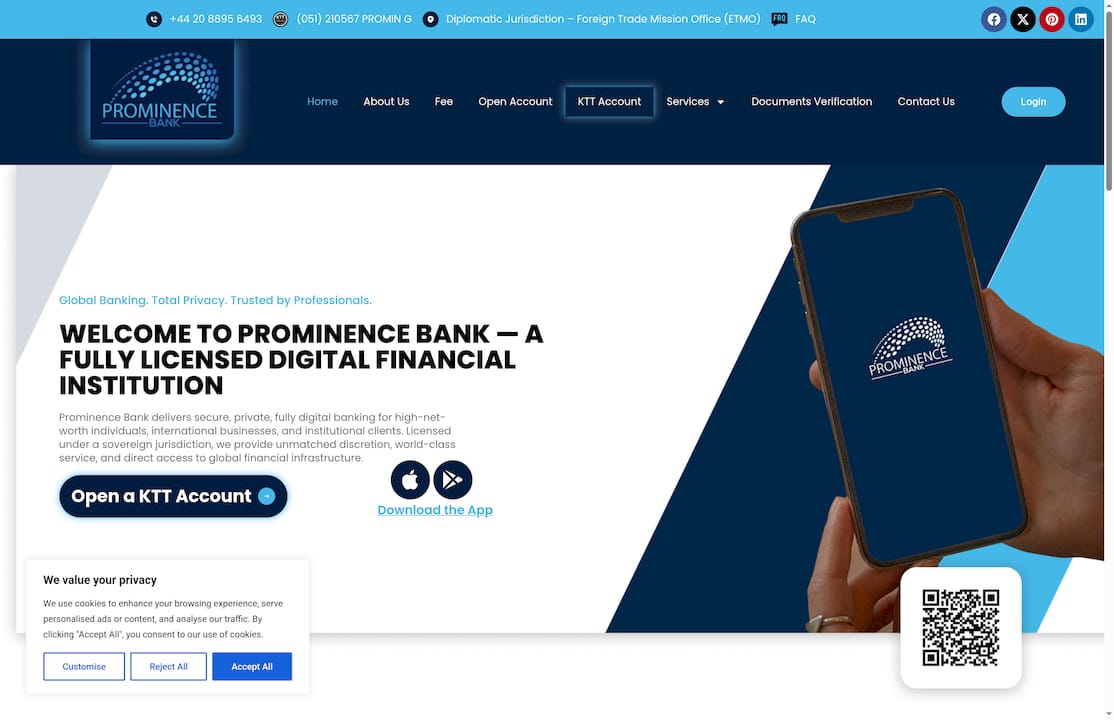
Clients who need multi-currency global banking with strong privacy safeguards will find that Prominencebank’s structure addresses the exact risks covered in this article. Multi-currency accounts operate under strict confidentiality protocols, and the bank’s compliance with international standards means your data is governed by frameworks with real enforcement teeth. For clients ready to move beyond generic digital banking, Prominencebank’s advanced privacy strategies for 2026 outline exactly how the institution approaches data protection at an institutional level.
FAQ
What is e-banking privacy in simple terms?
E-banking privacy is the set of rules, technologies, and practices that control how your financial data is collected, stored, and shared during online banking. It gives you the right to know what data your bank holds and how it is used.
How does privacy-by-design protect e-banking users?
Privacy-by-design builds data minimization and access controls directly into a bank’s systems, so less data is collected and fewer people can access it by default. This reduces breach risk without requiring clients to change their behavior.
What regulations govern e-banking privacy?
GDPR in the European Union, India’s Digital Personal Data Protection Act, and Basel IV’s operational risk standards are the primary frameworks. Each imposes consent, minimization, and breach notification requirements on financial institutions.
What is the biggest e-banking privacy risk for businesses?
Third-party fintech integrations represent the highest risk for businesses, because each connected application expands the data surface and introduces vendors whose privacy practices may not match the bank’s own standards.
How can I tell if my bank takes privacy seriously?
Look for a plain-language privacy policy that names every third party receiving your data, independent audit certifications, and MFA as a default rather than an option. Banks that bury data-sharing disclosures in fine print are telling you something important.