
TL;DR:
- An offshore KTT account uses the Key Tested Telex protocol to facilitate secure, authenticated cross-border bank-to-bank transfers. Its value relies on verified correspondent banking relationships and compliance, not on the existence of a “KTT license,” which is a scam. Due to CRS 2.0 reforms, offshore privacy has limits, making full anonymity unrealistic for investors.
An offshore KTT account is a specialized international banking arrangement that uses the Key Tested Telex (KTT) protocol to execute secure, authenticated, bank-to-bank fund transfers across borders. KTT, short for Key Tested Telex, is a legacy but still-active messaging system that allows financial institutions to send encrypted, verified payment instructions directly to correspondent banks. For investors seeking privacy, asset protection, and global liquidity, these accounts represent one of the more discreet pathways in offshore financial services. The critical distinction: KTT is a communication protocol, not a banking license or a product you purchase from a third party.
How does an offshore KTT account work in cross-border transactions?
The KTT protocol functions as an authenticated messaging layer between two banks. When a sending institution initiates a transfer, it generates a tested telex message encoded with a unique cipher key shared only between the two correspondent banks. The receiving institution decodes the message, verifies the cipher, and confirms the instruction before releasing funds. This process predates SWIFT in some implementations but remains in active use within specific international banking corridors, particularly for high-value or discreet transfers.

What separates a legitimate KTT transaction from a fraudulent one is settlement capacity. KTT messages alone do not prove that funds have been or can be transferred. A typed telex message is straightforward to fabricate. Real value comes from the sending bank’s verified correspondent relationships, its regulatory license, and its ability to clear the transfer through an established settlement pathway. Without those three elements, the message is just text.
A typical legitimate transaction flow involves four parties: the originating client, the sending bank, one or more correspondent banks acting as intermediaries, and the receiving institution. Each leg of that chain must have pre-established agreements and compliance clearances in place. A correspondent bank in New York, Frankfurt, or Singapore acts as the settlement hub, converting the KTT instruction into an actual debit and credit across real accounts.
Pro Tip: Before accepting any KTT-related transfer, ask the sending institution to provide its correspondent banking agreements and regulatory license number. If they hesitate or redirect you to a third-party “clearing agent,” treat that as a serious warning sign.
What are the benefits and limitations of offshore KTT accounts?
The appeal of an offshore KTT account for high-net-worth investors centers on three factors: transaction security, discreet banking, and global asset accessibility. The KTT cipher system creates a verifiable, tamper-resistant record of payment instructions between institutions, which reduces exposure to interception or manipulation. For investors moving large sums across jurisdictions, that authentication layer matters.
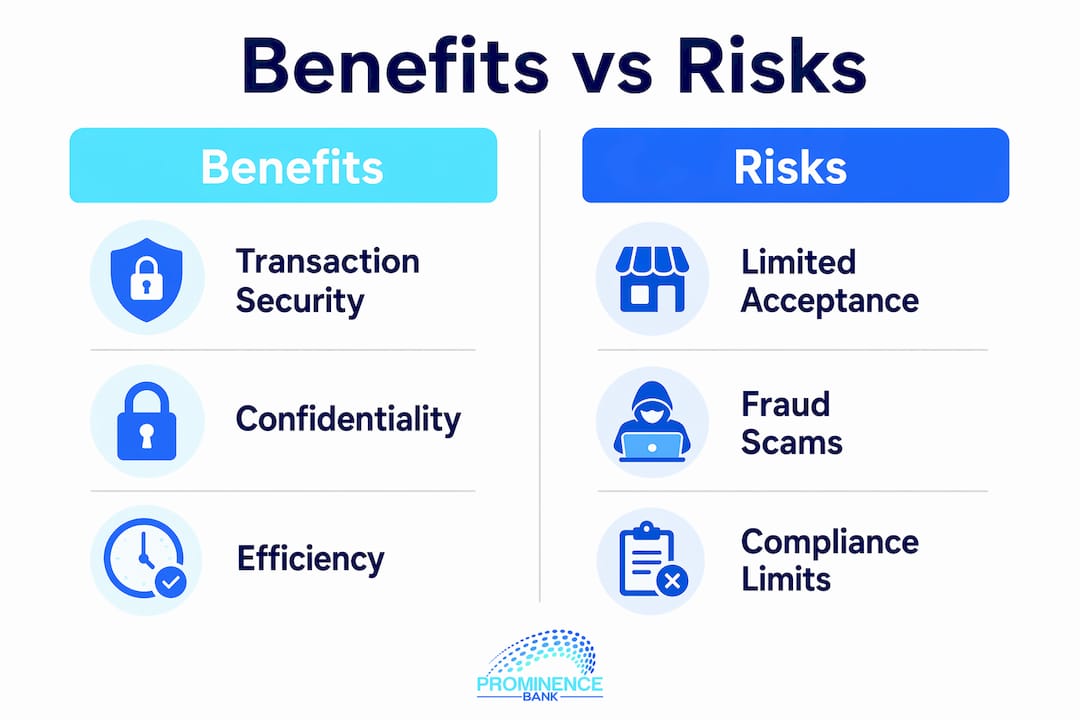
Privacy is a genuine feature of KTT banking services, but it operates within defined legal limits. The CRS 2.0 reforms effective January 1, 2026, expand global tax transparency requirements and bring crypto assets into the scope of automatic reporting. Financial institutions in participating jurisdictions must now report account balances, income, and asset details to tax authorities. This means privacy in offshore structures is real but not absolute. Investors who expect total anonymity through any offshore account, KTT-enabled or otherwise, are working from an outdated assumption.
The limitations are equally concrete. Not every bank accepts KTT-formatted transfers. Jurisdiction matters less than the specific bank’s internal compliance posture. Account structure, transaction profile, and the commercial rationale behind the transfer all affect whether a receiving institution will process the payment. A bank in Switzerland and a bank in the same Swiss canton may reach opposite decisions on the same transaction based on their individual risk frameworks.
| Benefit | Limitation |
|---|---|
| Authenticated, cipher-verified transfer instructions | Message format alone does not guarantee fund settlement |
| Discreet bank-to-bank communication channel | CRS 2.0 reporting obligations limit full anonymity |
| Access to global correspondent banking networks | Acceptance depends on receiving bank’s compliance posture |
| Suitable for high-value cross-border transactions | Not universally supported across all jurisdictions or institutions |
| Established protocol with documented settlement history | Legacy system requires verified correspondent relationships to function |
How to identify legitimate offshore KTT accounts and avoid scams
The most dangerous misconception in this space is that a “KTT banking license” is a real, purchasable credential. It is not. Offshore KTT license offers are a structured fraud pipeline where victims are pressured to buy offshore entities or licenses to supposedly clear fake funds. The scam cycle typically escalates from an initial promise of large incoming funds to a demand for payment to acquire a license that will “unlock” the transfer. No such license exists in any legitimate regulatory framework.
Scammers use KTT wording to appear credible because the terminology sounds technical and authoritative to non-specialists. They often lack actual correspondent banking pathways or regulatory licenses. The fraud schemes pivot around convincing pitches that falsely promise secrecy and clearance advantages that do not exist in practice. Recognizing the pattern early is the most effective defense.
Key fraud indicators to watch for:
- Any offer requiring you to purchase an “offshore KTT banking license” before funds can be released
- Third-party “clearing agents” inserted between you and the sending bank with no verifiable credentials
- Promises of guaranteed secrecy or immunity from reporting requirements
- Pressure to act quickly before a “transfer window” closes
- Inability or refusal to provide the sending bank’s regulatory license number and correspondent banking details
- Transfer amounts that seem disproportionately large relative to the stated commercial purpose
Legitimate KTT transfer verification requires independently confirming the sender’s license, correspondent banking access, currency limits, and compliance controls. This is not optional due diligence. It is the minimum standard before engaging with any KTT-related transaction. You can cross-reference licensing status through national banking regulators, central bank registries, or international databases like the BIS correspondent banking data set.
Pro Tip: Request a direct call with the compliance officer at the sending bank, not a broker or intermediary. A legitimate institution will accommodate this. A fraudulent one will find reasons to avoid it.
For a deeper breakdown of KTT scam patterns and how to protect yourself, Prominencebank maintains a detailed resource on current fraud schemes targeting offshore banking clients.
Which countries and banks support offshore KTT accounts?
There is no definitive list of “KTT-friendly countries” that guarantees acceptance. KTT transfer acceptance depends on the receiving bank’s policy, account structure, and compliance posture rather than country eligibility alone. Two banks operating in the same jurisdiction, under the same national regulator, may reach completely different decisions on the same KTT transaction based on their internal risk appetite and operational rules.
What actually determines acceptance is a combination of factors that investors must assess before initiating any transfer. The receiving bank’s correspondent banking agreements define which currencies and transfer types it can process. The account structure must have a clear commercial rationale documented in advance. The transaction profile, meaning the frequency, size, and origin of funds, must align with the account’s stated purpose. Banks that specialize in international bank accounts for institutional clients tend to have more developed KTT processing infrastructure than retail-focused institutions.
| Factor | Why it matters |
|---|---|
| Bank’s correspondent network | Determines which currencies and corridors can settle |
| Account structure and purpose | Must align with the transaction’s commercial rationale |
| Compliance documentation | Pre-cleared KYC and AML records reduce processing friction |
| Transaction size and frequency | Unusual patterns trigger enhanced due diligence or rejection |
| Jurisdiction’s regulatory framework | Affects reporting obligations and permissible account types |
Investors should assess the receiving route and the specific bank’s policies together, not treat jurisdiction as a standalone qualifier. A well-structured account at a bank with strong correspondent relationships in a mid-tier jurisdiction will outperform a poorly documented account at a major bank in a Tier 1 financial center. The infrastructure matters more than the address.
Key takeaways
An offshore KTT account provides authenticated, bank-to-bank transfer capability through the Key Tested Telex protocol, but its value depends entirely on verified correspondent relationships, compliant account structure, and rigorous fraud awareness.
| Point | Details |
|---|---|
| KTT is a protocol, not a license | No legitimate “KTT banking license” exists; offers to sell one are fraud. |
| Settlement requires more than a message | Correspondent banking capacity and compliance clearance determine real transfer success. |
| CRS 2.0 limits offshore privacy | 2026 reforms expand reporting obligations, making full anonymity unrealistic. |
| Bank acceptance is institution-specific | Two banks in the same country may accept or reject the same KTT transfer. |
| Verification is non-negotiable | Confirm licensing, correspondent access, and compliance controls before any engagement. |
Why KTT accounts still matter, and where investors get it wrong
I have spent years watching investors approach offshore banking with two equally dangerous mindsets. The first is blind trust: they hear “KTT” and assume the technical terminology signals legitimacy. The second is blanket skepticism: they dismiss KTT accounts entirely because of scam headlines and miss a genuinely useful tool for cross-border asset management.
The reality sits between those extremes. KTT-enabled accounts remain relevant for specific use cases, particularly high-value transfers where authenticated bank-to-bank messaging adds a meaningful layer of security over standard SWIFT instructions. The protocol’s age is not a weakness. It is a feature in environments where newer digital channels carry higher fraud exposure.
What I find most concerning is how thoroughly the scam ecosystem has poisoned the well. The KTT license fraud cycle has become so sophisticated that even experienced investors get drawn in by the technical language. The tell is always the same: any arrangement that requires you to pay money upfront to receive money is not banking. It is extraction.
The CRS 2.0 changes also deserve more attention than they get in most offshore banking discussions. Investors who structured their offshore positions around privacy assumptions that predate 2026 need to revisit those structures now. Compliance is not the enemy of offshore banking. It is the framework that makes legitimate offshore banking sustainable.
— Harold
Secure offshore banking with Prominencebank
Prominencebank operates as a fully licensed digital banking institution under the sovereignty of the Extraterritorial Trade Mission Office (ETMO), offering KTT-enabled accounts designed for high-net-worth individuals and institutional clients who require both discretion and compliance integrity.
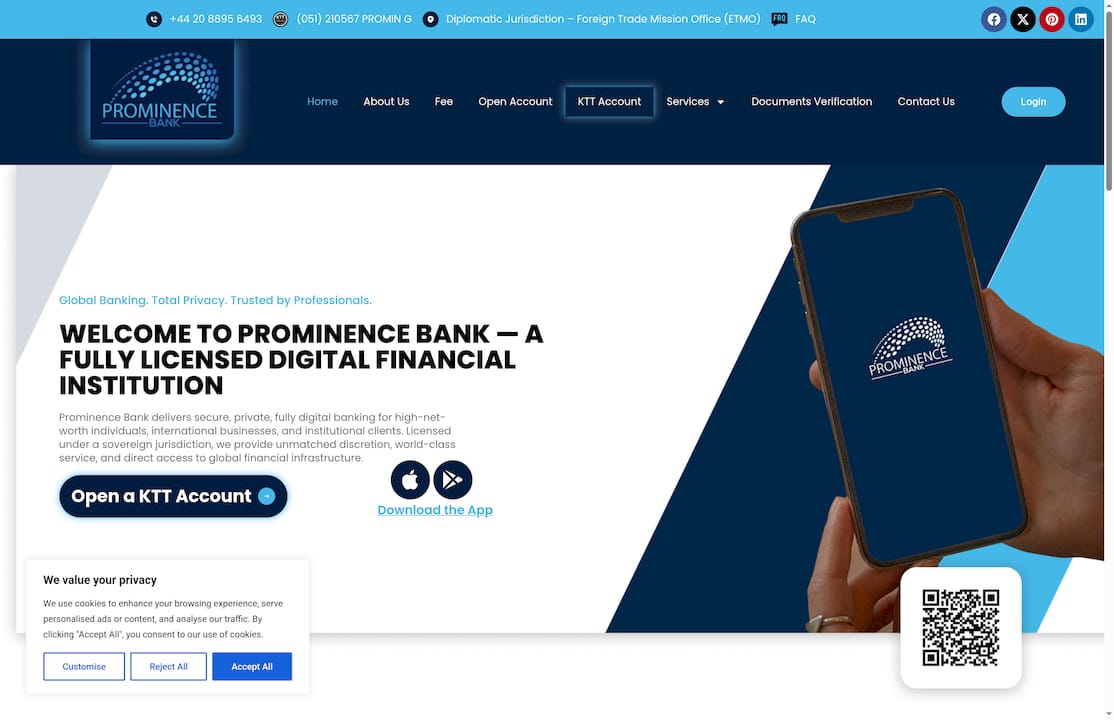
Prominencebank’s multi-currency offshore accounts are built on verified correspondent banking relationships, full AML/KYC compliance, and direct access to global financial infrastructure. For investors who need a corporate account setup that supports KTT transfers without the compliance gaps that expose clients to fraud or regulatory risk, Prominencebank provides the institutional infrastructure to do it correctly. Reach out directly to explore account options tailored to your transaction profile and jurisdiction requirements.
FAQ
What is an offshore KTT account?
An offshore KTT account is an international banking account that uses the Key Tested Telex protocol to send authenticated, encrypted payment instructions between correspondent banks. It is designed for secure, high-value cross-border transfers with a documented settlement pathway.
Is a KTT banking license a real requirement?
No. A “KTT banking license” does not exist as a legitimate regulatory instrument. Any offer requiring you to purchase one before receiving funds is a structured fraud scheme designed to extract upfront payments.
How does CRS 2.0 affect offshore KTT account privacy?
CRS 2.0 reforms effective January 1, 2026, require financial institutions to report account balances, income, and asset details to participating tax authorities, including crypto assets. Full anonymity through offshore accounts is no longer a realistic expectation under this framework.
How do I verify a legitimate KTT sending bank?
Confirm the sending bank’s regulatory license through a national banking registry, verify its correspondent banking agreements, and request direct contact with its compliance officer. Legitimate verification covers licensing status, correspondent access, currency limits, and compliance controls.
Does every country accept KTT transfers?
No. KTT transfer acceptance depends on the specific receiving bank’s internal policies, account structure, and compliance posture rather than national eligibility. Two banks in the same jurisdiction may reach opposite decisions on the same transaction.